



Ngăn ngừa gán chân đục lỗ: Giải phóng mặt bằng, Kết thúc, và các lớp phủ
Galling happens when metal from the workpiece adheres to the punch tip during shearing, leaving a rough buildup that scratches parts, dulls the cutting edge, and shortens tool life. The fix depends on which type of galling you're dealing with — clearance, Bề mặt hoàn thiện, and coatings each solve a different piece of the problem, and using the wrong one wastes time and tooling budget.
Hướng dẫn này chọn nơi rộng hơn Hướng dẫn đục lỗ (được suy luận) leaves off. That resource covers die types, Vật liệu, and general clearance principles; here, the focus narrows specifically to why punch pins gall and how to stop it from recurring.
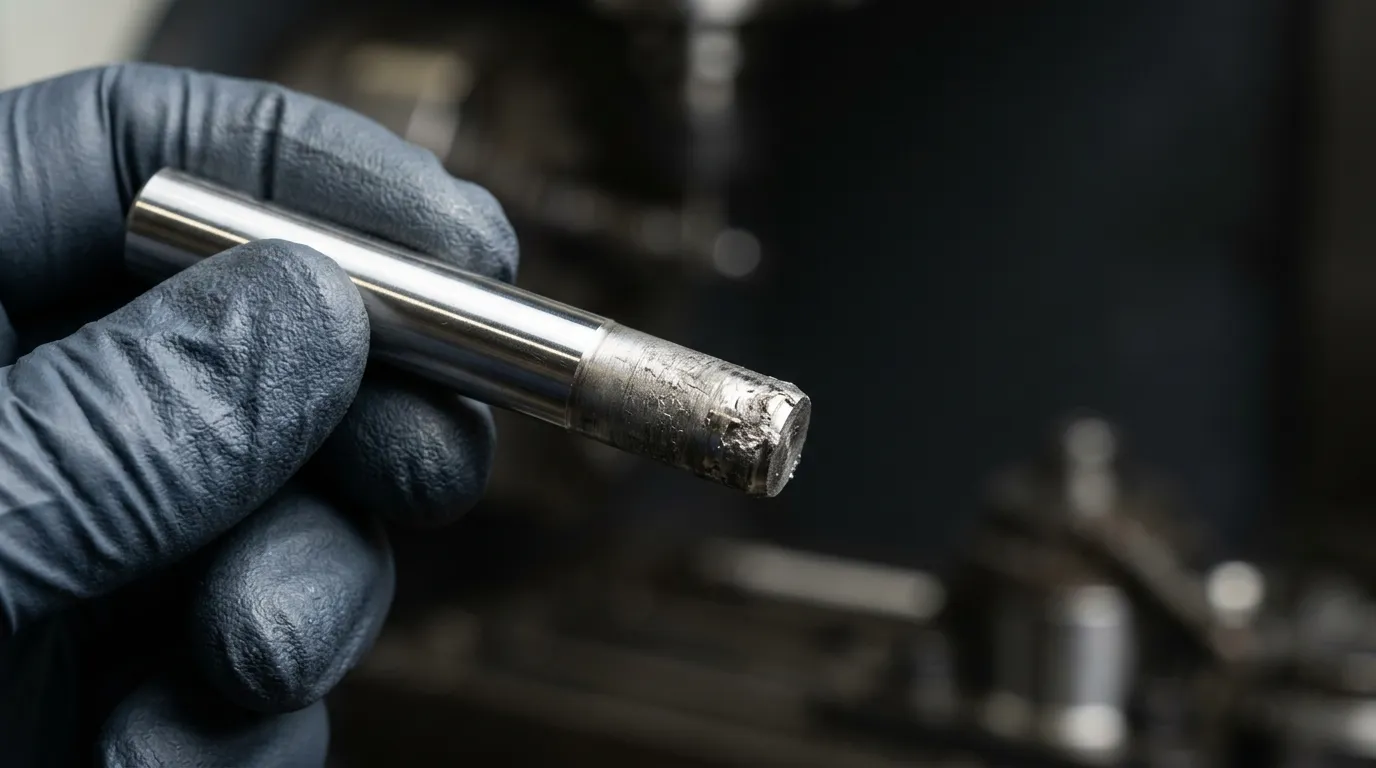
Chẩn đoán loại Galling trên chốt đục lỗ của bạn
Not all galling looks or behaves the same way, and the visible pattern tells you where to start fixing it.
Chất kết dính — small particles of the workpiece material weld onto the punch surface under pressure and heat, building up a rough patch that grows with each stroke.
Mài mòn — hard inclusions or scale in the workpiece material scrape against the punch, wearing it down rather than depositing material on it.
Ăn mòn — less common, this occurs when a chemical reaction between the punch surface and workpiece (often from lubricant breakdown or moisture) accelerates surface degradation.
Phân tích kỹ thuật của Fabricator về Những thất bại nghiệt ngã notes that adhesive galling is the most frequent type in stamping operations, largely because friction and localized heat are difficult to eliminate entirely in high-speed punching.
If you're also seeing stripping problems — parts hanging up on the punch instead of clearing the die — that's usually a downstream symptom of galling that's already progressed past the early stage. Insufficient or incompatible lubricant often makes any of these three types worse, so checking lubricant condition is a reasonable first step before adjusting the tooling itself.
If the punch tip is chipping or cracking rather than building up material, that's a separate failure mode — see đục lỗ đứt gãy trong khuôn dập for that diagnosis instead.
Đặt khe hở khuôn phù hợp để ngăn ngừa mài mòn
Clearance is the single most commonly cited fix for galling, and for good reason: too little clearance increases contact pressure and heat, which is exactly what drives adhesive galling.
Clearance requirements shift with material hardness and thickness. Mate's Hướng dẫn phòng ngừa galling points to a combination of increased die clearance and a small back taper — typically around 2° total, split evenly per side — as an effective remedy when galling is persistent rather than occasional.
| Loại vật liệu | Typical Clearance (% of Stock Thickness) | Ghi chú |
|---|---|---|
| Thép nhẹ | ~10% | Quy tắc ngón tay cái của ngành cơ bản cho mỗi Cú đấm Moeller |
| Thép không gỉ | 15–20% | Độ cứng cao hơn làm tăng ma sát và nhiệt |
| Nhôm | 8–12% | Chất liệu mềm hơn nhưng dễ tích tụ chất kết dính |
| Các ứng dụng dễ bị mài mòn | 20–30% | Kết hợp với côn ngược theo đề xuất dụng cụ của Mate |
Back taper works by reducing the contact area between the punch flank and the sheared edge as the punch travels through the material, which lowers the friction that drives adhesive buildup. This is a geometric change to the punch itself, not just a die adjustment, so it's worth discussing with whoever handles your tooling specification.
Tool steel hardness also plays a role here: harder steels resist the surface deformation that starts adhesive galling, but very hard, brittle steels can be more prone to abrasive wear if the workpiece contains hard inclusions. Matching hardness to the specific failure type you diagnosed earlier matters more than simply choosing the hardest available steel.
Cải thiện độ hoàn thiện bề mặt để giảm mài mòn
A rougher punch surface gives workpiece material more microscopic points to adhere to, so improving finish directly reduces adhesive galling risk — and it's also how you remove galling that's already present.
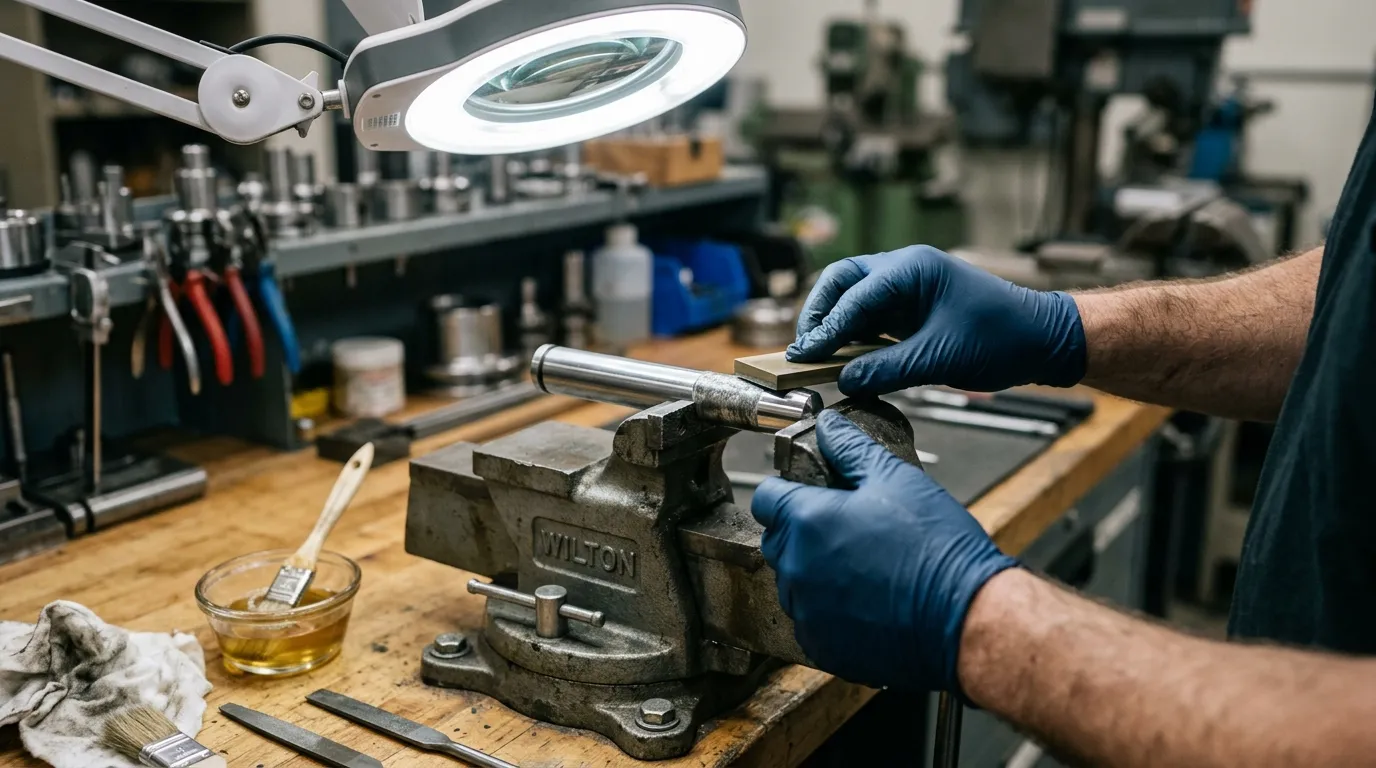
For removing existing buildup, the process generally follows these steps:
Inspect the punch tip under magnification to confirm galling rather than chipping or wear.
Stone or polish the affected area lightly, working in the direction of the original finish rather than across it.
Re-measure the punch profile to confirm dimensions haven't drifted from the polishing.
Reapply lubricant appropriate to the workpiece material before returning the punch to service.
Sunshine's punch and pin manufacturing supports surface finishes as smooth as Ra0.4, which is a relevant benchmark if you're specifying a replacement or reworked punch pin rather than hand-polishing an existing one.
For punches that have galled repeatedly despite polishing, a full regrind may restore geometry more reliably than spot polishing — mài và mài lại chốt đục lỗ covers when a regrind is the better option versus a quick polish.
Chọn một lớp phủ để chống mài mòn
Coatings reduce the friction coefficient between the punch and the workpiece, which helps prevent the localized adhesion that starts adhesive galling. But they work best as a supplement to correct clearance and finish, not a replacement for them.
| Loại lớp phủ | Quyền lợi chính | Đánh đổi điển hình |
|---|---|---|
| TiN (Titan Nitride) | Độ cứng và giảm ma sát đa năng tốt | Kém hiệu quả hơn chống lại sự mài mòn của chất kết dính nghiêm trọng trên vật liệu mài mòn |
| CrN (Crom Nitride) | Khả năng chống mài mòn chất kết dính tốt hơn trên không gỉ và nhôm | Độ cứng thấp hơn một chút so với TiN |
| DLC (Diamond-Like Carbon) | Very low friction coefficient, strong adhesive-galling resistance | Chi phí cao hơn, more sensitive to substrate finish quality |
A caution worth taking seriously: as noted in industry commentary on Lớp phủ bề mặt cho thép kéo, applying a coating over a punch with incorrect clearance or a poor base finish often just delays the problem rather than solving it. Coating a punch that's already galling from bad clearance can mask the symptom for a short run before the underlying issue reappears.
Heat treatment is a related lever worth mentioning here: Sunshine's heat treatment process increases hardness by roughly 30%, which improves impact and wear resistance independent of any coating applied afterward. That's a useful option to raise with a supplier when a punch needs both better hardness and a coating.
Danh sách kiểm tra bảo trì để phát hiện sớm
Catching galling early keeps a polish job from turning into a full regrind or replacement. Build these checks into routine tooling inspection:
Inspect punch tips visually every scheduled changeover, looking for a dull or rough patch near the cutting edge.
Track part quality — burrs, rough hole edges, or inconsistent stripping often show up before galling is visible on the punch itself.
Confirm lubricant type and application rate match the current workpiece material, especially after switching stock.
Re-check die clearance after any regrind, since repeated sharpening gradually changes the punch profile.
Flag punches that gall repeatedly on the same material for a clearance or coating review rather than repeatedly polishing the same spot.
If you're evaluating how a punch pin fits into the broader tooling assembly, Các Hướng dẫn thành phần khuôn covers how punch pins interact with guide bushings and other components that also affect alignment and wear.
Persistent galling despite correct clearance and finish is usually a signal to discuss a coating or a specification change — that conversation is easiest with a supplier who can quote both the regrind and the coating option together, so you're not solving the problem in two separate steps.
Chia sẻ:


Được viết bởi Sunshine
Tại Sunshine, Chúng tôi là nhà sản xuất và cung cấp chuyên nghiệp các linh kiện khuôn chính xác, cung cấp một loạt sản phẩm đa dạng cho ứng dụng dập và khuôn ép. Trọng tâm chính của chúng tôi bao gồm khuôn đục lỗ, ghim và ống lót đẩy, và cọc hướng dẫn cùng các bushing. Với gia công CNC tiên tiến, Kiểm soát chất lượng nghiêm ngặt, và năng lực sản xuất mạnh mẽ, chúng tôi đảm bảo độ tin cậy, các bộ phận chính xác cao, cùng với các linh kiện tiêu chuẩn có sẵn trong kho để cung cấp nhanh chóng và hiệu quả toàn cầu.
TIN TỨC
NHẬN DỊCH VỤ
Với các bộ phận chất lượng đáp ứng mọi ngân sách và đội ngũ nhân viên thân thiện được đào tạo để giúp chuyến thăm của bạn trở nên hữu ích và thuận tiện.
