



Thành phần khuôn chính xác: Guide for High-Accuracy Mold Assemblies
Precision mold components improve mold alignment, repeatability, and long-term production stability by maintaining tight tolerances across repeated manufacturing cycles. Components such as guide posts, các vòng đệm, chốt đẩy, and inserts directly affect flash control, dimensional consistency, khả năng chống mài mòn, và sự sống của nấm mốc. Choosing the right materials, các mức độ cứng, and fit tolerances helps reduce downtime, minimize repairs, and maintain reliable high-volume production.
High-accuracy molds depend on more than cavity design alone. The quality and fit of each internal component determine how consistently the mold performs after thousands or even millions of cycles. Căn chỉnh kém, uneven wear, and loose tolerances often start with small component failures that grow into expensive production issues. Understanding which precision parts matter most helps buyers and engineers build more stable mold assemblies from the start.
What are precision mold components?
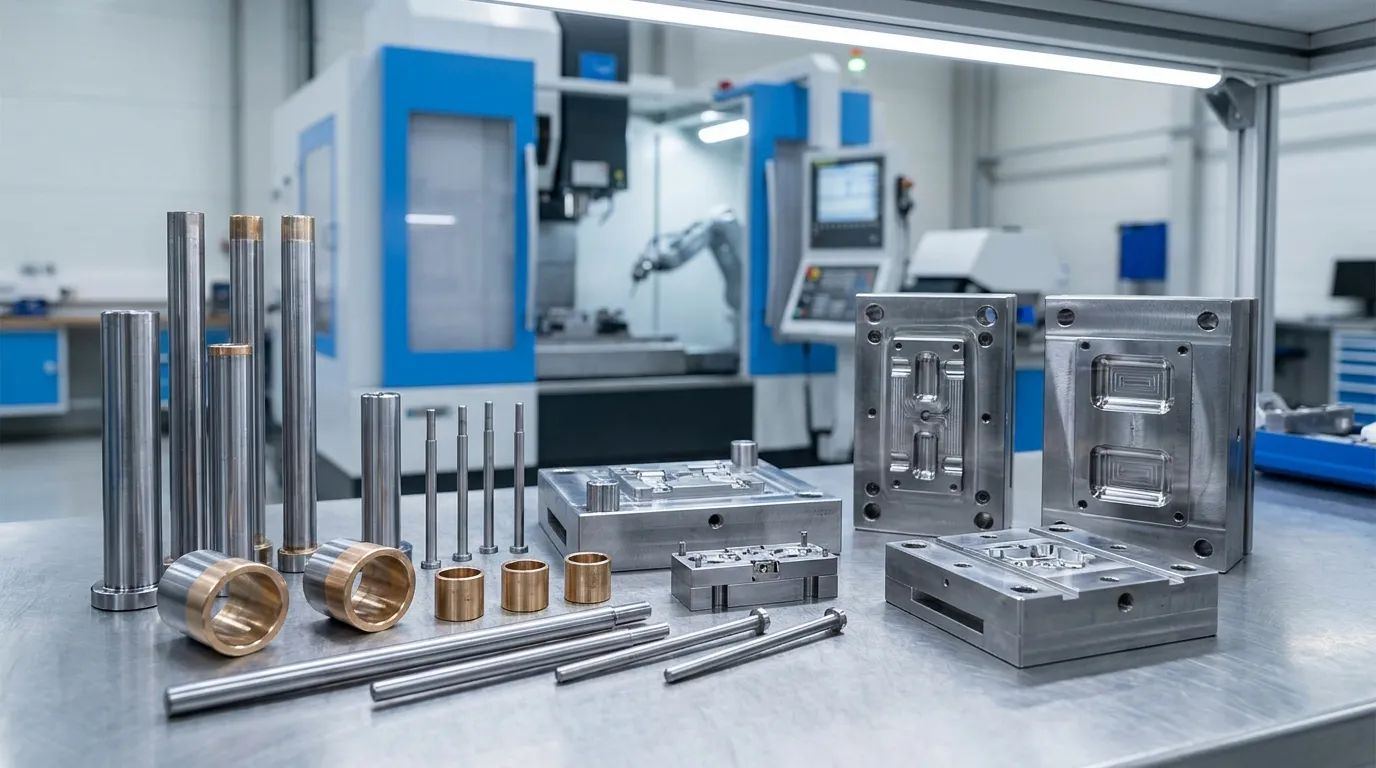
Precision mold components are high-tolerance parts used to maintain alignment, repeatability, and dimensional stability inside mold assemblies. Components like guide posts, các vòng đệm, chốt đẩy, and inserts directly affect mold accuracy, khả năng chống mài mòn, and production consistency over long manufacturing cycles.
These components are machined and ground to tight tolerances so mold halves close accurately during every production cycle. Even small alignment errors can create flash, uneven wear, or dimensional variation in molded parts. That is why high-cycle molds rely heavily on precision-fit internal systems.
| Thành phần | Chức năng chính |
|---|---|
| Bài hướng dẫn | Căn chỉnh các nửa khuôn |
| Ống lót | Giảm mài mòn trong quá trình di chuyển |
| Chốt đẩy | Phát hành các bộ phận đúc |
| Chèn | Hình thành các tính năng của bộ phận quan trọng |
| Tay áo | Hỗ trợ chuyển động của đầu phun |
| Khoang và lõi | Định hình sản phẩm cuối cùng |
Manufacturers often combine hardened tool steels and carbide materials to improve wear resistance in these areas. Theo Tổng quan về thành phần đúc chính xác của Nidec, precision-fit mold elements are widely used in applications requiring stable dimensional control and repeatable production accuracy.
For a broader overview of mold system architecture, Các Hướng dẫn thành phần khuôn hoàn chỉnh explains how these assemblies fit into the larger injection molding process.
Bạn cũng có thể khám phá Hệ thống thành phần khuôn used in different tooling configurations.
Which precision mold components affect alignment the most?
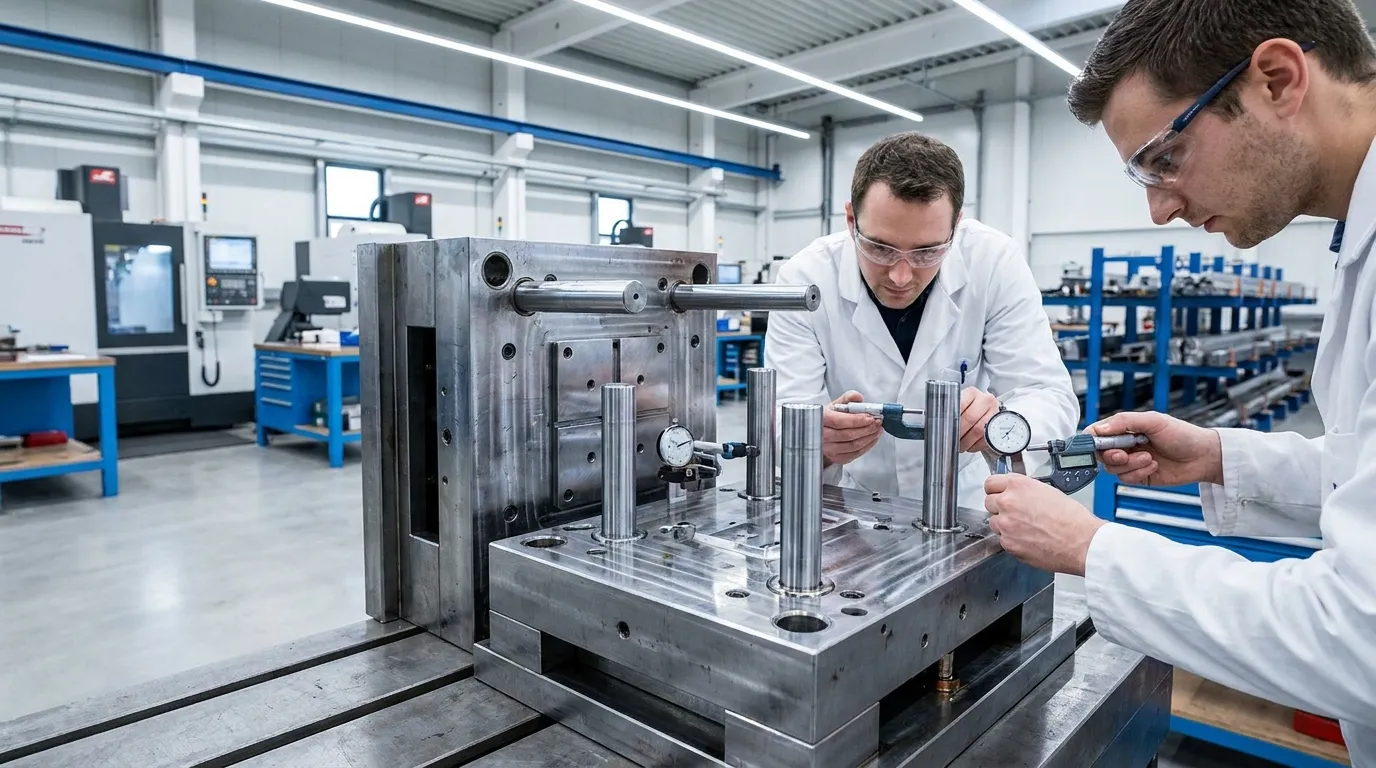
Bài hướng dẫn, các vòng đệm, and precision inserts have the biggest impact on mold alignment because they control cavity positioning during repeated production cycles. Poor fit or premature wear in these components increases flash risk, biến đổi kích thước, and mold instability.
Alignment problems rarely begin with major mold damage. In most cases, wear starts gradually inside guide systems or mating surfaces. Once movement develops between mold halves, the cavity no longer closes consistently, and defects become harder to control.
Trụ dẫn hướng và ống lót
Guide posts and bushings absorb repeated opening and closing movement during every molding cycle. If these parts wear unevenly, the mold halves can shift slightly during closure. That small shift may create flash, các gờ, or part mismatch over time.
A high-cycle automotive grille mold is a common example. After extended production, worn bushings can create enough play to cause visible flashing along long cosmetic edges. Replacing only the worn guide system often restores part quality without rebuilding the full mold.
Chèn và khoang
Precision inserts also affect alignment because they maintain cavity positioning in critical areas. Loose insert fit can create variation in wall thickness or gate geometry, especially in medical or electronics molds.
Low-cost insert systems are not always the best choice. They may reduce initial tooling cost, but frequent replacement and production instability often erase those savings during long production runs.
Bảng rủi ro hỏng hóc thành phần chính xác
| Thành phần | Vấn đề hao mòn thông thường | Triệu chứng sản xuất | Nâng cấp được đề xuất |
|---|---|---|---|
| Bài hướng dẫn | Mài mòn bề mặt | Nhấp nháy ở đường chia tay | Hệ thống dẫn hướng cứng |
| Ống lót | Tăng trưởng giải phóng mặt bằng | Khuôn không khớp | Ống lót nối đất chính xác |
| Chèn | Mài mòn cạnh | Biến thể kích thước | Chèn cacbua |
| Chốt đẩy | Galling | Một phần dính | Chốt cứng được đánh bóng |
Các nhà sản xuất làm việc với công cụ có dung sai chặt chẽ thường nâng cấp lên Hệ thống dẫn hướng chính xác to reduce long-term alignment drift.
How do tight tolerances improve repeatability in mold assemblies?
Tight component tolerances reduce movement between mating mold parts during repeated cycles. Better fit improves cavity alignment, stabilizes ejection, reduces flashing, and helps maintain consistent part dimensions during long production runs.
Repeatability matters most in high-volume production. A mold that performs well for 5,000 cycles may still fail in long-term production if clearances grow too quickly. Precision-ground components slow that wear progression by minimizing friction and movement between mating surfaces.
Tolerance control becomes especially important in molds with thin walls or cosmetic surfaces. Even minor cavity shift can affect appearance, vừa vặn, or sealing performance. Medical device molds often use tighter ejector pin tolerances to avoid surface marks during part release.
- Căn chỉnh khoang ổn định hơn
- Giảm sự hình thành đèn flash và gờ
- Tính nhất quán về kích thước tốt hơn
- Chu kỳ đẩy mượt mà hơn
- Tần suất bảo trì thấp hơn
Over-specifying one component rarely fixes the entire system. Tight tolerances only help when the full mold assembly can maintain alignment consistently. A precision insert paired with a worn guide system still creates instability during production.
Nhiều nhà cung cấp dụng cụ cung cấp Các bộ phận khuôn dung sai chặt chẽ specifically designed for long-cycle production environments.
What materials and hardness levels work best for precision mold parts?
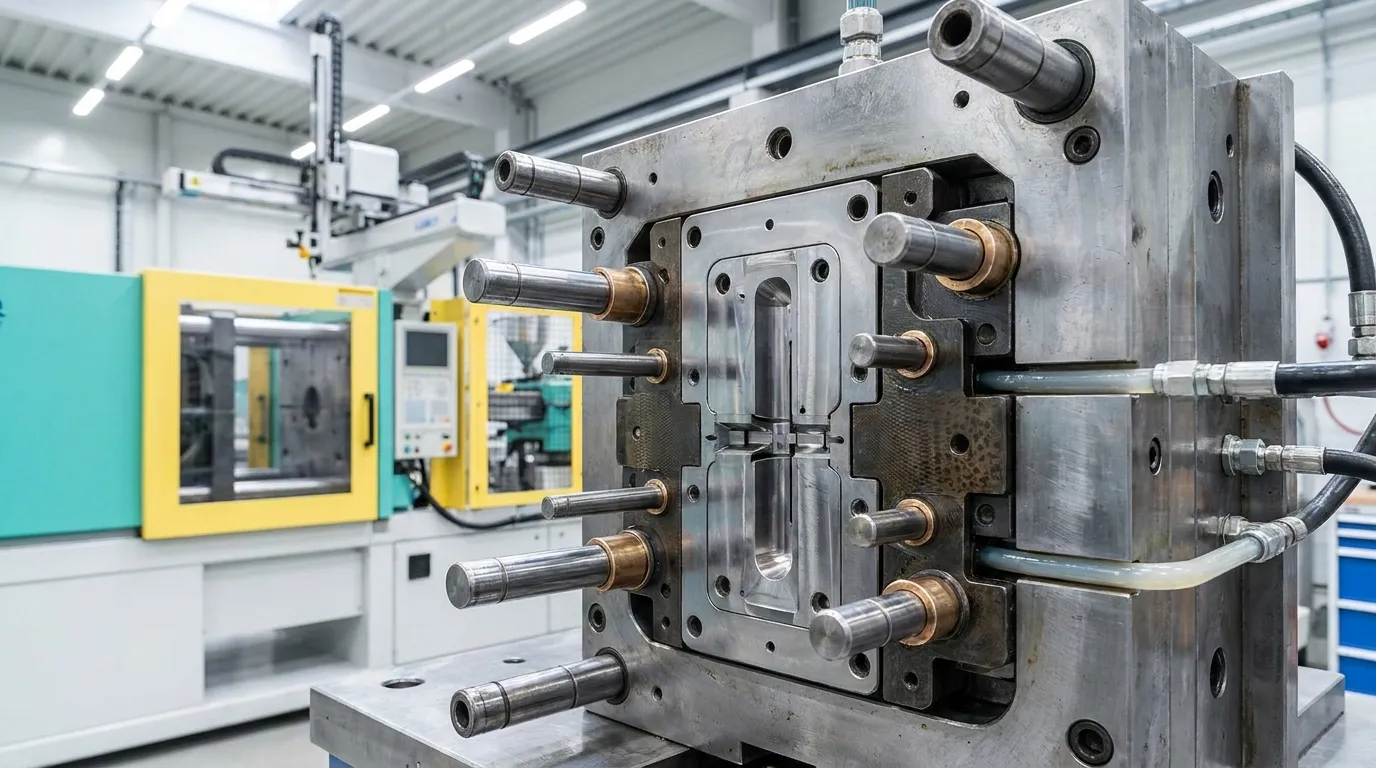
Material selection affects wear resistance, thermal stability, and service life in precision mold assemblies. Carbide components offer superior wear resistance, while hardened tool steels balance toughness, khả năng gia công, and long-cycle durability.
Material choice depends on cycle volume, molding conditions, và dung sai yêu cầu. High-speed production creates friction and heat that quickly damage softer components. Harder materials hold dimensional accuracy longer under those conditions.
| Vật chất | Lợi thế điển hình | Sử dụng phổ biến |
|---|---|---|
| SKD11 | Chống mài mòn | Chèn và đục lỗ |
| SKH51 | Khả năng chịu nhiệt | Dụng cụ tốc độ cao |
| Cacbua | Độ cứng cực cao | Chèn chính xác |
| Thép công cụ | Độ dẻo dai cân bằng | Hệ thống khuôn chung |
Theo Tham khảo thành phần chính xác iPROS, carbide and hardened tool steels are commonly selected for applications requiring long wear life and dimensional stability.
Heat treatment quality matters just as much as raw material selection. Poorly controlled hardening can create distortion or cracking, especially in precision-ground components. Buyers should ask suppliers about hardness range, inspection methods, and traceability before approving production.
Consumer electronics molds often highlight this issue clearly. One housing mold using upgraded carbide inserts reduced replacement frequency significantly because the insert edges resisted wear during continuous production.
If material durability is a priority, những thứ này Vật liệu dụng cụ chính xác are commonly used in high-accuracy assemblies.
When do standard mold components stop being reliable?
Standard mold components often become unreliable in high-cycle, tight-tolerance, or medical-grade applications where wear accumulates quickly. Precision-ground or custom-fit components improve alignment stability and reduce downtime in these demanding environments.
Standard catalog components work well in many general-purpose molds. They are cost-effective and easy to replace. Problems usually appear when production cycles increase, tolerances tighten, or molded parts require strict cosmetic consistency.
Medical molding is one example where standard systems often struggle. Theo Hướng dẫn yêu cầu ép phun y tế, repeatable dimensional control and traceability are critical in regulated production environments.
Bảng quyết định thành phần tiêu chuẩn và chính xác
| Điều kiện sản xuất | Thành phần tiêu chuẩn | Linh kiện chính xác |
|---|---|---|
| Dụng cụ khối lượng thấp | Thường được chấp nhận | Tùy chọn |
| Bề mặt mỹ phẩm | Nguy cơ trung bình | Đề xuất |
| Bộ phận y tế | Thường không đủ | Ưu tiên |
| Khuôn chu kỳ cao | Mặc nhanh hơn | Ổn định lâu dài tốt hơn |
| Dung sai chặt chẽ | Các vấn đề về giải phóng mặt bằng có thể xảy ra | Độ lặp lại tốt hơn |
A common mistake is delaying component upgrades until visible defects appear. By that stage, wear may already affect cavities, chèn, or shut-off surfaces. Replacing guide systems earlier often costs far less than repairing damaged mold sections later.
How do precision components extend mold life?
Precision components extend mold life by reducing friction, sai lệch, and uneven wear during repeated production cycles. Better fit between moving parts helps the mold maintain stable operation longer without frequent adjustments or repairs.
Long-cycle molds place constant stress on guide systems, ejector assemblies, and mating surfaces. Once clearances begin increasing, wear spreads quickly across neighboring components. That chain reaction shortens overall tooling life.
A production mold running one million cycles illustrates this clearly. In one automotive application, worn guide bushings caused cavity mismatch and flashing along cosmetic surfaces. Replacing the guide system restored alignment and delayed a far more expensive cavity rebuild.
Danh sách kiểm tra cải thiện tuổi thọ khuôn
- Sử dụng hệ thống dẫn hướng cứng cho khuôn chu kỳ cao
- Khớp vật liệu chèn với khối lượng sản xuất
- Kiểm tra độ mòn của chốt đẩy thường xuyên
- Thay thế ống lót bị mòn trước khi hư hỏng khoang phát triển
- Duy trì lịch bôi trơn nhất quán
- Giám sát sự liên kết trong quá trình bảo trì phòng ngừa
Low-cost ejector systems often become the first major wear point in fast-cycle production. That is especially true in molds using aggressive ejection timing or thin-wall parts. Upgrading those systems early usually improves production stability and reduces downtime.
Bạn có thể xem thêm Các thành phần khuôn chống mài mòn commonly used to improve tooling durability.
What should buyers evaluate before sourcing precision mold components?
Buyers should evaluate tolerance capability, Chất lượng xử lý nhiệt, material traceability, inspection methods, and delivery consistency before selecting a precision mold component supplier. These factors affect both mold stability and long-term production reliability.
A supplier's machining accuracy matters, but inspection capability matters just as much. Precision components should include documented dimensional checks, kiểm tra độ cứng, and repeatable manufacturing controls.
- Khả năng chịu đựng
- Độ chính xác mài
- Tính nhất quán của xử lý nhiệt
- Chứng nhận vật liệu
- Chất lượng hoàn thiện bề mặt
- Độ tin cậy của giao hàng
- Thời gian thay thế
Production scheduling also affects sourcing decisions. Delayed component delivery can hold up mold trials, validation runs, or customer approvals. Some manufacturers now build extra inspection and logistics planning into production schedules to reduce tooling delays, as discussed in Phân tích kế hoạch sản xuất khuôn mẫu gần đây.
Import timing may also affect tooling schedules in some regions. Buyers handling overseas shipments should review applicable customs and trade documentation requirements before finalizing delivery timelines. Thuộc tính Hướng dẫn Hải quan Bangladesh is one example of how import procedures can influence manufacturing lead times.
Before selecting a supplier, it also helps to compare available nhà cung cấp linh kiện khuôn tùy chỉnh capabilities against actual production requirements instead of choosing based on price alone.
Thực hiện bước tiếp theo đúng đắn
Precision mold components directly affect alignment stability, dimensional consistency, và sự sống của nấm mốc. Small differences in fit, độ cứng, or wear resistance often become major production issues after extended cycles. That is why component selection should match the actual operating conditions of the mold, not just the initial tooling budget.
If your application involves tight tolerances, bề mặt mỹ phẩm, medical parts, or high-cycle production, it is worth reviewing the full guide system, ejector assembly, and insert strategy before launch. Choosing the right precision mold components early usually reduces downtime, lowers maintenance costs, and keeps production more stable over time.
Những câu hỏi thường gặp
What are precision mold components?
Precision mold components are high-tolerance parts used to maintain alignment, stability, and dimensional accuracy inside mold assemblies. Common examples include guide posts, các vòng đệm, chốt đẩy, chèn, and cavities.
Why are guide posts and bushings important?
Guide posts and bushings keep mold halves aligned during repeated opening and closing cycles. Căn chỉnh kém làm tăng hao mòn, flash defects, and dimensional inconsistency during production.
What materials are commonly used for precision mold parts?
Carbide and hardened tool steels like SKD11 and SKH51 are commonly used because they provide strong wear resistance and dimensional stability. Material choice depends on cycle volume, yêu cầu về dung sai, và điều kiện vận hành.
How do ejector pins affect molding quality?
Ejector pins affect part release consistency and surface quality during mold opening. Poorly fitted or worn ejector pins can create marks, sticking problems, or uneven ejection force.
When should custom mold components be used?
Custom mold components are usually necessary when standard catalog parts cannot maintain required tolerances, fit conditions, or production durability. They are common in medical, Ô tô, and high-cycle tooling applications.
How do precision components improve mold life?
Precision components reduce friction, sai lệch, and uneven wear during repeated cycles. Better fit and surface finish help molds maintain stable operation for longer production runs.
Chia sẻ:


Được viết bởi Sunshine
Tại Sunshine, Chúng tôi là nhà sản xuất và cung cấp chuyên nghiệp các linh kiện khuôn chính xác, cung cấp một loạt sản phẩm đa dạng cho ứng dụng dập và khuôn ép. Trọng tâm chính của chúng tôi bao gồm khuôn đục lỗ, ghim và ống lót đẩy, và cọc hướng dẫn cùng các bushing. Với gia công CNC tiên tiến, Kiểm soát chất lượng nghiêm ngặt, và năng lực sản xuất mạnh mẽ, chúng tôi đảm bảo độ tin cậy, các bộ phận chính xác cao, cùng với các linh kiện tiêu chuẩn có sẵn trong kho để cung cấp nhanh chóng và hiệu quả toàn cầu.
TIN TỨC
NHẬN DỊCH VỤ
Với các bộ phận chất lượng đáp ứng mọi ngân sách và đội ngũ nhân viên thân thiện được đào tạo để giúp chuyến thăm của bạn trở nên hữu ích và thuận tiện.
