



Plastic Injection Mold Design: DFM Checklist for Stronger Plastic Parts
Plastic injection mold design depends on good DFM decisions before tooling starts. Consistent wall thickness, Góc draft thích hợp, balanced ribs, smooth corner transitions, and clean ejection planning help prevent sink marks, sự cong vênh, những cú bắn ngắn, and mold wear. A practical DFM checklist reduces tooling revisions, improves part strength, and helps manufacturers move into production with fewer delays and quality problems.
A plastic part can look perfect in CAD and still fail during production. Small geometry choices often create sink marks, ejection problems, or expensive tooling changes once steel cutting begins. That’s why DFM, viết tắt của Design for Inufacturability, matters early. This guide walks through the key checks engineers use before approving a plastic part for injection molding, with practical examples you can apply before sending a design to tooling.
What is plastic injection mold design and why does DFM matter?
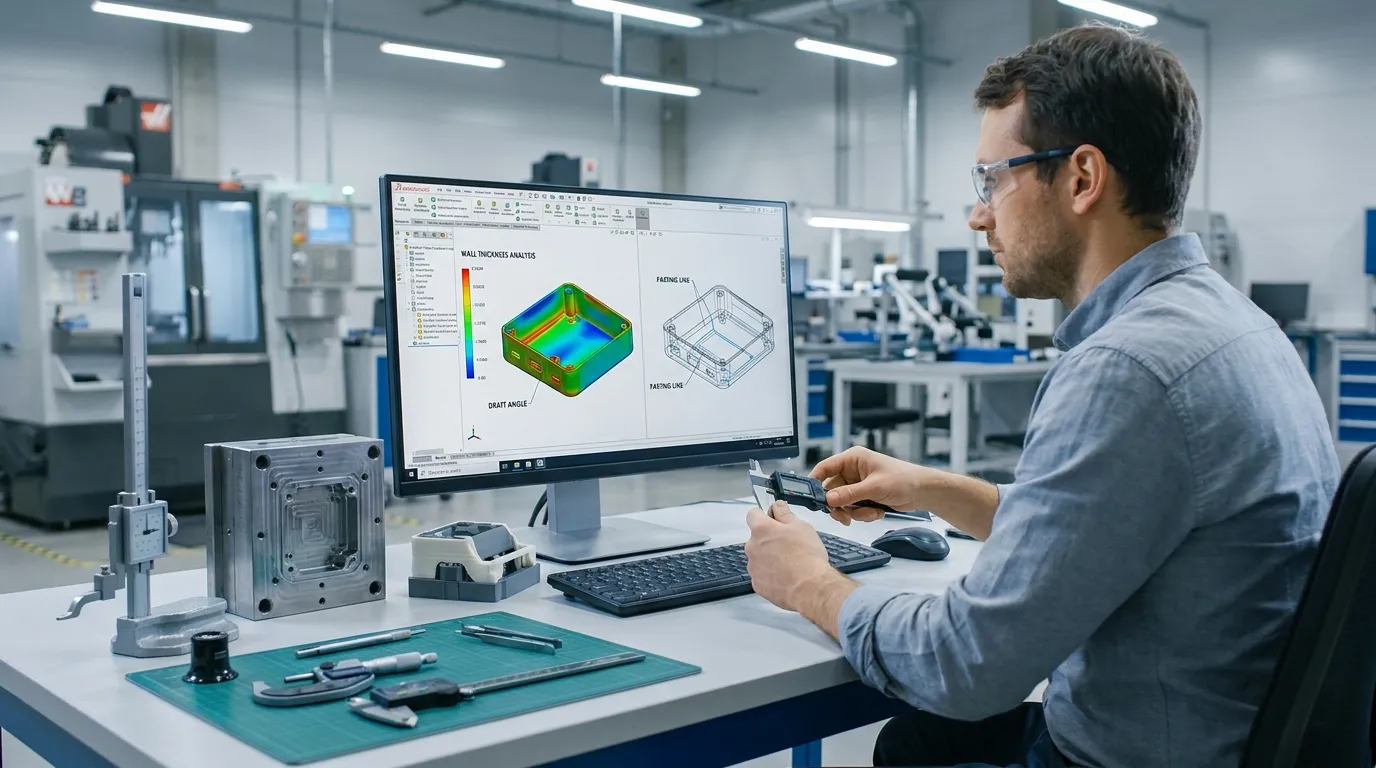
Plastic injection mold design works best when DFM decisions happen before tooling starts. Độ dày của tường, draft, xương sườn, and ejection features directly affect defects, thời gian chu kỳ, độ phức tạp của dụng cụ, and part consistency.
Plastic injection mold design is the process of shaping a part so it can be manufactured reliably inside an injection mold. DFM focuses on reducing production risks before the mold is machined. Theo Tùy chỉnhPartNet, geometry choices directly affect cooling behavior, sự co lại, and defect risk during molding.
A strong DFM review looks beyond appearance. Engineers check whether plastic can flow evenly, cool consistently, and eject cleanly from the mold. Even small changes to wall transitions or rib placement can improve part quality and reduce tooling revisions later.
Many product teams wait too long to review manufacturability. That usually increases cost because mold modifications after steel cutting are slower and more expensive than CAD updates early in development.
- Are wall sections consistent?
- Does every vertical face include draft?
- Are ribs sized correctly?
- Will the part eject without scuffing?
- Are undercuts necessary?
If you need a broader tooling overview, đánh giá điều này Kiến thức cơ bản về thiết kế khuôn ép guide before moving into detailed DFM checks.
What wall thickness works best for injection molded parts?
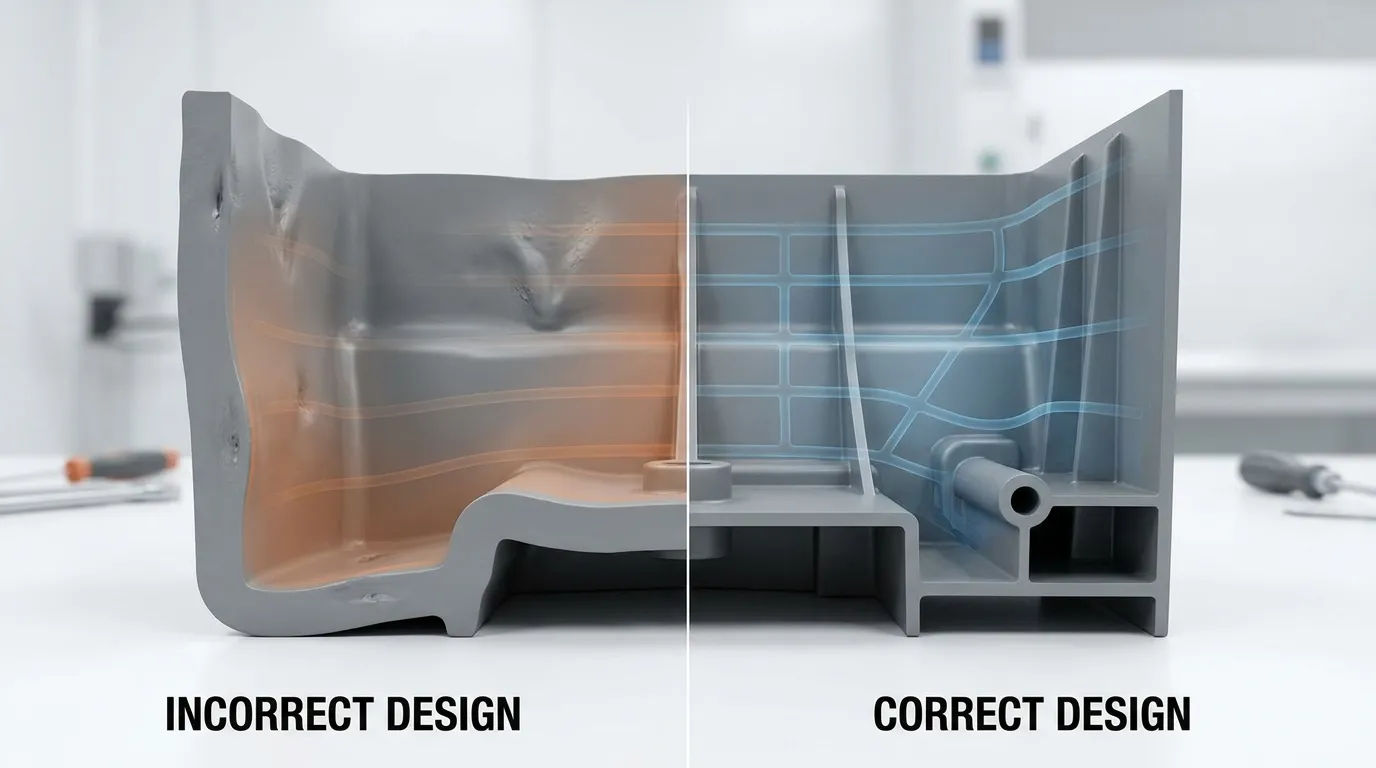
Consistent wall thickness improves plastic flow, cân bằng làm mát, và độ ổn định kích thước. Thick sections often create sink marks and warping, while abrupt thickness changes increase internal stress and molding defects.
Wall consistency matters more than maximum thickness. Plastic shrinks as it cools, and uneven cooling creates distortion. Thick sections hold heat longer than thin sections, which increases the risk of sink marks and warped geometry.
A common mistake is adding extra wall thickness to improve strength. Thick walls are not always the best solution. Trong nhiều trường hợp, properly designed ribs create better stiffness with fewer molding defects.
A handheld electronics housing is a good example. One design used ribs that matched full wall thickness. During molding, the rib area cooled unevenly and created visible sink marks on the outer cosmetic surface. Reducing rib thickness solved the issue without reducing strength.
What causes sink marks in thick wall sections?
Sink marks happen when thicker areas shrink more during cooling. Sườn quá khổ, các sếp, and sudden wall transitions usually create the biggest problems.
| Điều kiện thiết kế | Kết quả có thể xảy ra | Cách tiếp cận tốt hơn |
|---|---|---|
| Phần tường dày | Dấu chìm | Giữ độ dày thành nhất quán |
| Chuyển đổi tường đột ngột | Căng thẳng bên trong | Sử dụng chuyển đổi dần dần |
| Sườn dày đầy đủ | Biến dạng bề mặt | Sử dụng sườn gia cố mỏng hơn |
| Khối lượng góc nặng | Làm mát không đều | Thêm bán kính góc |
Cái này Cân nhắc thiết kế khuôn resource explains how geometry affects manufacturability across different tooling situations.
Why are draft angles critical for clean part ejection?
Draft angles help molded parts release from the tool without dragging or surface damage. Even small draft improvements can reduce ejection force, khuyết tật thẩm mỹ, and mold wear during high-volume production.
Draft creates a slight taper on vertical surfaces so parts can separate from the mold during ejection. Without draft, the plastic drags against the mold wall and increases friction during release.
Zero-draft walls may look acceptable in CAD, but they often create real production problems. Surface scratching, dính, and ejector stress become more common as cycle counts increase. Phòng thí nghiệm nguyên mẫu notes that manufacturable geometry improves production consistency and tooling efficiency.
Textured surfaces need even more draft because texture increases contact area inside the mold. A medical enclosure with textured side walls experienced repeated ejection scratches during production testing. Adding draft solved the issue without changing the product appearance.
- Thêm gió lùa vào tất cả các bức tường thẳng đứng
- Tăng gió lùa trên các bề mặt có kết cấu
- Kiểm tra sườn sâu cẩn thận
- Xem lại vị trí đầu phun sớm
- Tránh các góc nhọn bên trong
For tight-tolerance products, cái này Dung sai đúc chính xác guide explains how geometry affects dimensional accuracy.
How should ribs and bosses be designed for strength without defects?
Ribs improve stiffness without increasing overall wall thickness when they are properly proportioned. Oversized ribs or unsupported bosses commonly create sink marks, cosmetic distortion, and uneven cooling.
Ribs are one of the safest ways to strengthen a plastic part. They improve stiffness without adding excessive material mass. The key is controlling rib dimensions so cooling remains balanced.
Many cosmetic defects come from oversized ribs hidden behind visible surfaces. Engineers often assume thicker ribs mean stronger parts, but oversized reinforcement usually creates more shrinkage problems during cooling.
Hướng dẫn độ dày sườn
A practical rule is keeping rib thickness smaller than the surrounding wall section. Balanced geometry improves cooling and reduces visible surface distortion.
| Đặc tính | Thực hành được đề xuất | Rủi ro nếu bị bỏ qua |
|---|---|---|
| Độ dày sườn | Mỏng hơn tường chính | Dấu chìm |
| Chiều cao sườn | Tỷ lệ khung hình vừa phải | Vấn đề điền |
| Khoảng cách xương sườn | Khoảng cách đều | Co ngót không đồng đều |
| Góc sườn | Thêm bán kính | Tập trung căng thẳng |
Sai lầm gia cố trùm
Bosses often fail because they are unsupported or connected to thick wall sections. A cosmetic packaging cap warped after molding because one side used a heavy reinforced boss design. Redistributing the support ribs balanced cooling and corrected the distortion.
Unsupported bosses can also crack during assembly. Adding gussets or connecting ribs usually improves durability without increasing overall wall thickness.
For complex molded components, cái này Các bộ phận đúc chính xác page shows how controlled geometry supports stable production quality.
Which part features increase mold complexity and tooling cost?
Cắt xén, deep ribs, những góc sắc nhọn, and inaccessible geometry often require more complex tooling. These features increase machining time, maintenance requirements, and mold cost while raising defect risk.
Some design features force the mold to include sliders, lifters, or deep core structures. These mechanisms increase mold complexity and usually extend lead time. Theo Tổng quan về quy trình ép phun, mold geometry directly affects tooling structure and manufacturing difficulty.
Undercuts should only be used when the product function truly requires them. Many cosmetic undercuts add tooling complexity without improving product performance.
An appliance housing is a common example. A late-stage cosmetic undercut required additional side actions inside the mold. That change increased tooling cost and delayed production approval because the mold needed redesign work.
Tính năng vs Bảng độ phức tạp của dụng cụ
| Đặc tính | Rủi ro sản xuất | Tác động chi phí | Thay thế tốt hơn |
|---|---|---|---|
| Cắt xén mỹ phẩm | Các hành động phụ bắt buộc | Cao | Đơn giản hóa hình học |
| Góc nhọn | Tập trung căng thẳng | Trung bình | Thêm bán kính |
| Sườn hẹp sâu | Điền khó khăn | Trung bình | Sườn gia cố ngắn hơn |
| Trùm dày | Dấu chìm | Trung bình | Hỗ trợ Gusset |
| Không có tường gió lùa | Vấn đề đẩy ra | Trung bình | Thêm côn nháp |
Cái này Quy trình thiết kế dụng cụ resource explains how geometry choices affect mold engineering decisions.
How do engineers review a plastic part before tooling approval?

A proper injection molding DFM review checks wall consistency, draft, xương sườn, các cổng, đường chia tay, sự co lại, and ejection before steel cutting begins. Early corrections prevent expensive mold modifications later.
Most engineering teams follow a structured review before releasing tooling for machining. The goal is finding geometry risks before they become manufacturing delays.
A strong DFM process reviews the entire molding cycle, not just the CAD shape. Engineers evaluate how plastic fills the cavity, cools, shrinks, and ejects during production.
Danh sách kiểm tra DFM trước khi sử dụng
| Khu vực danh sách kiểm tra | Những gì kỹ sư đánh giá |
|---|---|
| Độ dày của tường | Tính nhất quán và vùng chuyển tiếp |
| Bản nháp | Khe hở phóng trên tất cả các bức tường thẳng đứng |
| Xương sườn và trùm | Tỷ lệ độ dày và cấu trúc hỗ trợ |
| Phạt góc | Bán kính và nồng độ ứng suất |
| Đường chia tay | Tính khả thi của việc tách khuôn |
| Cổng | Cân bằng dòng chảy và tác động thẩm mỹ |
| Phóng ra | Vị trí ghim và lực nhả |
| Cắt xén | Cần các hành động phụ hoặc bộ nâng |
A product team manufacturing consumer electronics reduced tooling revisions by running this review before steel cutting. The team identified uneven wall transitions and corrected them in CAD instead of modifying hardened tooling later.
Many manufacturers also use mold flow analysis during this stage. Simulation helps identify filling problems, trapped air, and shrinkage risks before production begins.
For broader process planning, cái này Quy trình làm việc DFM guide covers additional mold engineering considerations.
If you need a larger manufacturing overview, a Hướng dẫn khuôn ép hoàn chỉnh can help connect DFM decisions with the full tooling lifecycle.
What are the most common DFM mistakes in plastic part design?
Most molding defects come from a small group of repeat design mistakes. These problems usually appear during cooling, sự đẩy ra, or dimensional inspection after production begins.
One of the most common mistakes is treating CAD appearance as proof of manufacturability. A part can look correct visually while still creating flow imbalance, vết sụt, or difficult ejection conditions inside the mold.
Bảng khắc phục sự cố DFM phổ biến
| Sai lầm thiết kế | Vấn đề sản xuất | Giải pháp tốt hơn |
|---|---|---|
| Không có bản nháp | Dính trong quá trình phóng | Thêm góc nháp |
| Phần tường dày | Vết chìm và cong vênh | Duy trì tính nhất quán của tường |
| Các góc bên trong sắc nét | Tập trung căng thẳng | Thêm bán kính |
| Sườn quá khổ | Biến dạng mỹ phẩm | Giảm độ dày sườn |
| Boss không được hỗ trợ | Nứt trong quá trình lắp ráp | Thêm miếng lót hoặc sườn |
| Cắt xén quá mức | Chi phí dụng cụ cao | Đơn giản hóa hình học |
Cái này đúc chính xác cao overview explains why small geometry adjustments matter for repeatable production quality.
Thực hiện bước tiếp theo đúng đắn
Good plastic injection mold design starts long before the mold is machined. Most production problems can be traced back to early geometry decisions involving wall thickness, draft, xương sườn, or ejection planning. A practical DFM review helps teams catch those risks while changes are still inexpensive.
Before approving tooling, review the part as a manufacturing engineer would. Check cooling behavior, ejection paths, reinforcement geometry, and mold complexity together. Small adjustments during design often prevent major tooling revisions later and help production move faster with fewer defects.
Những câu hỏi thường gặp
DFM là gì trong ép phun?
DFM in injection molding means designing plastic parts so they can be manufactured efficiently and consistently. It helps reduce defects, thay đổi dụng cụ, cycle time issues, and production cost before tooling begins.
What wall thickness is best for injection molding?
Consistent wall thickness usually performs better than thick sections with large transitions. Balanced walls improve cooling, reduce sink marks, and help maintain dimensional stability during molding.
Why is draft angle important in injection molding?
Draft angles help parts release from the mold without sticking or surface damage. Proper draft reduces ejection force and helps maintain surface quality during production.
What causes sink marks in injection molded parts?
Sink marks usually happen when plastic cools unevenly in thick sections or oversized ribs. Reducing local mass and improving wall consistency helps prevent visible surface depressions.
How do undercuts affect mold cost?
Undercuts often require sliders, lifters, or additional tooling mechanisms. These features increase mold complexity, machining time, bảo trì, and production cost.
How do you avoid warping in plastic parts?
Warping is reduced by maintaining uniform wall thickness, balanced cooling, and proper rib placement. Uneven shrinkage is one of the main causes of part distortion.
Chia sẻ:


Được viết bởi Sunshine
Tại Sunshine, Chúng tôi là nhà sản xuất và cung cấp chuyên nghiệp các linh kiện khuôn chính xác, cung cấp một loạt sản phẩm đa dạng cho ứng dụng dập và khuôn ép. Trọng tâm chính của chúng tôi bao gồm khuôn đục lỗ, ghim và ống lót đẩy, và cọc hướng dẫn cùng các bushing. Với gia công CNC tiên tiến, Kiểm soát chất lượng nghiêm ngặt, và năng lực sản xuất mạnh mẽ, chúng tôi đảm bảo độ tin cậy, các bộ phận chính xác cao, cùng với các linh kiện tiêu chuẩn có sẵn trong kho để cung cấp nhanh chóng và hiệu quả toàn cầu.
TIN TỨC
NHẬN DỊCH VỤ
Với các bộ phận chất lượng đáp ứng mọi ngân sách và đội ngũ nhân viên thân thiện được đào tạo để giúp chuyến thăm của bạn trở nên hữu ích và thuận tiện.
