



Precision Mold Parts: Khoan dung, Thép, Kết thúc, và danh sách kiểm tra chất lượng
Precision mold parts must balance tolerance capability, cấp thép, Bề mặt hoàn thiện, and inspection quality to maintain stable injection molding performance. Buyers should compare suppliers using measurable QC processes, material traceability, dimensional inspection methods, and realistic lead-time expectations instead of relying only on low pricing or “high precision” marketing claims.
A mold can look well-machined and still fail during production because of poor tolerance control, incorrect steel selection, or weak inspection procedures. Small dimensional problems often create flash, part sticking, co rút không đồng đều, or early wear. This guide explains how engineers and buyers can compare precision mold parts using practical standards instead of supplier claims alone.
What are precision mold parts and why do they matter in injection molding?
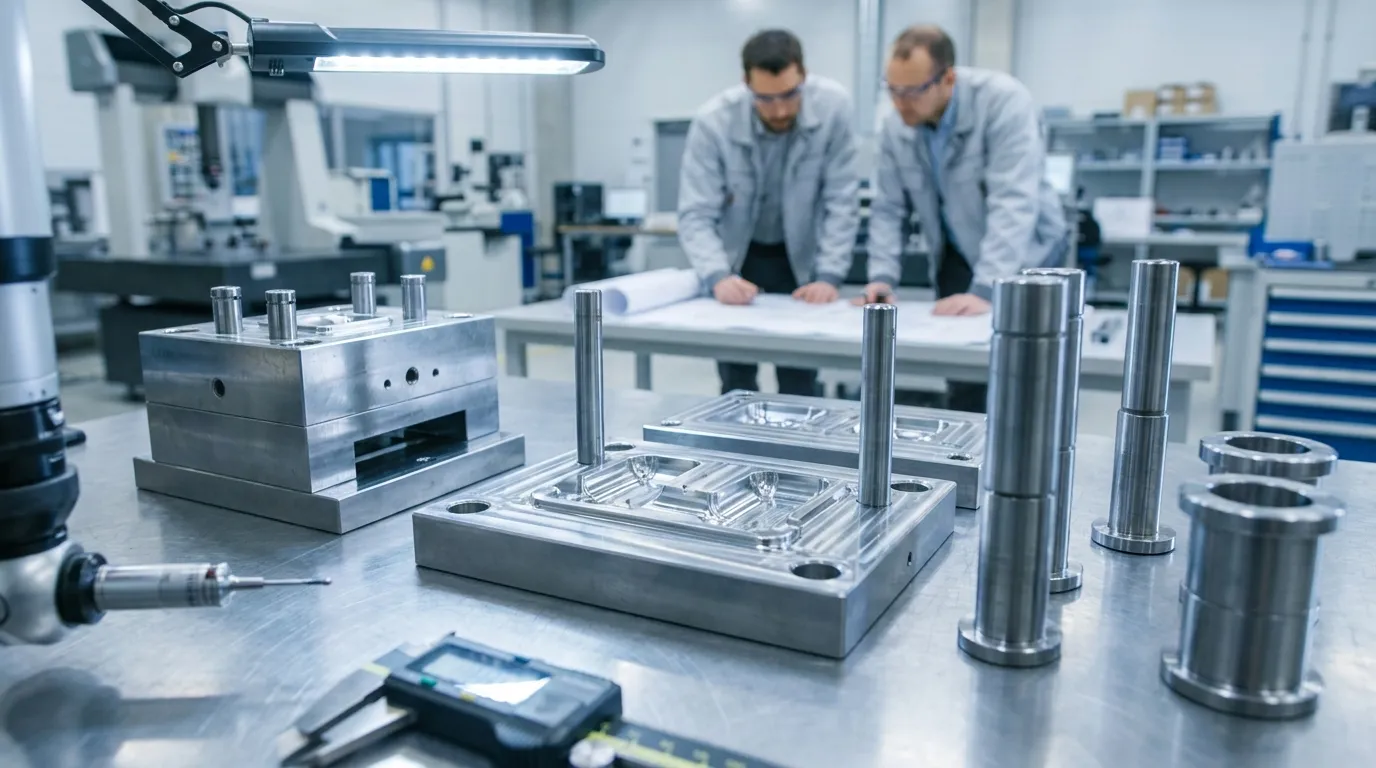
Precision mold parts are high-accuracy mold components such as cores, các lỗ sâu, các thiết bị đẩy, and inserts manufactured to tight tolerances. Their dimensional consistency directly affects molded part accuracy, độ ổn định chu kỳ, khả năng chống mài mòn, and long-term production reliability.
Precision mold parts are the components inside a mold that directly control part geometry, movement, và sự căn chỉnh. These parts include mold inserts, các thanh trượt, chốt đẩy, ống lót dẫn hướng, Màu sắc, và sâu răng. Even small dimensional errors can affect the molded product after thousands of production cycles.
Ví dụ, a cavity insert with slight dimensional drift may create flash on a medical housing or cause uneven shrinkage in a packaging component. That problem usually becomes more expensive after production begins because downtime, làm lại, and scrap costs increase quickly.
Nhiều người mua bắt đầu với một Hướng dẫn thành phần khuôn to understand how mold systems work together before comparing individual precision components.
| Thành phần chính xác | Chức năng chính | Rủi ro nếu dung sai không thành công |
|---|---|---|
| Chèn lõi | Hình dạng hình học bên trong | Kích thước không khớp |
| Chèn khoang | Hình dạng hình dạng bên ngoài | Lỗi chớp nhoáng hoặc thẩm mỹ |
| Chốt đẩy | Loại bỏ phần đúc | Dấu dính hoặc ghim |
| Ống lót dẫn hướng | Duy trì sự liên kết | Mòn khuôn và không ổn định |
| Thanh trượt | Tạo các tính năng phụ | Rò rỉ hoặc biến dạng bộ phận |
So sánh người mua Tổng quan về các bộ phận khuôn nhựa pages should focus less on catalog variety and more on measurable process capability, inspection control, and steel traceability.
What tolerance range is realistic for precision mold parts?
Precision mold parts commonly operate within micron-level tolerances, but tighter specifications increase machining, Kiểm tra, and rejection costs. Not every mold component requires ultra-tight control, so tolerance should match the molding function and production risk.
Many suppliers advertise “high precision” without defining actual tolerance capability. Trong thực tế, required tolerance depends on the component’s role inside the mold. A cavity insert handling cosmetic alignment needs tighter control than a support plate or non-critical mounting feature.
Ultra-tight tolerance is not always the best choice. Some mold components perform reliably with wider tolerances that reduce machining cost and inspection delays. Over-specifying every dimension often increases lead time without improving molding results.
Which mold components require the tightest tolerances?
Critical sealing surfaces, shut-off areas, cavity inserts, and alignment components usually require the highest precision. These areas directly affect molded part quality and mold movement.
Support structures and non-contact surfaces often allow wider tolerances without affecting production stability.
| Loại thành phần | Yêu cầu chính xác điển hình | Tại sao nó lại quan trọng |
|---|---|---|
| Chèn khoang | Rất cao | Kiểm soát kích thước đúc |
| Bề mặt ngắt | Rất cao | Ngăn chặn đèn flash |
| Các thành phần hướng dẫn | Cao | Duy trì sự liên kết |
| Hệ thống phun | Trung bình | Hỗ trợ phát hành mượt mà |
| Tấm hỗ trợ | Thấp hơn | Tác động đúc hạn chế |
A packaging mold project may require tight cavity tolerance control to prevent flash around thin walls, while surrounding support plates can use wider tolerance ranges. One buyer reduced machining cost significantly after relaxing unnecessary tolerances on non-critical support components.
Kỹ sư so sánh Thành phần khuôn chính xác should ask suppliers which dimensions receive full inspection instead of assuming every surface receives the same level of control.
Which steel grade should buyers choose for precision mold parts?
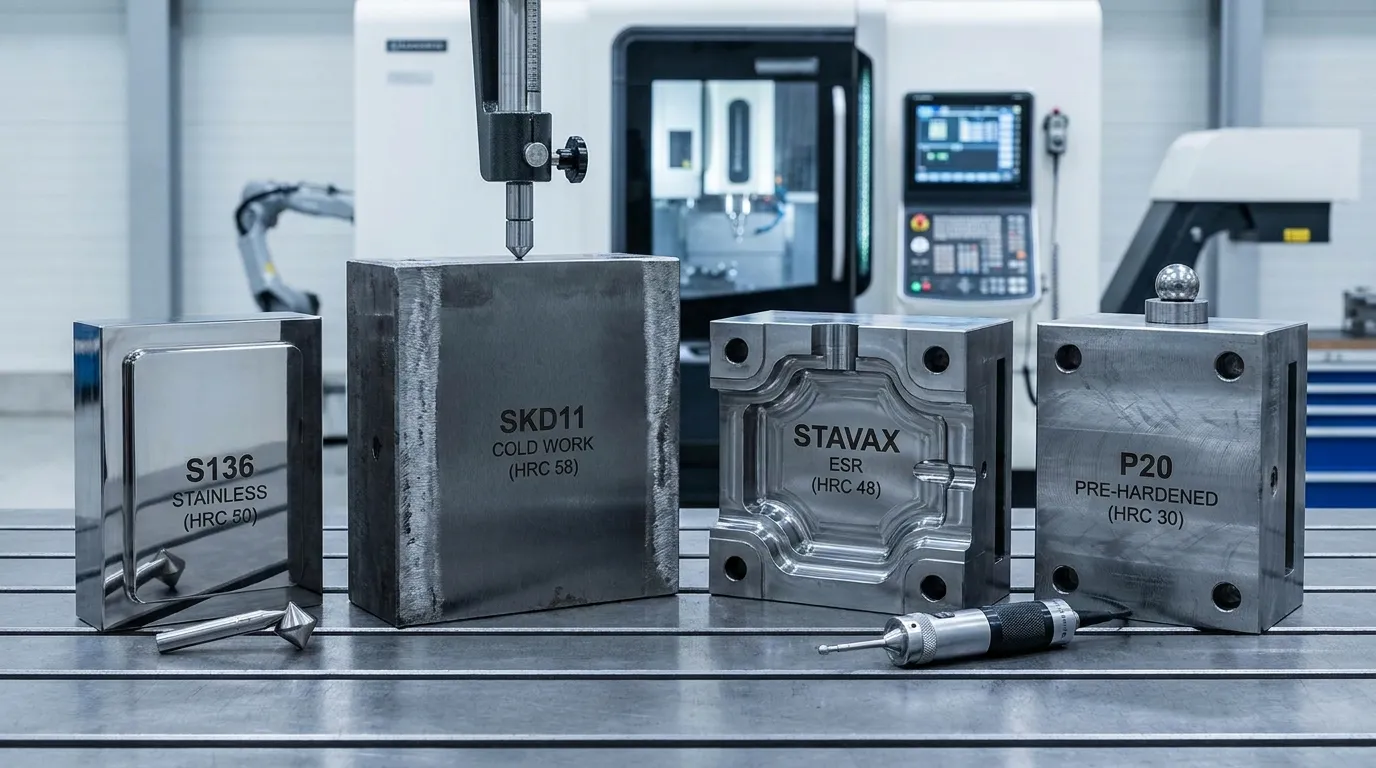
Mold steel selection depends on production volume, loại nhựa, phơi nhiễm ăn mòn, và điều kiện hao mòn. Harder steel is not automatically better because machining difficulty, brittleness, polishability, and maintenance requirements also affect long-term tooling performance.
Steel selection changes mold lifespan, polish quality, khoảng thời gian bảo trì, and repair difficulty. Buyers often compare popular grades like S136, SKD11, STAVAX, and P20, but the best option depends on production conditions rather than brand familiarity alone.
Harder mold steel is not automatically better. Extremely hard steel can increase brittleness, polishing difficulty, and repair complexity in high-maintenance molds. Some high-volume molds actually perform better with balanced hardness and easier maintenance access.
When is stainless mold steel worth the added cost?
Stainless grades such as S136 or STAVAX work well in corrosive environments, medical molding, and humid production conditions. They also support polished cosmetic surfaces more effectively than some general-purpose steels.
A medical mold insert exposed to moisture and aggressive cleaning chemicals may fail early with standard tool steel. Stainless mold steel often prevents corrosion damage and extends maintenance intervals in those environments.
Bảng lựa chọn thép khuôn chính xác
| Lớp thép | Lợi thế chính | Trường hợp sử dụng tốt nhất | Chống mài mòn tương đối | Ghi chú bảo trì |
|---|---|---|---|---|
| P20 | Gia công dễ dàng | Khuôn sản xuất chung | Trung bình | Dễ sửa chữa hơn |
| SKD11 | Chống mài mòn mạnh | Ứng dụng nhựa mài mòn | Cao | Đánh bóng cứng hơn |
| S136 · | Chống ăn mòn | Khuôn y tế và mỹ phẩm | Cao | Tốt cho lớp hoàn thiện được đánh bóng |
| STAVAX | Khả năng đánh bóng cao | Các bộ phận quang học hoặc trong suốt | Cao | Chi phí vật liệu cao hơn |
Nhiều người mua đang nghiên cứu Vật liệu thành phần khuôn focus only on hardness values. Chống mài mòn, phơi nhiễm ăn mòn, polish requirements, and repair access usually matter just as much during long production runs.
How does surface finish affect mold performance and part quality?
Surface finish affects part appearance, release behavior, khả năng chống mài mòn, and cleaning requirements. A mirror finish improves cosmetic clarity for some applications, but many industrial molds perform better with practical finishes that reduce maintenance and machining cost.
Surface finish changes more than appearance. It affects mold release, ma sát, cleaning cycles, resin flow, và hành vi hao mòn. Cosmetic consumer products often require polished cavity surfaces, while industrial parts may perform better with controlled texture or practical machining finishes.
Mirror-polished surfaces are often overused. Many industrial molding applications achieve better long-term performance with practical finishes that reduce maintenance and tooling cost. Highly polished surfaces can increase polishing time and future repair expense without improving the molded part.
| Loại hoàn thiện | Sử dụng phổ biến | Lợi ích chính |
|---|---|---|
| Đánh bóng gương | Các bộ phận quang học hoặc mỹ phẩm | Độ rõ nét hình ảnh cao |
| Đánh bóng mịn | Sản phẩm tiêu dùng | Ngoại hình cân bằng |
| Kết cấu EDM | Linh kiện công nghiệp | Cầm và nhả tốt hơn |
| Hoàn thiện gia công | Lĩnh vực dụng cụ chức năng | Chi phí bảo trì thấp hơn |
A cosmetic electronics housing may require mirror-polished cavity surfaces for visual clarity. A structural industrial part usually benefits more from stable release performance and lower maintenance requirements.
Người mua đánh giá thành phần khuôn ép should match finish quality to actual product requirements instead of automatically choosing the highest polish level.
How are precision mold parts inspected before approval?
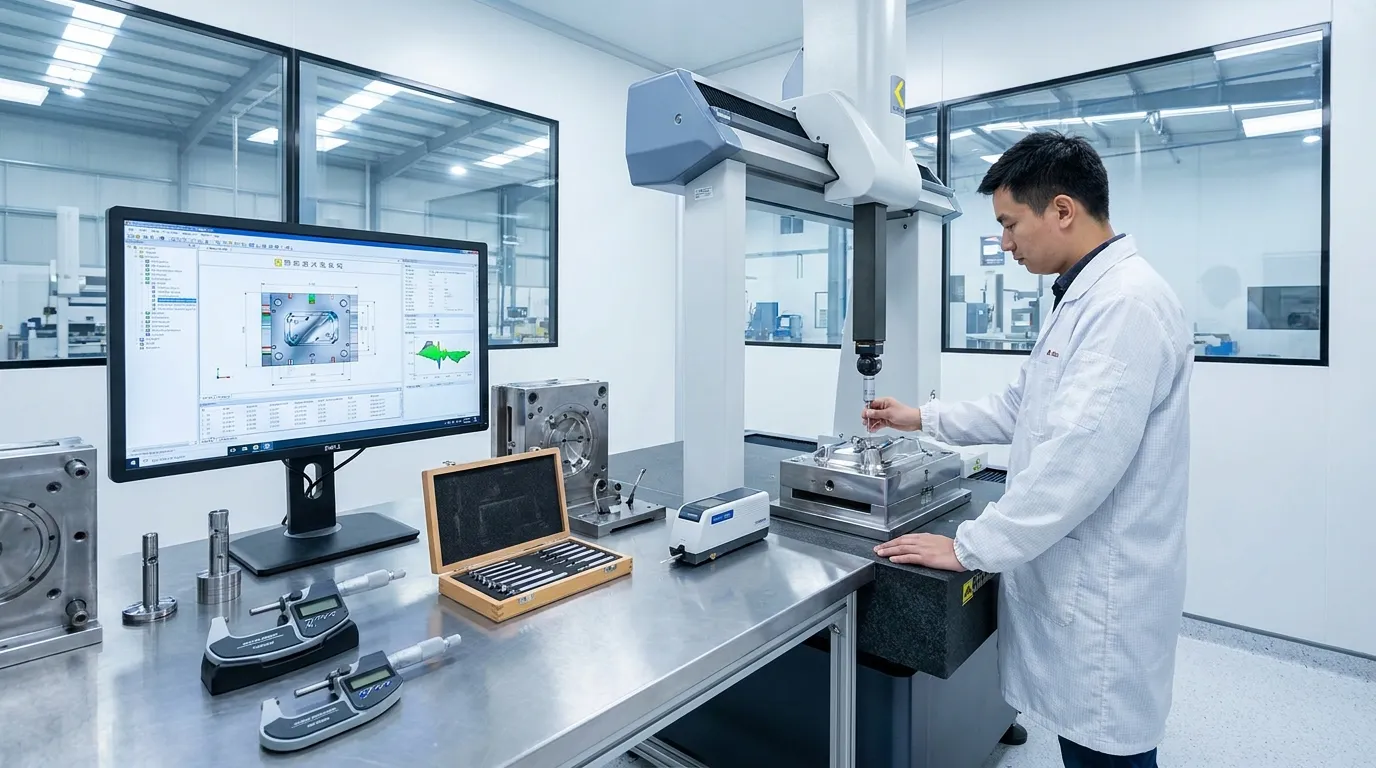
Precision mold part inspection should combine dimensional measurement, kiểm tra độ cứng, surface evaluation, and documented first article approval. Buyers should request measurable inspection data instead of relying only on supplier claims about precision capability.
A reliable inspection process starts before shipment. Suppliers should verify dimensions against engineering drawings, confirm material specifications, inspect surface finish quality, and document all critical measurements.
Many procurement teams reject suppliers because inspection reports lack measurable traceability. If a supplier cannot explain how dimensions were verified, future production consistency becomes difficult to trust.
Which inspection tools matter most?
Coordinate Measuring Machines (CMMs) remain one of the most important inspection tools for complex mold geometry. Micrometers, hardness testers, pin gauges, and surface roughness instruments also support dimensional verification.
| Công cụ kiểm tra | Mục đích chính |
|---|---|
| CMM | Đo kích thước phức tạp |
| Panme kế | Đo lường chính xác bên ngoài |
| Máy đo pin | Xác minh lỗ |
| Máy đo độ cứng | Xác nhận độ cứng thép |
| Máy đo độ nhám bề mặt | Kiểm tra chất lượng hoàn thiện |
A supplier should also provide first article inspection records before approval. This documentation helps buyers compare measured dimensions against the original drawing package.
Danh sách kiểm tra phê duyệt QC phần khuôn
- Xác minh sửa đổi bản vẽ kỹ thuật
- Xác nhận chứng nhận vật liệu
- Xem lại hồ sơ kiểm tra độ cứng
- Kiểm tra thứ nguyên quan trọng bằng báo cáo CMM
- Kiểm tra chất lượng hoàn thiện bề mặt
- Xác nhận bề mặt ngắt và niêm phong
- Xác minh tài liệu truy xuất nguồn gốc
- Xem lại các phương pháp bảo vệ bao bì
- Xác nhận độ chính xác của nhãn lô hàng
- Phê duyệt báo cáo kiểm tra bài viết đầu tiên
International trade documentation also affects approval timing. Thuộc tính Hoa Kỳ. International Trade Administration notes that incomplete compliance records can disrupt import timelines, especially for industrial manufacturing shipments.
Người mua đánh giá Quy trình kiểm tra chính xác should verify how inspection data is stored, reviewed, and linked to each production batch.
What causes delays in precision mold part delivery?
Precision mold part delays often result from incomplete drawings, inspection failures, customs documentation errors, tariff classification problems, and late-stage design revisions. Many delays occur after machining is complete rather than during manufacturing itself.
Machining is only one part of the delivery timeline. Inspection rework, engineering revisions, customs holds, and shipment paperwork often create larger delays than the machining process itself.
One tooling project experienced shipment delays because HS code classification errors triggered customs inspection holds during export processing. The shipment was already complete, but documentation problems delayed delivery for days.
| Nguồn trì hoãn | Kết quả có thể xảy ra | Phương pháp phòng ngừa |
|---|---|---|
| Bản vẽ chưa hoàn chỉnh | Gia công lại | Phê duyệt bản vẽ cuối cùng |
| Kiểm tra không thành công | Sự chậm trễ trong sản xuất | Kiểm tra QC trung gian |
| Lỗi mã HS | Hải quan giữ | Phân loại đã được xác minh |
| Sửa đổi thiết kế | Gia hạn thời gian giao hàng | Quy trình kiểm soát thay đổi |
| Quá tải nhà cung cấp | Trượt lịch trình | Xác minh năng lực |
Thuộc tính Hoa Kỳ. Hải quan và Bảo vệ Biên giới highlights that incorrect customs documentation can increase inspection and clearance delays. Tariff uncertainty also affects sourcing timelines and budgeting decisions in global tooling programs.
How should buyers compare precision mold part suppliers?
Buyers should compare mold suppliers based on measurable inspection capability, documentation quality, steel traceability, process control, and communication responsiveness rather than price alone. Low-cost precision parts can become expensive if dimensional drift causes production downtime.
A low quote does not always mean lower total cost. Poor inspection control, weak communication, or inconsistent machining quality can create expensive production interruptions later.
Procurement teams should compare suppliers using measurable criteria instead of marketing claims. A supplier that documents inspection capability clearly is usually easier to manage during production changes or troubleshooting.
Cờ đỏ trong quá trình đánh giá nhà cung cấp
The biggest warning sign is vague technical communication. If a supplier cannot explain tolerance verification, inspection frequency, or steel sourcing clearly, future QC problems become more likely.
- Truy xuất nguồn gốc vật liệu bị thiếu
- Báo cáo kiểm tra chung
- Thời gian giao hàng không thực tế
- Hỗ trợ kỹ thuật hạn chế
- Kiểm soát sửa đổi kém
Danh sách kiểm tra so sánh người mua
| Khu vực đánh giá | Những gì người mua nên xác minh |
|---|---|
| Khả năng kiểm tra | Truy cập và báo cáo CMM |
| Kiểm soát vật liệu | Hồ sơ truy xuất nguồn gốc thép |
| Giao tiếp | Tốc độ phản hồi kỹ thuật |
| Ổn định quy trình | Phương pháp gia công lặp lại |
| Độ tin cậy của giao hàng | Lập lịch sản xuất thực tế |
| Tài liệu | Báo cáo có kiểm soát sửa đổi |
A buyer once rejected a supplier after discovering the inspection report contained no CMM traceability and no measurement references tied to the engineering drawing. That issue appeared before production began, which prevented larger quality problems later.
Nhóm nghiên cứu Khả năng của nhà cung cấp khuôn mẫu should compare process transparency as carefully as pricing.
Danh sách kiểm tra QC các bộ phận khuôn chính xác trước khi phê duyệt cuối cùng
Before approving shipment, buyers should confirm that every critical dimension matches the latest engineering drawing revision. Chứng nhận vật liệu, hardness testing, and traceability records should also align with purchase specifications.
Danh sách kiểm tra phê duyệt cuối cùng
- Xác nhận sửa đổi bản vẽ đã được phê duyệt
- Khớp loại thép với đơn đặt hàng
- Xác minh các giá trị kiểm tra độ cứng
- Xem lại báo cáo kiểm tra CMM
- Kiểm tra các bề mặt ngắt quan trọng
- Kiểm tra tính nhất quán của bề mặt hoàn thiện
- Xác nhận khoang và căn chỉnh lõi
- Xác minh bảo vệ bao bì
- Xác nhận nhãn và chứng từ lô hàng
- Lưu trữ hồ sơ kiểm tra để bảo trì trong tương lai
Nhiều nhà sản xuất cũng duy trì rộng hơn Hướng dẫn khuôn ép nhựa internally to standardize sourcing, tooling approval, and long-term maintenance procedures across multiple projects.
Thực hiện bước tiếp theo đúng đắn
Choosing precision mold parts is less about finding the cheapest supplier and more about reducing long-term production risk. Khả năng chịu đựng, lựa chọn thép, surface finish quality, and inspection discipline all affect mold stability after production begins.
Before approving a supplier, review inspection documentation carefully, compare material traceability, and verify how dimensional control is managed during machining. A supplier with clear QC procedures and realistic lead times usually delivers more stable production performance than one focused only on aggressive pricing.
Những câu hỏi thường gặp
What are precision mold parts?
Precision mold parts are high-accuracy mold components manufactured to tight dimensional tolerances for injection molding systems. Common examples include mold cores, các lỗ sâu, chèn, chốt đẩy, các thanh trượt, and bushings that directly affect molded part quality and production stability.
What tolerance can precision mold parts achieve?
Precision mold parts can achieve micron-level tolerances depending on geometry, Vật chất, and machining method. Tighter tolerances increase manufacturing cost, inspection complexity, and rejection risk, so specifications should match actual molding requirements.
Which steel is best for precision mold parts?
The best mold steel depends on wear conditions, loại nhựa, phơi nhiễm ăn mòn, và sản lượng sản xuất. Stainless grades like S136 improve corrosion resistance, while hardened tool steels such as SKD11 provide strong wear resistance for demanding applications.
How are precision mold parts inspected?
Precision mold parts are typically inspected using CMM systems, micromet, hardness testing, surface finish measurement, and dimensional comparison against engineering drawings. Buyers should request inspection reports and first article documentation before approval.
What causes delays in mold component shipments?
Mold component shipments are commonly delayed by incomplete customs documentation, tariff classification errors, failed inspections, late engineering revisions, and supplier scheduling bottlenecks. Inspection rework can also extend lead times significantly.
How long do precision mold parts take to manufacture?
Precision mold part lead times vary by complexity, tolerance level, cấp thép, và yêu cầu kiểm tra. Standard components may ship within days, while custom high-precision parts can require several weeks including inspection and validation.
Chia sẻ:


Được viết bởi Sunshine
Tại Sunshine, Chúng tôi là nhà sản xuất và cung cấp chuyên nghiệp các linh kiện khuôn chính xác, cung cấp một loạt sản phẩm đa dạng cho ứng dụng dập và khuôn ép. Trọng tâm chính của chúng tôi bao gồm khuôn đục lỗ, ghim và ống lót đẩy, và cọc hướng dẫn cùng các bushing. Với gia công CNC tiên tiến, Kiểm soát chất lượng nghiêm ngặt, và năng lực sản xuất mạnh mẽ, chúng tôi đảm bảo độ tin cậy, các bộ phận chính xác cao, cùng với các linh kiện tiêu chuẩn có sẵn trong kho để cung cấp nhanh chóng và hiệu quả toàn cầu.
TIN TỨC
NHẬN DỊCH VỤ
Với các bộ phận chất lượng đáp ứng mọi ngân sách và đội ngũ nhân viên thân thiện được đào tạo để giúp chuyến thăm của bạn trở nên hữu ích và thuận tiện.
