



Phụ tùng tiêu chuẩn khuôn: Các loại, Kích thước, và Khi nào tùy chỉnh
Mold standard parts are pre-sized mold components used in injection molds and tooling systems to reduce lead time, đơn giản hóa bảo trì, and lower replacement costs. Standard parts work well for most general-purpose molds, but custom mold components become necessary when projects require tighter tolerances, unusual geometry, higher wear resistance, or specialized materials. Buyers should compare lifecycle cost, replacement speed, and production risk before choosing between stocked and custom-made parts.
Choosing between standard and custom mold components affects more than purchase cost. It changes maintenance planning, downtime risk, replacement speed, and even shipping timelines. Many tooling projects work perfectly with stocked components, but high-cycle molds and tight-tolerance applications often need something more specific. This guide explains where standard parts make sense, where customization pays off, and how to avoid expensive sourcing mistakes.
What are mold standard parts?
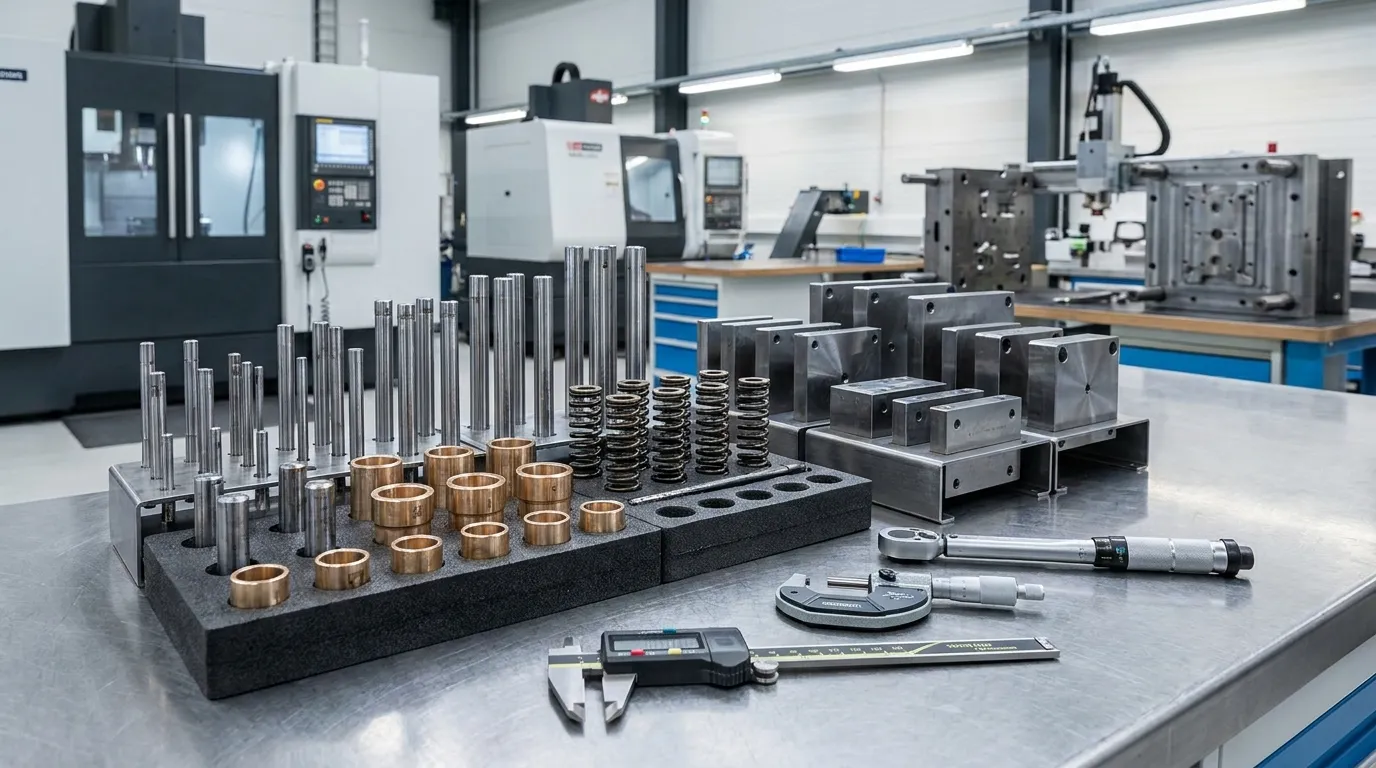
Mold standard parts are pre-engineered mold components produced in fixed sizes and tolerances for repeat use across injection molds and tooling systems. They reduce lead time, simplify replacement, and lower machining costs when catalog specifications meet application requirements.
These components are manufactured according to common dimensional standards, which allows mold makers to source replacements quickly instead of machining every part from scratch. Standardization also improves interchangeability across different mold programs.
Common examples include ejector pins, các cột chỉ dẫn, các vòng đệm, các tấm khuôn, tay áo, and springs. Many suppliers keep these parts in stock, which helps reduce production delays during mold assembly or maintenance.
Một cái nhìn chi tiết về cấu trúc khuôn rộng hơn có sẵn trong này Hướng dẫn thành phần khuôn hoàn chỉnh.
| Loại phần tiêu chuẩn | Chức năng chính | Lợi ích chung |
|---|---|---|
| Chốt đẩy | Đẩy các bộ phận đúc ra ngoài | Thay thế dễ dàng |
| Bài hướng dẫn | Căn chỉnh các nửa khuôn | Định vị nhất quán |
| Ống lót | Giảm ma sát | Tuổi thọ lâu hơn |
| Lò xo | Hỗ trợ chuyển động | Bảo trì nhanh hơn |
| Tấm khuôn | Hỗ trợ cấu trúc | Kích thước tiêu chuẩn |
Many manufacturers rely on standardization because it shortens procurement cycles and simplifies servicing. Theo Các bộ phận tiêu chuẩn khuôn STRACK, standardized systems also improve compatibility across tooling setups.
Bạn cũng có thể khám phá các thành phần khuôn nhựa used across injection mold systems.
Which mold components are usually standardized?
Most mold shops standardize ejector pins, các cột chỉ dẫn, các vòng đệm, Suối nước, and mold plates because these components benefit from interchangeable sizing, easier replacement, and shorter procurement cycles compared to fully custom-machined parts.
Standardization works best for components that perform repeatable mechanical functions. These parts usually follow established dimensional ranges, which allows suppliers to maintain inventory for fast shipment.
| Thành phần | Tại sao nó được tiêu chuẩn hóa | Lợi thế điển hình |
|---|---|---|
| Chốt đẩy | Tần suất thay thế cao | Bảo trì nhanh chóng |
| Ống lót dẫn hướng | Vai trò căn chỉnh cố định | Khả năng hoán đổi cho nhau tốt hơn |
| Trả lại ghim | Hình học lặp lại | Chi phí gia công thấp hơn |
| Lò xo | Phạm vi tải có thể dự đoán | Tìm nguồn cung ứng dễ dàng |
| Cơ sở khuôn | Bố cục cấu trúc phổ biến | Lắp ráp khuôn nhanh hơn |
Some mold shops also standardize cooling fittings, các trụ đỡ, and wear plates to simplify spare-part inventory across multiple production lines.
This approach becomes especially useful in high-volume manufacturing environments. An automotive supplier running several similar molds can keep one shared stock of replacement ejector pins instead of maintaining custom inventory for every tool.
For a broader breakdown of injection mold structures, Hướng dẫn thành phần khuôn ép của Rapiddirect explains how these systems work together inside production molds.
If you need tighter specifications or specialty machining, những thứ này Các thành phần khuôn tiêu chuẩn show where precision manufacturing becomes important.
What standard sizes are commonly available?
Standard mold parts are available in a wide range of catalog sizes, but they still follow fixed dimensional systems. Buyers need to confirm diameter, chiều dài, tolerance class, and regional compatibility before ordering replacements.
Chốt đẩy, Ví dụ, are commonly available in millimeter increments with standardized head dimensions. Guide posts and bushings usually follow established outer diameter and fitment ranges to maintain compatibility between mold halves.
Các lớp dung sai ảnh hưởng đến khả năng hoán đổi cho nhau như thế nào
Tolerance class matters as much as physical size. Two guide bushings with the same diameter may still perform differently if clearance tolerances vary between suppliers or regions.
Before ordering standard parts, buyers should verify:
- Phạm vi đường kính
- Tăng độ dài
- Độ cứng bề mặt
- Xử lý nhiệt
- Dung sai phù hợp
- Hệ thống tiêu chuẩn khu vực
A common mistake is assuming all catalog components are fully interchangeable. Điều đó không phải lúc nào cũng đúng. Some suppliers use proprietary sizing variations, especially for older tooling systems.
Medical and electronics molds often require tighter dimensional control than standard stock tolerances allow. In those situations, standard sizing may still work, but the finishing process usually needs additional machining or inspection.
If your tooling program depends on close alignment tolerances, những thứ này Dung sai khuôn chính xác explain where tighter specifications become necessary.
When are standard mold parts the better choice?
Standard mold parts are usually the better choice when production speed, replacement availability, and predictable maintenance matter more than ultra-specific geometry or extreme tolerance requirements. They reduce downtime and simplify sourcing across multiple mold programs.
Most general-purpose molds perform well with stocked components. Standardization lowers machining cost, shortens lead time, and makes future replacements easier to manage.
A supplier producing consumer packaging molds, Ví dụ, may prioritize quick maintenance over custom engineering. Trong tình huống đó, standardized ejector systems often provide the best balance between cost and reliability.
| Nếu ưu tiên của bạn là.... | Các bộ phận tiêu chuẩn thường hoạt động tốt nhất |
|---|---|
| Thay thế nhanh chóng | Có |
| Chi phí trả trước thấp hơn | Có |
| Hàng tồn kho dự phòng dùng chung | Có |
| Khuôn đa năng | Có |
| Thời gian sản xuất ngắn | Có |
Standard parts are not automatically the cheaper choice long-term. In high-cycle molds, repeated replacement downtime can cost more than a properly engineered custom component.
Vẫn vậy, many buyers over-specify custom machining when stocked parts already meet production requirements. If the mold does not require extreme wear resistance or complex geometry, standardization usually keeps operations simpler.
Các nhóm quản lý bảo trì liên tục thường dựa vào bộ phận khuôn thay thế to reduce downtime and avoid long machining queues.
When should you customize mold components instead?
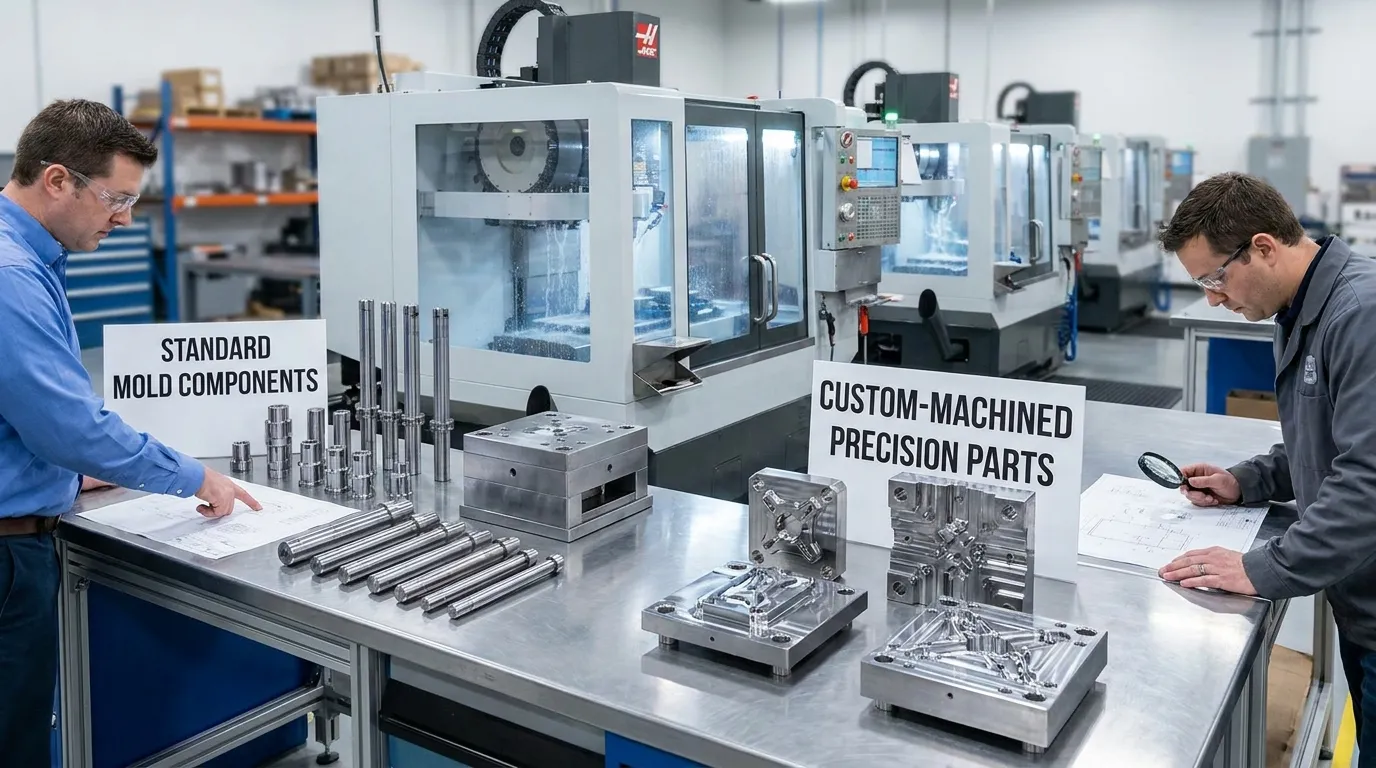
Custom mold components become necessary when standard catalog parts cannot meet tolerance, khả năng chống mài mòn, hình học, or cycle-life requirements. High-volume molds and complex part geometries often justify custom machining despite higher upfront costs.
Standard parts work well in many molds, but they have limits. Once a tooling project reaches extreme production volumes or tighter dimensional requirements, customization often becomes the safer option.
Khuôn chu kỳ cao
High-cycle molds experience constant wear, ma sát, and repeated impact. Standard components may wear out too quickly under these conditions.
A high-volume automotive mold producing millions of cycles each year may need hardened custom bushings or specialty coatings to reduce maintenance intervals. Although the initial cost is higher, the mold spends less time offline for repairs.
Ứng dụng không gian chật hẹp
Some mold layouts simply cannot accommodate catalog dimensions. Electronics housings and compact medical parts often require non-standard geometry to fit within limited tooling space.
One medical mold supplier switched from standard bushings to custom-machined alignment components after tolerance variation caused positioning issues during assembly. The change increased upfront tooling cost but reduced rejected parts and maintenance adjustments.
| Kích hoạt tùy chỉnh | Tại sao các bộ phận tiêu chuẩn lại thiếu hụt |
|---|---|
| Dung sai chặt chẽ | Chuyển động hoặc thay đổi quá mức |
| Môi trường mài mòn cao | Tuổi thọ ngắn hơn |
| Hạn chế về không gian | Kích thước danh mục cố định |
| Vật liệu đặc biệt | Hạn chế thép tiêu chuẩn |
| Hình học độc đáo | Vấn đề tương thích |
Fast delivery claims matter less if suppliers cannot maintain replacement inventory. Reliable stocking is often more valuable than saving a few days on initial machining.
For projects requiring specialty machining, những thứ này Các thành phần chính xác tùy chỉnh show where custom manufacturing supports tighter production requirements.
How do lead time and customs delays affect mold part decisions?
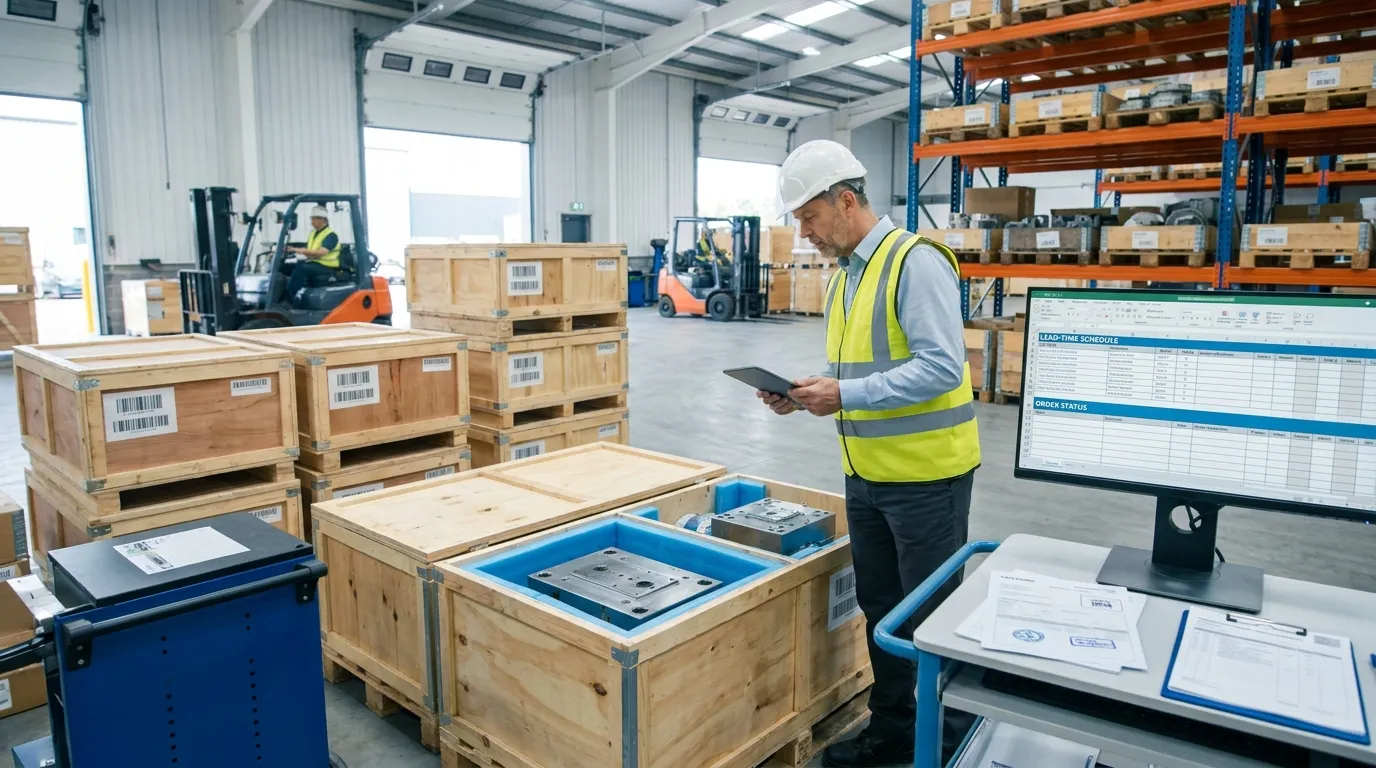
Standard parts usually shorten procurement timelines because suppliers maintain inventory, but imported mold components can still face customs or logistics delays. Critical molds often require backup sourcing or local stocking strategies to reduce production risk.
Lead time is one of the biggest reasons manufacturers choose standard mold parts. A stocked ejector pin may ship in days, while a custom-machined replacement can take several weeks.
That difference becomes important during unexpected downtime. If a production line stops because of a failed guide bushing, waiting four weeks for machining and shipping can cost far more than the part itself.
Cách người mua giảm rủi ro lô hàng
- Giữ hàng tồn kho dự phòng quan trọng tại địa phương
- Phê duyệt trước nhà cung cấp thứ cấp
- Xác minh chứng từ nhập khẩu sớm
- Dự trữ các thành phần thay thế có độ mài mòn cao
- Tránh phụ thuộc vào một nguồn
Customs delays also create problems for imported tooling components. Theo Báo cáo chậm trễ hải quan của NG Terminal, incomplete documentation and compliance checks continue to slow industrial shipments.
One electronics mold supplier experienced a production delay after imported replacement components were held during customs review because shipment documentation was incomplete. The issue forced temporary production downtime while replacement inventory was sourced locally.
Lead-time planning matters during initial mold manufacturing too. Tổng quan về thời gian thực hiện ép phun của Evok Poly shows how sourcing delays can affect tooling schedules across multiple production stages.
Các nhà sản xuất quản lý bảo trì định kỳ thường giữ Các thành phần khuôn dự trữ available locally to reduce replacement delays.
What is the real cost difference between standard and custom parts?
Custom mold parts cost more upfront, but they can reduce wear, bảo trì, and replacement frequency in demanding applications. Standard parts usually win on short-term procurement cost, while custom components may lower long-term operational risk.
Upfront price only tells part of the story. Buyers also need to compare replacement frequency, downtime risk, inventory planning, and service life.
A low-cost standard component may require frequent replacement in high-cycle production. Theo thời gian, repeated downtime and maintenance labor can exceed the cost of a better-engineered custom part.
| Yếu tố chi phí | Bộ phận tiêu chuẩn | Bộ phận tùy chỉnh |
|---|---|---|
| Chi phí gia công ban đầu | Thấp hơn | Cao hơn |
| Tốc độ thay thế | Nhanh hơn | Chậm hơn |
| Hàng tồn kho dự phòng | Dễ dàng hơn | Chuyên biệt hơn |
| Chống mài mòn | Trung bình | Ứng dụng cụ thể |
| Rủi ro thời gian ngừng hoạt động | Sử dụng cực cao hơn | Thấp hơn trong môi trường khắt khe |
Consider a mold running 24-hour automotive production. If a standard wear component fails every six months, each shutdown may involve labor, lost production time, and emergency sourcing. A hardened custom component costing twice as much may still reduce annual operating cost if it lasts significantly longer.
Custom machining is often unnecessary for general-purpose molds. Vẫn vậy, in high-volume tooling, the cheaper component is not always the cheaper decision.
Các công ty so sánh kế hoạch bảo trì dài hạn thường đánh giá Sản xuất bộ phận khuôn tùy chỉnh alongside replacement frequency and production downtime.
How should buyers decide between standard and custom mold parts?
The safest selection process starts with function, sự khoan dung, and replacement risk rather than price alone. Standard parts fit most general-purpose molds, while high-cycle or high-precision tooling often justifies custom engineering.
The best decision usually comes from balancing production goals with maintenance realities. Buyers should focus on how the mold will actually perform over time, not just the initial purchase price.
| Câu hỏi | Nếu có | Nếu không |
|---|---|---|
| Is the mold high-cycle? | Xem xét các bộ phận hao mòn tùy chỉnh | Các bộ phận tiêu chuẩn có thể hoạt động |
| Are tolerances extremely tight? | Sử dụng gia công tùy chỉnh chính xác | Kích thước tiêu chuẩn thường là đủ |
| Is fast replacement critical? | Ưu tiên các thành phần dự trữ | Thời gian giao hàng lâu hơn có thể chấp nhận được |
| Is downtime expensive? | Ưu tiên độ bền | Các tùy chọn chi phí thấp hơn có thể phù hợp |
| Are replacement parts easy to source locally? | Hệ thống tiêu chuẩn hoạt động tốt | Có thể cần nguồn dự phòng |
A buyer managing several consumer packaging molds may prioritize fast maintenance and shared spare inventory. Trong tình huống đó, standardized systems usually make operations easier.
A medical tooling supplier dealing with tight alignment tolerances may reach the opposite conclusion. The higher upfront machining cost becomes easier to justify when production quality depends on precision stability.
If you need a broader overview of mold engineering decisions, cái này Hướng dẫn khuôn ép nhựa explains how component selection fits into larger tooling systems.
Cách chọn tùy chọn phù hợp
Most molds do not need fully custom components. Standardized parts handle many production environments efficiently, especially when maintenance speed and inventory simplicity matter most.
The decision changes when molds operate under heavy wear, dung sai chặt chẽ, or costly downtime conditions. Trong những trường hợp đó, custom engineering can reduce long-term operating risk even if the initial cost is higher.
Before choosing mold standard parts, review your production volume, replacement timeline, sourcing flexibility, and tolerance requirements together. A practical selection process usually prevents more problems than chasing the lowest upfront price.
Những câu hỏi thường gặp
What are standard mold parts?
Standard mold parts are pre-manufactured mold components produced in fixed sizes and tolerances for broad compatibility across tooling systems. They reduce machining time, simplify replacement, and improve sourcing speed for mold manufacturers.
Sự khác biệt giữa các bộ phận khuôn tiêu chuẩn và tùy chỉnh là gì?
Standard mold parts follow catalog sizes and specifications, while custom parts are machined for unique geometry, sự khoan dung, or performance requirements. Customization is usually chosen when standard components cannot meet production demands.
Are standard mold components interchangeable?
Many standard mold components are interchangeable when suppliers follow the same dimensional standards and tolerance classes. Buyers should still verify compatibility because regional standards and manufacturer specifications may vary.
Which mold parts wear out the fastest?
Chốt đẩy, ống lót dẫn hướng, Suối nước, and sliding components often wear faster because they experience repeated movement and friction during production cycles. Material quality and lubrication strongly affect service life.
How long do mold component replacements usually take?
Replacement time depends on inventory availability, machining complexity, and shipping conditions. Standard stocked parts can ship within days, while custom-machined components may require weeks of production and validation.
What causes customs delays for mold parts?
Customs delays usually happen because of incomplete documentation, origin verification issues, inspection holds, or changing import compliance requirements. Buyers importing critical mold parts often maintain backup inventory to reduce production risk.
Chia sẻ:


Được viết bởi Sunshine
Tại Sunshine, Chúng tôi là nhà sản xuất và cung cấp chuyên nghiệp các linh kiện khuôn chính xác, cung cấp một loạt sản phẩm đa dạng cho ứng dụng dập và khuôn ép. Trọng tâm chính của chúng tôi bao gồm khuôn đục lỗ, ghim và ống lót đẩy, và cọc hướng dẫn cùng các bushing. Với gia công CNC tiên tiến, Kiểm soát chất lượng nghiêm ngặt, và năng lực sản xuất mạnh mẽ, chúng tôi đảm bảo độ tin cậy, các bộ phận chính xác cao, cùng với các linh kiện tiêu chuẩn có sẵn trong kho để cung cấp nhanh chóng và hiệu quả toàn cầu.
TIN TỨC
NHẬN DỊCH VỤ
Với các bộ phận chất lượng đáp ứng mọi ngân sách và đội ngũ nhân viên thân thiện được đào tạo để giúp chuyến thăm của bạn trở nên hữu ích và thuận tiện.
