



Ép phun ô tô: Yêu cầu dụng cụ cho các chi tiết nhựa bền
Automotive injection molding requires tooling that can maintain dimensional stability, độ đặc thẩm mỹ, and repeatable part quality through long production runs. Automotive molds face thermal cycling, vibration-related stress, vật liệu mài mòn, and tight tolerance requirements. Dụng cụ thép cứng, balanced cooling channels, proper venting, and preventive maintenance help manufacturers produce durable automotive plastic parts with stable surface finishes and longer mold life.
Automotive suppliers cannot treat vehicle parts like standard consumer plastics. A dashboard panel, grille, or under-hood housing may go through years of heat, rung động, UV exposure, và ứng suất cơ học. Tooling decisions directly affect whether those parts stay dimensionally stable and visually consistent after hundreds of thousands of cycles.
What makes automotive injection molding different from standard plastic molding?
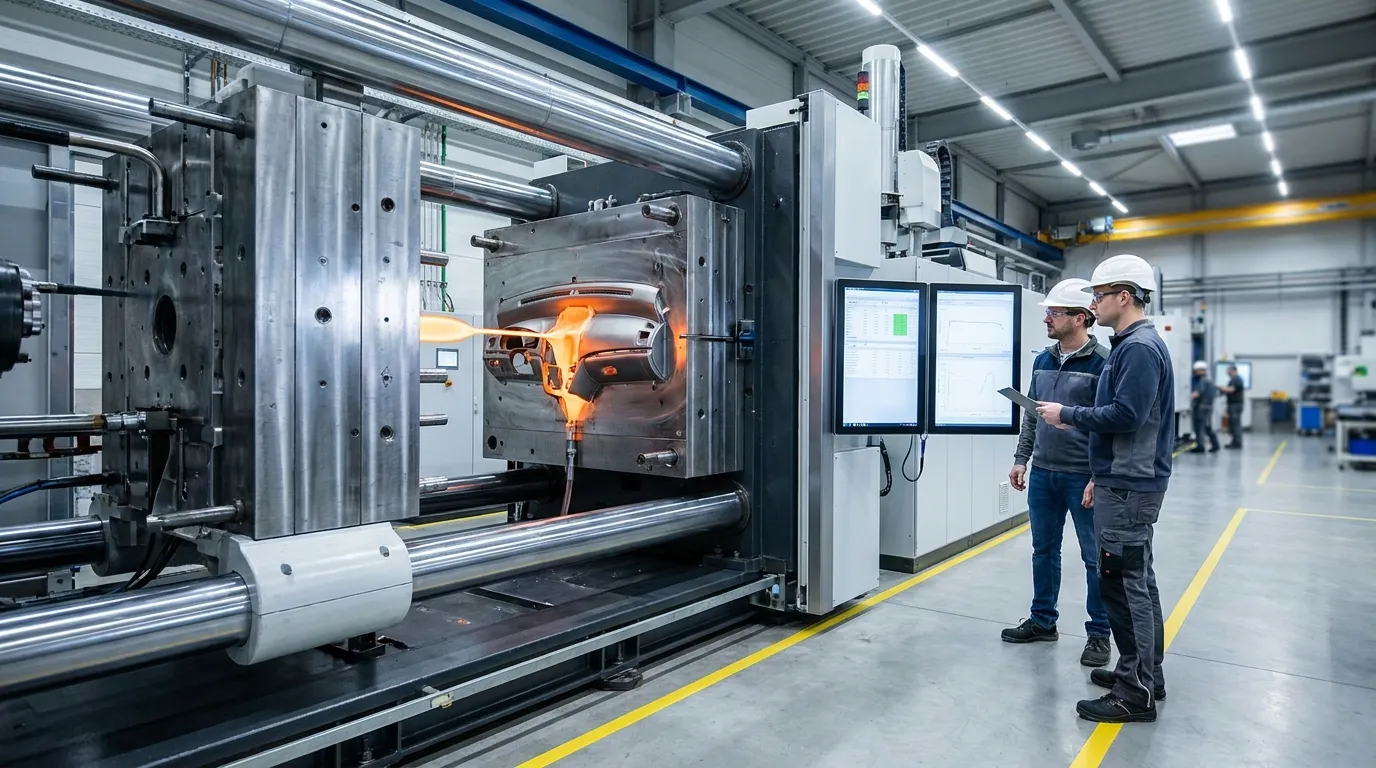
Automotive injection molding requires stronger tooling because vehicle parts must survive heat, rung động, UV exposure, and long production runs without losing dimensional accuracy or cosmetic quality. Standard consumer-product molds usually face lower stress and shorter production demands.
Automotive parts often stay in service for years under changing temperatures and constant vibration. Interior trim pieces must fit tightly without rattling. Exterior components need stable surface finishes even after long UV exposure. Under-hood parts may experience repeated thermal cycling that pushes both the resin and the mold harder than standard commercial applications.
Production volume also changes the tooling strategy. Automotive programs commonly run for hundreds of thousands or even millions of cycles. Softer tooling materials may wear too quickly under those conditions, especially when using glass-filled engineering plastics.
| Đúc nhựa tiêu chuẩn | Ép phun ô tô |
|---|---|
| Khối lượng sản xuất thấp hơn | Chạy sản xuất khối lượng lớn |
| Tiêu chuẩn mỹ phẩm cơ bản | Tính nhất quán của bề mặt hoàn thiện nghiêm ngặt |
| Hạn chế tiếp xúc với nhiệt | Chu kỳ nhiệt lặp đi lặp lại |
| Nhu cầu chiều thấp hơn | Dung sai lắp ráp chặt chẽ |
| Tuổi thọ sản phẩm ngắn hơn | Kỳ vọng về độ bền lâu dài |
This is why many automotive suppliers invest heavily in hardened tooling, kiểm soát quy trình, and preventive maintenance. Theo Intertek, automotive plastic components often require extensive validation and testing to maintain quality standards across production.
If you need a broader overview of mold construction, Các Nguyên tắc cơ bản về thiết kế khuôn mẫu page explains the core structure behind injection mold systems.
Which automotive parts place the highest demands on injection molds?
Automotive parts exposed to heat, rung động, UV light, or cosmetic inspection place the greatest demands on injection molds. Bảng điều khiển, Bếp nướng, vỏ đèn, and under-hood components require stable tooling that can maintain tight tolerances across long production runs.
Not every automotive component stresses a mold equally. Large cosmetic panels often create the biggest challenges because they combine appearance requirements with dimensional accuracy. Even a small amount of warpage can create fitment problems during assembly.
Lamp housings are another demanding application. Poor cavity polishing or inconsistent cooling can create gloss variation that becomes visible immediately under light reflection. Exterior grilles and trim pieces also need stable surface texture retention throughout the mold lifecycle.
| Phụ tùng ô tô | Thử thách công cụ chính |
|---|---|
| Bảng điều khiển | Kiểm soát cong vênh |
| Vỏ đèn | Độ bóng nhất quán |
| Lưới tản nhiệt bên ngoài | Chất lượng bề mặt liên quan đến tia cực tím |
| Vỏ dưới mui xe | Khả năng chịu nhiệt |
| Tấm trang trí nội thất | Vừa vặn kích thước chặt chẽ |
| Các thành phần HVAC | Độ lặp lại trong thời gian dài |
A dashboard molding project is a good example. Uneven cooling channels can create shrinkage differences across the part surface. The result may look flat at first, then distort slightly after installation. That small dimensional shift often causes alignment issues during vehicle assembly.
Manufacturers working across different industries often apply similar precision principles. Thuộc tính Ứng dụng khuôn ép resource shows how tooling requirements change between product categories.
Why do mold steel selection and hardness matter in automotive production?
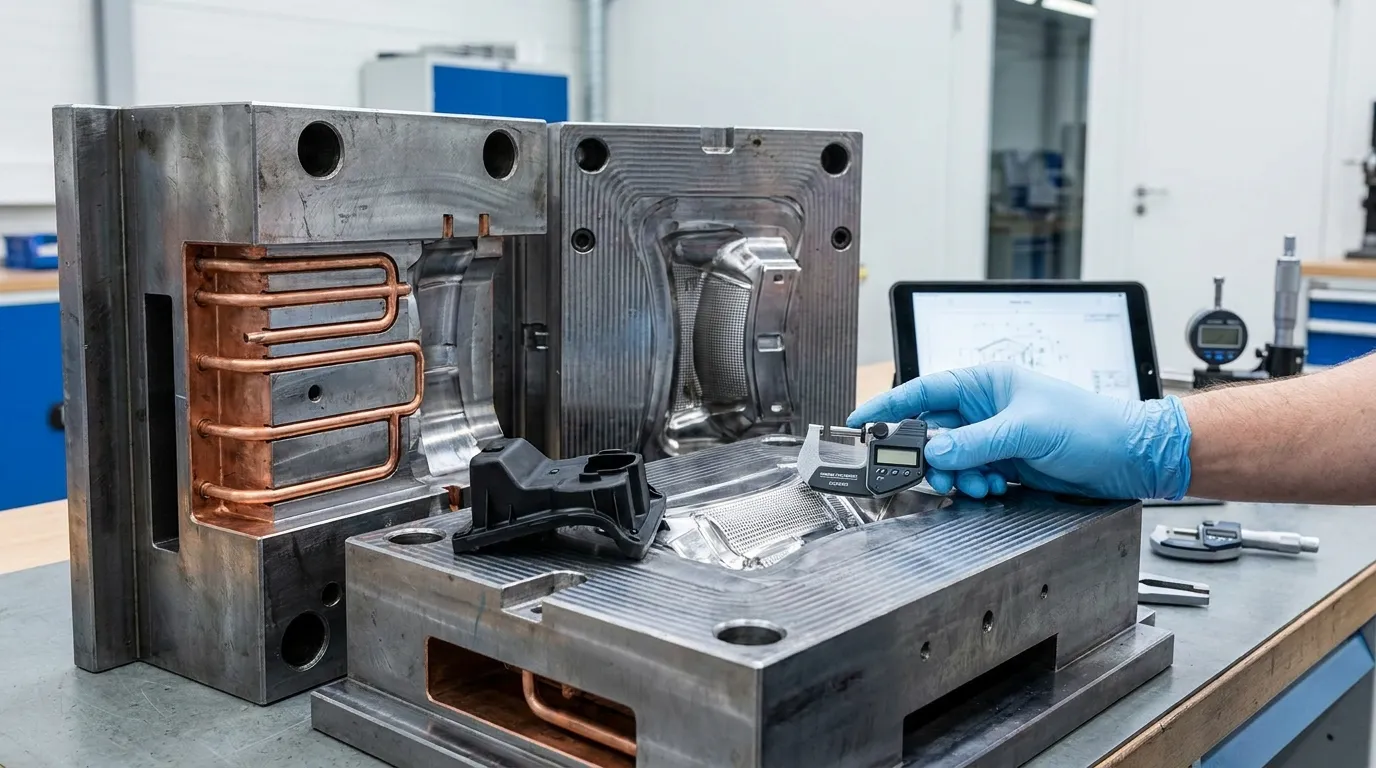
Mold steel selection affects wear resistance, cavity stability, surface finish retention, và tính nhất quán trong sản xuất lâu dài. Automotive programs with high volumes or abrasive resins usually require hardened steel tooling instead of softer aluminum molds.
Tooling material directly affects how long a mold can maintain quality standards. Automotive molds frequently run abrasive materials such as glass-filled nylon, which can wear softer cavity surfaces quickly. Once cavity wear starts, dimensional drift and cosmetic defects become harder to control.
Hardened steel tooling costs more upfront, but it usually performs better for long automotive programs. It handles repeated thermal cycling more consistently and maintains cavity precision over larger production volumes.
| Vật liệu dụng cụ | Trường hợp sử dụng tốt nhất | Hạn chế chính |
|---|---|---|
| Dụng cụ nhôm | Nguyên mẫu và chạy ngắn | Mặc nhanh hơn |
| Thép cứng trước | Sản xuất trung bình | Chống mài mòn vừa phải |
| Thép cứng | Chương trình ô tô dài | Chi phí ban đầu cao hơn |
Khi dụng cụ nhôm vẫn có ý nghĩa
Aluminum tooling is not always the wrong choice. It works well for prototype validation, dụng cụ cầu, and low-volume production where lead time matters more than extreme mold lifespan.
Nói vậy nhưng, low tooling cost can become expensive later if the mold cannot maintain dimensional consistency. A softer mold running glass-filled resin may require repeated repairs, re-polishing, or cavity corrections much earlier than expected.
A supplier that understands long-term tooling performance should explain these tradeoffs clearly instead of defaulting to the cheapest option. Thuộc tính Hướng dẫn thành phần khuôn provides a broader look at the components that affect tooling durability.
How do automotive manufacturers maintain dimensional stability in molded parts?
Dimensional stability in automotive injection molding depends on balanced cooling, stable cavity temperatures, controlled shrinkage, and repeatable process settings. Poor tooling design can cause warpage, fitment issues, and inconsistent assembly performance.
Automotive assemblies leave little room for dimensional variation. Interior trim pieces, HVAC housings, and console components often need to align precisely with surrounding parts. Even small dimensional movement can create visible gaps or assembly stress.
Cooling design plays a major role in dimensional control. If one area of the cavity cools faster than another, the part may shrink unevenly. This is a common cause of warpage in large automotive panels.
Nguyên nhân phổ biến gây cong vênh trong các bộ phận ô tô
- Bố trí kênh làm mát không đồng đều
- Vị trí cổng kém
- Độ co ngót nhựa không nhất quán
- Áp suất phun quá mức
- Kiểm soát nhiệt độ khuôn không ổn định
A dashboard warpage issue illustrates the problem well. One supplier used uneven cooling channels near the center of a large panel. The part initially passed inspection, but slight dimensional movement appeared after installation. The issue traced back to inconsistent cooling rates across the cavity.
Manufacturers also use mold-flow analysis to predict shrinkage and filling behavior before production begins. Stable process settings help maintain repeatability after the tool moves into long production cycles.
| Hệ số ổn định kích thước | Tại sao nó lại quan trọng |
|---|---|
| Làm mát cân bằng | Giảm co ngót không đồng đều |
| Nhiệt độ khoang ổn định | Cải thiện độ lặp lại |
| Vị trí cổng có kiểm soát | Giảm căng thẳng bên trong |
| Cài đặt quy trình nhất quán | Duy trì kích thước bộ phận |
| Lựa chọn nhựa | Ảnh hưởng đến hành vi thu nhỏ |
Companies producing tight-tolerance parts in other industries face similar challenges. Thuộc tính thiết bị chính xác khuôn page shows how precision tooling practices support dimensional consistency.
What tooling features improve surface finish and cosmetic quality?
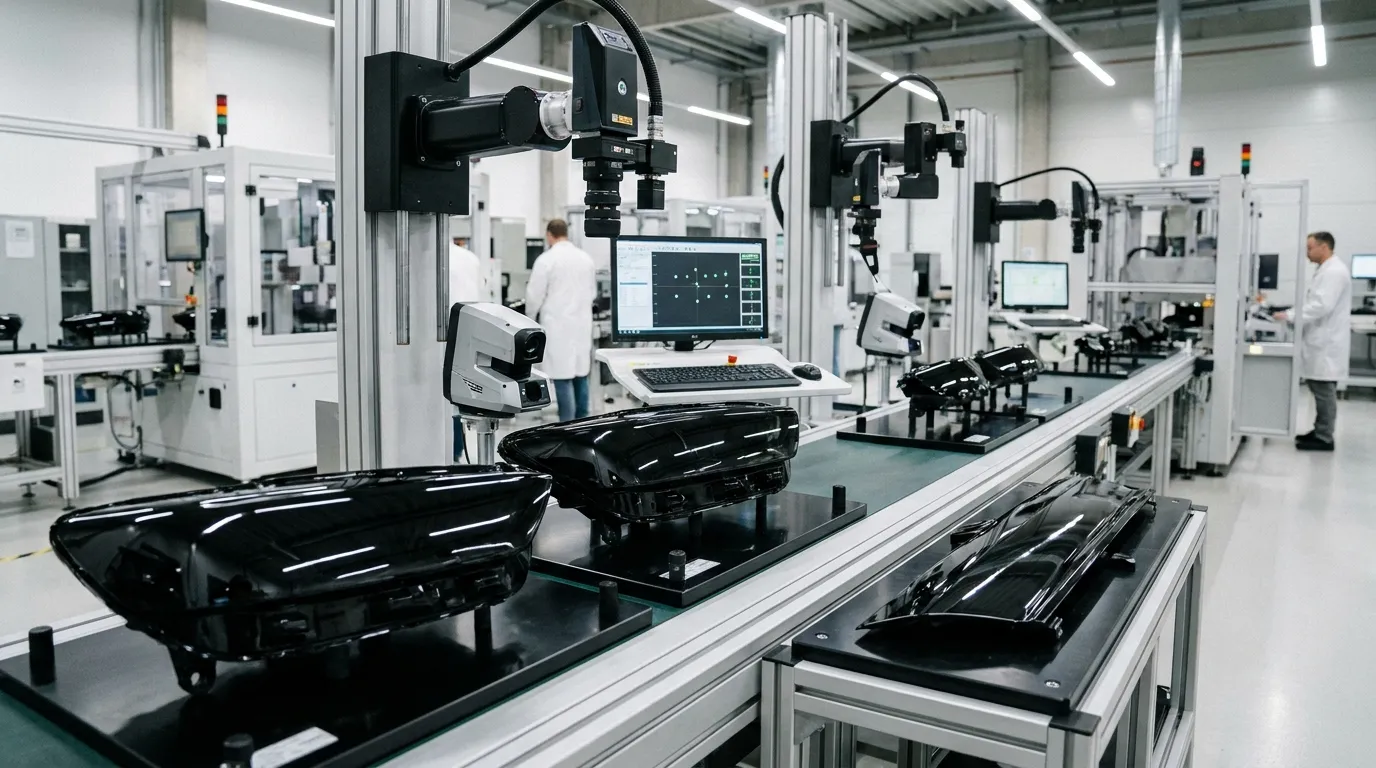
Automotive surface quality depends heavily on tooling precision. Proper polishing, xả khí, cavity alignment, and gate positioning help manufacturers reduce weld lines, gloss variation, and visible cosmetic defects across large production runs.
Cosmetic automotive parts require stable tooling surfaces. Poor polishing can create texture inconsistency, while weak venting may trap gases and leave visible marks on finished components.
Lamp housings provide a clear example. A supplier may choose a premium resin, but weak cavity polishing can still create uneven gloss reflection across the part surface. In automotive applications, even small cosmetic variation becomes noticeable under direct lighting.
Danh sách kiểm tra hoàn thiện bề mặt
- Duy trì các tiêu chuẩn đánh bóng khoang nhất quán
- Thiết kế lỗ thông hơi để giảm vết khí bị mắc kẹt
- Định vị cổng để giảm thiểu khả năng hiển thị đường hàn
- Theo dõi độ mòn khoang trong quá trình sản xuất dài
- Kiểm soát nhiệt độ khuôn để có độ bóng ổn định
Surface finish problems are often tooling problems, not material problems. A well-designed mold can improve appearance consistency even when production volume increases significantly.
For industries that also require tight cosmetic control, Các dụng cụ thiết bị nhựa resource shows how precision tooling supports clean surface quality.
How does production volume affect automotive tooling strategy?
Production volume changes nearly every tooling decision in automotive injection molding. Low-volume programs may justify softer tooling, while long-run automotive production usually requires hardened steel, preventive maintenance planning, and stable multi-cavity performance.
A prototype tool and a million-cycle automotive production mold serve very different purposes. Short-run programs often focus on speed and lower upfront cost. Long-run automotive programs prioritize consistency and predictable maintenance intervals.
Multi-cavity tooling becomes more important as production demand increases. When cavity balancing is poor, one cavity may fill differently from another. That variation can create dimensional inconsistency across the same production run.
Khi dụng cụ nhiều khoang trở nên cần thiết
Multi-cavity molds make sense when production demand is high enough to justify the added tooling complexity. They improve output efficiency, but they also increase the need for balanced flow paths and stable process control.
A trim panel production project highlights this issue well. One cavity produced slightly different shrinkage because the flow path was less balanced. The result was inconsistent fitment during assembly checks.
Bảng quyết định dụng cụ ô tô
| Khối lượng sản xuất | Dụng cụ được đề xuất | Tuổi thọ khuôn điển hình | Ứng dụng phổ biến | Tần suất bảo trì |
|---|---|---|---|---|
| Under 10,000 parts | Dụng cụ nhôm | Ngắn hạn | Xác thực nguyên mẫu | Thấp |
| 10,000 to 100,000 parts | Thép cứng trước | Trung hạn | Sản xuất cầu nối | Trung bình |
| 100,000+ parts | Thép cứng | Dài hạn | Sản xuất ô tô đầy đủ | Bảo trì phòng ngừa theo lịch trình |
Tooling revisions can also extend lead times significantly. Theo Evok Polytech và Ulitech, design changes during tooling development often increase production delays and adjustment costs.
What shortens the lifespan of automotive injection molds?
Automotive injection molds wear out faster when abrasive resins, poor maintenance practices, excessive injection pressure, or uncontrolled thermal cycling damage cavity surfaces and critical mold components.
Automotive molds operate under demanding conditions for long periods. Glass-filled engineering plastics are especially hard on cavity surfaces because the reinforcing fibers gradually erode softer tooling materials.
Thermal cycling creates another long-term issue. Repeated heating and cooling can affect cavity stability, especially if the mold lacks proper temperature management. Theo thời gian, this may reduce dimensional accuracy or create flash issues around part edges.
Danh sách kiểm tra lỗi khuôn ô tô
| Mặc nguồn | Triệu chứng có thể nhìn thấy | Nguyên nhân có thể | Hành động khắc phục | Ưu tiên bảo trì |
|---|---|---|---|---|
| Mòn nhựa mài mòn | Trôi không gian | Vật liệu chứa đầy thủy tinh | Làm cứng bề mặt khoang | Cao |
| Bảo trì lỗ thông hơi kém | Vết bỏng | Bẫy khí | Làm sạch các kênh thông hơi | Cao |
| Áp suất phun quá mức | Sự hình thành đèn flash | Mất cân bằng quy trình | Điều chỉnh cài đặt quy trình | Trung bình |
| Căng thẳng chu kỳ nhiệt | Nứt bề mặt | Kiểm soát nhiệt độ không ổn định | Cải thiện quản lý làm mát | Cao |
| Mài mòn đánh bóng khoang | Độ bóng không nhất quán | Thời gian sản xuất dài | Đánh bóng lại bề mặt khoang | Trung bình |
Preventive maintenance matters more in automotive molding than many buyers realize. Theo Escatec, tooling lifespan depends heavily on maintenance quality, operating conditions, và lựa chọn vật liệu.
Người mua nên đánh giá nhà cung cấp ép phun ô tô như thế nào?
Choosing the right supplier requires more than comparing tooling quotes. Automotive programs need stable production systems, long-term maintenance capability, and consistent quality control.
A supplier should be able to explain how they manage dimensional stability, cavity wear, cân bằng làm mát, and preventive maintenance. If those conversations stay vague, the tooling strategy may not be mature enough for demanding automotive programs.
Các câu hỏi cần hỏi trước khi phê duyệt công cụ
- What mold steel is recommended, and why?
- How will the supplier manage cavity wear?
- What maintenance schedule is planned?
- Has mold-flow analysis been completed?
- How are dimensional tolerances verified during production?
A low tooling quote is not always the safest choice. Some suppliers reduce cost by using softer tooling materials or simplifying cooling design. That may work for short runs, but long automotive programs often expose those compromises later.
Buyers should also look for evidence of precision manufacturing discipline. Suppliers serving industries with tight tolerance requirements often develop stronger process controls. Thuộc tính Quy trình sản xuất chính xác page provides a useful example of how structured manufacturing practices support consistency.
Thực hiện bước tiếp theo đúng đắn
Automotive injection molding depends heavily on tooling quality, especially when parts must maintain appearance, độ ổn định kích thước, and long-term durability across large production runs. Lựa chọn thép khuôn, cân bằng làm mát, maintenance planning, and cavity design all affect the final result.
Before approving a new automotive program, review how the supplier handles wear resistance, kiểm soát quy trình, and preventive maintenance. A stronger tooling strategy usually costs less over the full life of the program because it reduces rework, dimensional drift, and production interruptions.
Những câu hỏi thường gặp
What is automotive injection molding?
Automotive injection molding is a manufacturing process that forms vehicle plastic parts by injecting molten resin into precision molds. It is commonly used for dashboards, các tấm viền, vỏ đèn, Bếp nướng, and structural plastic components that require repeatable quality.
What plastics are commonly used in automotive injection molding?
Common automotive molding materials include ABS, polypropylene, nylon, polycarbonate, and glass-filled engineering plastics. Material choice depends on heat resistance, impact strength, chất lượng mỹ phẩm, and dimensional stability requirements.
How long do automotive injection molds last?
Automotive injection molds can last from hundreds of thousands to more than one million cycles depending on mold steel quality, maintenance practices, resin abrasiveness, và điều kiện vận hành. Hardened steel tooling usually provides the longest service life.
Why is hardened steel used for automotive molds?
Hardened steel is used because automotive production often involves high volumes, vật liệu mài mòn, and strict dimensional requirements. Nó cải thiện khả năng chống mài mòn, cavity stability, and long-term surface finish consistency.
What causes warpage in automotive molded parts?
Biến dạng thường xuất phát từ việc làm mát không đều, đặt cổng không đúng vị trí, inconsistent material shrinkage, hoặc cài đặt quy trình không ổn định. Balanced cooling channels and controlled mold temperatures help reduce distortion.
Which automotive parts are commonly injection molded?
Common injection molded automotive parts include dashboards, bumpers, các tấm viền, Bếp nướng, vỏ đèn, Các thành phần HVAC, and interior consoles. Many modern vehicles rely heavily on molded plastic components to reduce weight and improve manufacturing efficiency.
Chia sẻ:


Được viết bởi Sunshine
Tại Sunshine, Chúng tôi là nhà sản xuất và cung cấp chuyên nghiệp các linh kiện khuôn chính xác, cung cấp một loạt sản phẩm đa dạng cho ứng dụng dập và khuôn ép. Trọng tâm chính của chúng tôi bao gồm khuôn đục lỗ, ghim và ống lót đẩy, và cọc hướng dẫn cùng các bushing. Với gia công CNC tiên tiến, Kiểm soát chất lượng nghiêm ngặt, và năng lực sản xuất mạnh mẽ, chúng tôi đảm bảo độ tin cậy, các bộ phận chính xác cao, cùng với các linh kiện tiêu chuẩn có sẵn trong kho để cung cấp nhanh chóng và hiệu quả toàn cầu.
TIN TỨC
NHẬN DỊCH VỤ
Với các bộ phận chất lượng đáp ứng mọi ngân sách và đội ngũ nhân viên thân thiện được đào tạo để giúp chuyến thăm của bạn trở nên hữu ích và thuận tiện.
