



Mold Guide Pins: Căn chỉnh, Mặc, and Selection Guide
Mold guide pins keep injection mold halves aligned during every opening and closing cycle. Proper guide pin selection reduces flashing, prevents cavity and core damage, improves repeatability, and extends mold life. High-cycle molds usually need hardened guide pins, matched bushings, and consistent lubrication to reduce wear and maintain alignment accuracy over long production runs.
A mold can have excellent cavity design and still fail early if alignment is inconsistent. Guide pins control how mold halves meet during every cycle, which directly affects wear, nhấp nháy, tính nhất quán về chiều, và chi phí bảo trì. Understanding how these components work helps tooling buyers and maintenance teams avoid expensive repair problems before they grow into full mold rebuilds.
What do mold guide pins do during mold operation?
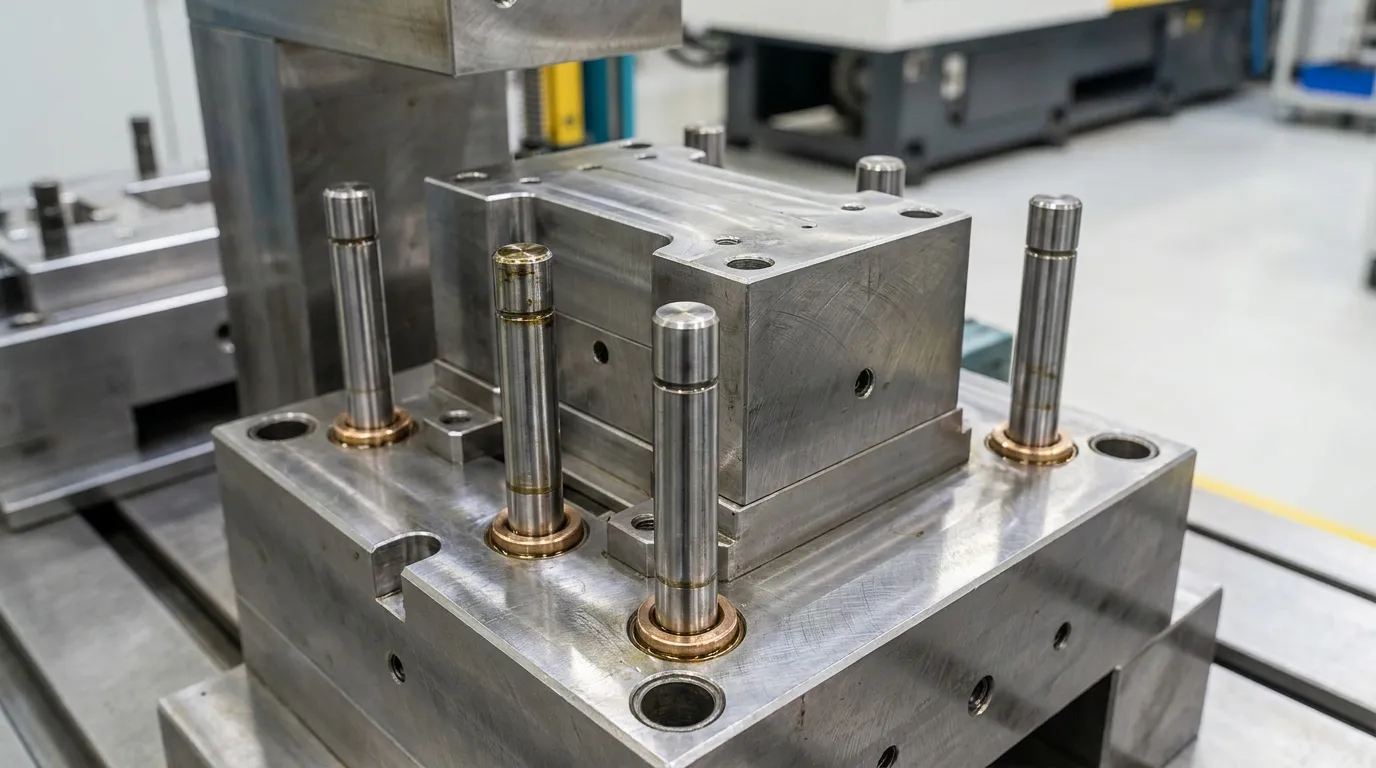
Mold guide pins keep the mold halves aligned during opening and closing cycles. Proper alignment prevents cavity damage, giảm hiện tượng nhấp nháy, improves repeatability, and extends mold life by minimizing uneven wear.
Guide pins are precision-machined cylindrical components installed in the mold base. During mold closing, the pins enter matching guide bushings and help both mold halves align correctly before clamping pressure builds. This protects cavity edges, Màu sắc, and other precision surfaces from impact damage.
Nếu không căn chỉnh đúng, even small positioning errors can create uneven stress across the mold. Theo thời gian, that stress increases wear and may create flashing or dimensional variation in molded parts. This becomes more noticeable in high-cycle production where molds open and close thousands of times per day.
Guide pins also improve movement consistency during production. In precision molds, repeatable alignment helps maintain stable part quality and smoother mold movement. If you need a broader overview of how alignment fits into the full tooling system, Sunshine’s guide to Cấu trúc khuôn ép explains how these components work together inside a complete mold assembly.
Why does guide pin alignment affect mold life?
Poor guide pin alignment increases uneven stress across the mold. Theo thời gian, this accelerates cavity wear, damages cores, creates flashing defects, and shortens the usable life of high-cycle tooling.
Guide pins do more than position mold halves. They help distribute movement evenly during closing and opening. When alignment drifts, side loading increases across cavity surfaces and moving components. That extra friction slowly damages precision areas that are expensive to repair.
A common example appears in high-cycle packaging molds. A small amount of guide pin wear may initially create light flashing near the parting line. If the problem continues, cavity edges begin wearing unevenly, and repair costs rise quickly.
Standard guide pin systems are not always enough for high-cycle precision molds. Lower-cost setups may reduce tooling cost at the beginning, but they often increase maintenance frequency later. Precision molds with tight tolerances usually benefit from hardened materials and tighter fit control.
| Điều kiện căn chỉnh | Kết quả chung | Rủi ro nấm mốc dài hạn |
|---|---|---|
| Căn chỉnh thích hợp | Đóng khuôn ổn định | Tỷ lệ mài mòn thấp hơn |
| Mòn chốt dẫn hướng nhỏ | Đèn nhấp nháy | Ứng suất khoang không đồng đều |
| Bôi trơn kém | Tăng ma sát | Galling và ghi điểm |
| Sai lệch nghiêm trọng | Tác động lõi hoặc khoang | Sửa chữa khuôn lớn |
For a broader look at tooling relationships, Sunshine’s overview of Hệ thống thành phần khuôn covers how alignment components interact with the rest of the mold assembly.
How do guide pins and guide bushings work together?
Guide pins provide alignment movement while guide bushings control friction and support. The fit between both parts directly affects mold smoothness, wear rate, and long-term alignment accuracy.
Guide pins and guide bushings operate as a matched system. The guide pin enters the bushing during mold closing, which keeps movement controlled and centered. If the fit becomes too loose, alignment accuracy drops. If the fit is too tight, friction increases and wear accelerates.
Lubrication also affects how these parts perform together. Standard systems rely on oil or grease to reduce friction between the pin and bushing surface. Poor lubrication increases scoring and surface damage, especially in high-speed molds.
| Thành phần | Chức năng chính | Vấn đề hao mòn thông thường |
|---|---|---|
| Chốt dẫn hướng | Chỉ đạo chuyển động căn chỉnh | Chấm điểm bề mặt |
| Ống lót dẫn hướng | Hỗ trợ và ổn định chuyển động | Mặc bên trong |
| Lớp bôi trơn | Giảm ma sát | Hư hỏng khi chạy khô |
Precision medical molds often use tighter tolerances and hardened guide systems because dimensional consistency is critical. Small alignment errors that might be acceptable in low-precision parts can create rejection problems in medical or electronic components.
What causes mold guide pins to wear out early?
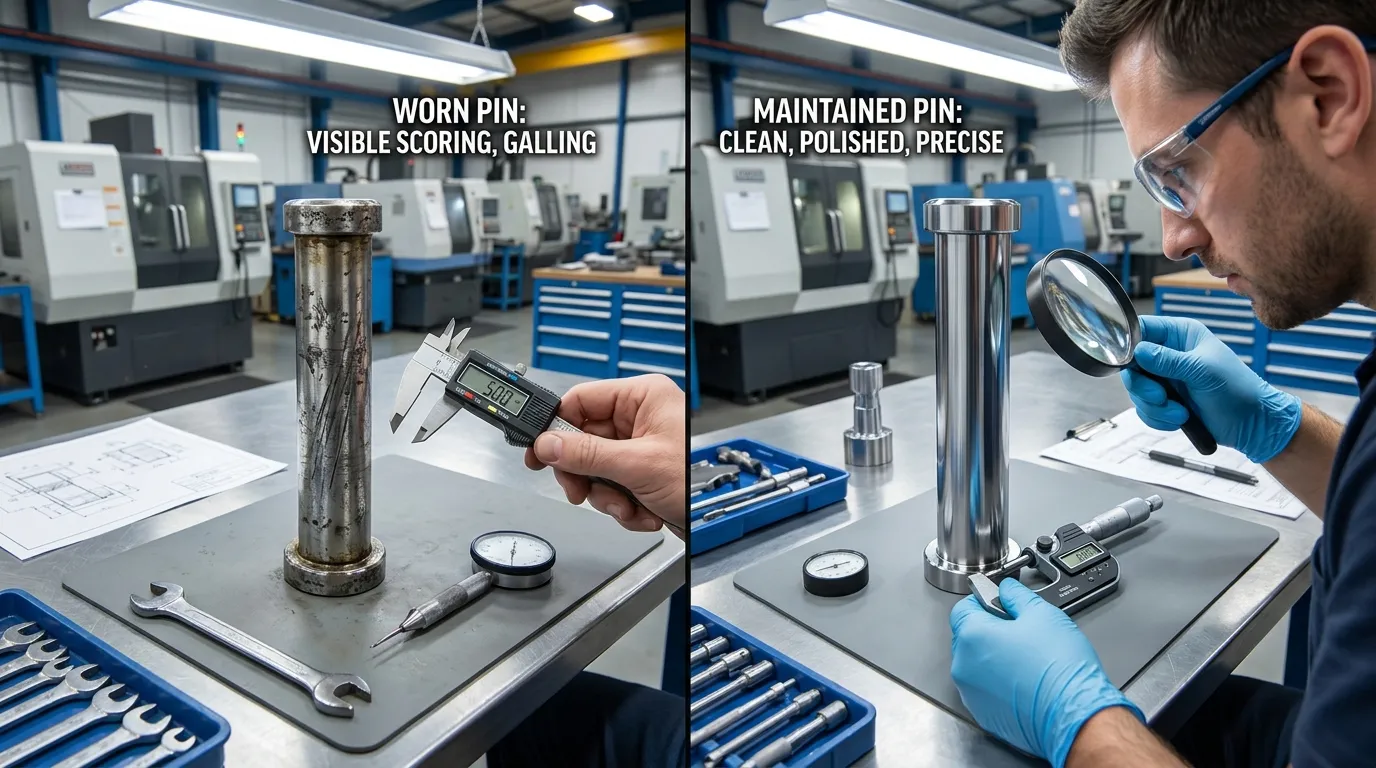
Early guide pin wear usually comes from poor lubrication, Sự ô nhiễm, or incorrect fit. Misalignment increases side loading, which accelerates scoring, gây khó chịu, and uneven wear inside the mold.
Guide pins rarely fail suddenly. Most wear problems develop slowly through friction, Sự ô nhiễm, or poor maintenance habits. Once surface wear begins, alignment quality decreases and additional damage spreads across nearby components.
A common maintenance issue appears in dusty production environments. Dirt or resin contamination enters the guide system and scratches the guide pin surface during repeated cycling. This creates rough movement and increases wear inside the bushing.
Các triệu chứng hao mòn thường gặp cần kiểm tra
- Trầy xước hoặc ghi điểm trên bề mặt chốt dẫn hướng
- Các kiểu mài mòn không đều gần một bên của chốt
- Nhấp nháy xung quanh phần đúc
- Chuyển động đóng mở khuôn thô
- Tăng sự đổi màu của bôi trơn
- Tiếng ồn trong quá trình chu kỳ khuôn
Oil-less systems reduce lubrication maintenance, but they are not maintenance-free. Contamination and poor fit can still shorten guide pin life. In some environments, a properly lubricated standard system may last longer than a poorly maintained oil-less setup.
Bảng khắc phục sự cố Pin Wear hướng dẫn
| Triệu chứng | Nguyên nhân có thể | Rủi ro nấm mốc | Đề xuất sửa lỗi |
|---|---|---|---|
| Chấm điểm bề mặt | Bôi trơn kém | Mặc nhanh hơn | Cải thiện lịch bôi trơn |
| Mòn không đều | Sai lệch | Nhấp nháy và căng thẳng khoang | Kiểm tra sự phù hợp của căn chỉnh |
| Dấu vết | Ma sát quá mức | Chuyển động bị thu giữ | Thay thế các thành phần bị hư hỏng |
| Chuyển động khuôn thô | Ô nhiễm | Hư hỏng ống lót | Làm sạch và kiểm tra hệ thống |
| Khiếm khuyết nhấp nháy | Phù hợp với hướng dẫn bị mòn | Không nhất quán về kích thước | Thay thế các chốt và ống lót bị mòn |
Wear patterns often affect more than one component. Teams investigating alignment issues may also benefit from reviewing mòn pin lõi chính xác because similar wear conditions can affect multiple tooling areas at the same time.
How do you select the right mold guide pin setup?
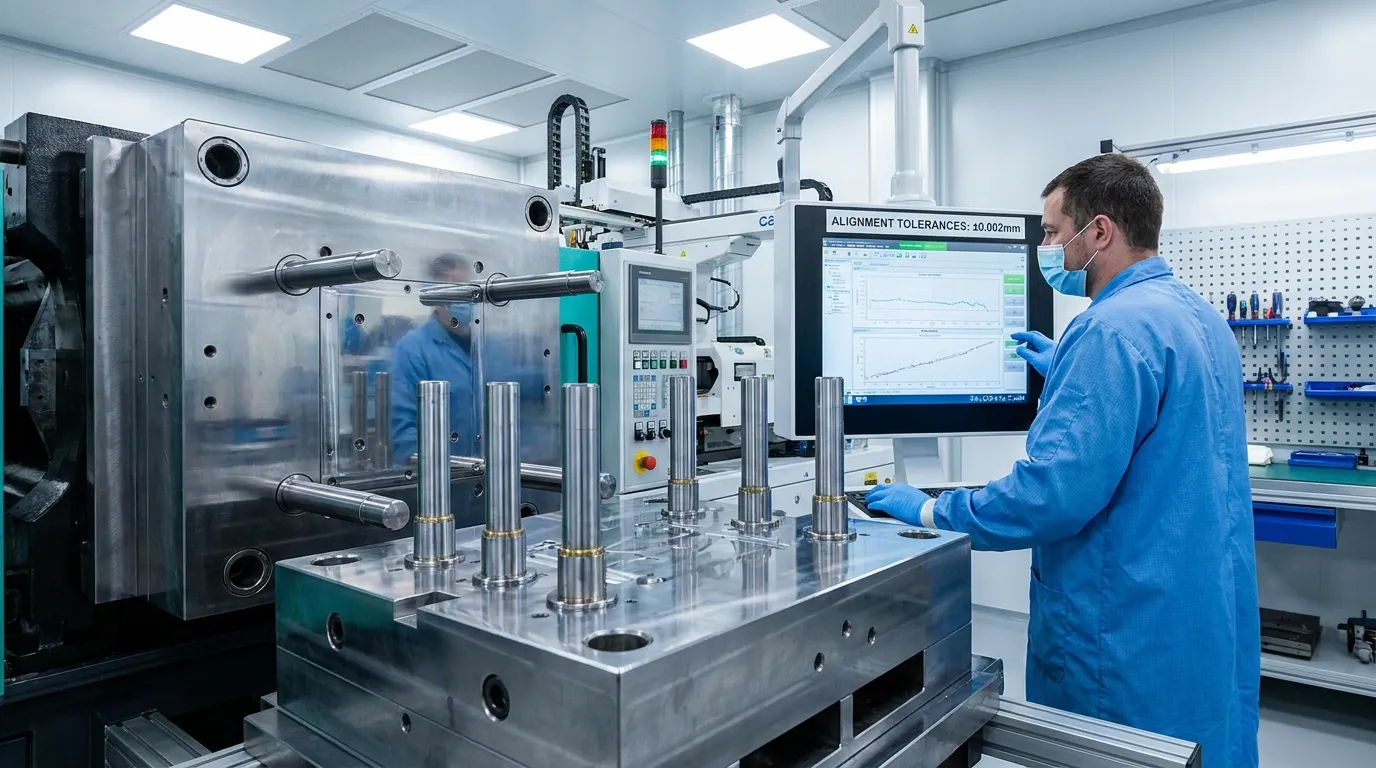
The right mold guide pin setup depends on mold size, production cycles, độ chính xác căn chỉnh, and maintenance conditions. High-cycle molds usually require hardened materials, dung sai chặt chẽ hơn, and more reliable lubrication systems.
Guide pin selection should match the mold’s operating conditions. A low-volume prototype mold does not need the same alignment system as a high-speed production mold running continuously across multiple shifts.
Material hardness matters because guide pins experience repeated contact and side loading. Hardened tool steels such as SUJ2 are commonly used because they provide better wear resistance under repeated cycling conditions.
Hệ thống chốt dẫn hướng tiêu chuẩn và chính xác
| Tình trạng khuôn | Thiết lập được đề xuất | Chiến lược bôi trơn | Mức độ mài mòn dự kiến |
|---|---|---|---|
| Dụng cụ khối lượng thấp | Chốt dẫn hướng tiêu chuẩn | Bôi trơn thủ công | Trung bình |
| Khuôn đóng gói chu kỳ cao | Chốt chính xác cứng | Bôi trơn theo lịch trình | Thấp hơn |
| Khuôn y tế chính xác | Hệ thống dung sai chặt chẽ | Bôi trơn có kiểm soát | Rất thấp |
| Khu vực sản xuất bụi bặm | Hệ thống không dầu hoặc kín | Giảm bảo trì | Phụ thuộc vào ô nhiễm |
A practical example appears in consumer packaging molds. High-cycle production can create side loading and wear quickly, especially when molds operate at fast cycle times. Using hardened guide pins with controlled lubrication often reduces downtime compared to lower-cost standard setups.
Replacing worn guide pins early is usually cheaper than waiting for visible cavity damage. Small alignment problems can become expensive mold repairs quickly, especially in molds with precision cavity surfaces.
If your project involves different tooling environments or production sectors, Sunshine’s guide to Ứng dụng khuôn ép shows how mold requirements change across industries.
Are oil-less guide pin systems worth using?
Oil-less guide pin systems reduce lubrication maintenance, but they are not the best option for every mold. Their performance depends heavily on contamination levels, cycle frequency, and alignment precision requirements.
These systems usually use self-lubricating bushings or specialized surface materials that reduce the need for manual lubrication. They work well in environments where regular lubrication is difficult or where excess oil could contaminate products.
| Loại hệ thống | Lợi thế chính | Hạn chế chính |
|---|---|---|
| Hệ thống bôi trơn tiêu chuẩn | Chi phí ban đầu thấp hơn | Yêu cầu bảo trì thường xuyên |
| Hệ thống không dầu | Giảm công việc bôi trơn | Nhạy cảm với ô nhiễm |
| Hệ thống cứng chính xác | Chống mài mòn tốt hơn | Chi phí dụng cụ cao hơn |
A dusty production area highlights the difference clearly. Oil-less systems may reduce grease buildup that traps debris, but contamination can still damage alignment surfaces if cleaning intervals are ignored. In cleaner environments, lubricated precision systems may provide longer service life and smoother movement.
What maintenance practices extend guide pin life?
Regular inspection and lubrication are the most effective ways to extend guide pin life. Small alignment problems become expensive mold repairs when wear is ignored for too long.
Preventive maintenance keeps alignment problems from spreading into cavity or core damage. Most guide pin wear starts as a small surface issue that grows gradually over thousands of cycles.
Maintenance teams should inspect guide pins during scheduled mold servicing. Bề mặt hoàn thiện, điều kiện bôi trơn, and movement smoothness all provide early warning signs before major alignment failure develops.
Dấu hiệu chân dẫn hướng của bạn cần thay thế
- Ghi điểm hoặc galling có thể nhìn thấy
- Vết mài mòn không đều
- Vừa vặn lỏng lẻo bên trong ống lót
- Sự cố nhấp nháy xuất hiện đột ngột
- Tăng khả năng chống rung hoặc chuyển động
- Đổi màu bôi trơn lặp đi lặp lại
A common repair scenario involves delayed replacement. A mold may continue running after light flashing appears, but continued operation can damage cavity edges and increase downtime later. Replacing worn guide pins early often prevents larger repair costs.
Maintenance planning also overlaps with other tooling components. Teams reviewing broader wear conditions can compare alignment-related movement issues with Các thành phần bảo trì khuôn used throughout the mold system.
How do guide pins affect molding quality and repeatability?
Guide pin condition directly affects molding consistency. Stable alignment keeps cavity surfaces positioned correctly during injection and clamping, which helps maintain dimensional accuracy across production cycles.
When guide pins wear unevenly, the mold halves may shift slightly during injection pressure. Even small movement changes can create flashing, độ dày thành không đồng đều, hoặc biến đổi kích thước. Precision molds are especially sensitive to these alignment changes.
A medical molding example shows why this matters. Precision medical components often require tight dimensional repeatability. Hardened guide systems with tighter tolerances help maintain stable cavity positioning and reduce variation between production runs.
Guide pins also affect mold movement smoothness. Stable movement reduces stress on nearby tooling components and helps maintain repeatable cycle performance over long production runs. Manufacturers focused on high-precision parts often evaluate alignment together with Độ chính xác đúc chính xác because both directly influence finished part quality.
Thực hiện bước tiếp theo đúng đắn
Choosing the right mold guide pins comes down to operating conditions, maintenance discipline, và yêu cầu độ chính xác. A standard setup may work well for lower-volume tooling, but high-cycle molds often need tighter tolerances, vật liệu đã làm cứng, and more consistent lubrication practices.
Before selecting a guide system, review cycle volume, contamination risks, maintenance access, and required part accuracy. Small alignment decisions affect wear, nhấp nháy, thời gian ngừng hoạt động, and mold life more than many buyers expect. A properly matched guide pin system usually saves money long before the mold reaches the repair bench.
Những câu hỏi thường gặp
What happens when mold alignment fails?
Mold alignment failure can cause flashing, cavity damage, uneven wear, and dimensional inconsistency. Continued operation with poor alignment may also damage cores, các vòng đệm, and other precision mold components.
How often should mold guide pins be replaced?
Thời gian thay thế phụ thuộc vào sản lượng sản xuất, chất lượng bôi trơn, and mold precision requirements. High-cycle molds usually need more frequent inspection because even small wear patterns can affect alignment accuracy early.
What material is best for mold guide pins?
Hardened tool steels such as SUJ2 are commonly used for mold guide pins because they resist wear during repeated cycling. The best material still depends on production volume, lubrication conditions, và yêu cầu độ chính xác.
Do guide pins need lubrication?
Most standard guide pin systems require lubrication to reduce friction and wear. Oil-less systems reduce maintenance demands, but they still need proper fit and contamination control to perform reliably.
Can worn guide pins cause flashing?
Có, worn guide pins can allow slight mold movement during clamping and injection. Even small alignment shifts may create flashing and dimensional inconsistency in precision molded parts.
What is the difference between guide pins and guide bushings?
Guide pins direct mold alignment movement, while guide bushings support the pin and control friction during operation. Both components work together to maintain smooth movement and positioning accuracy.
Chia sẻ:


Được viết bởi Sunshine
Tại Sunshine, Chúng tôi là nhà sản xuất và cung cấp chuyên nghiệp các linh kiện khuôn chính xác, cung cấp một loạt sản phẩm đa dạng cho ứng dụng dập và khuôn ép. Trọng tâm chính của chúng tôi bao gồm khuôn đục lỗ, ghim và ống lót đẩy, và cọc hướng dẫn cùng các bushing. Với gia công CNC tiên tiến, Kiểm soát chất lượng nghiêm ngặt, và năng lực sản xuất mạnh mẽ, chúng tôi đảm bảo độ tin cậy, các bộ phận chính xác cao, cùng với các linh kiện tiêu chuẩn có sẵn trong kho để cung cấp nhanh chóng và hiệu quả toàn cầu.
TIN TỨC
NHẬN DỊCH VỤ
Với các bộ phận chất lượng đáp ứng mọi ngân sách và đội ngũ nhân viên thân thiện được đào tạo để giúp chuyến thăm của bạn trở nên hữu ích và thuận tiện.
