



Chốt và Bạc Ống Đúc: Cách cải thiện căn chỉnh và giảm mài mòn
Mold pins and bushings improve mold alignment by guiding mold halves into accurate position during every cycle. Choosing the correct fit, material hardness, and maintenance schedule reduces friction, prevents uneven wear, and lowers downtime risk. Hardened and coated guide systems usually last longer in high-volume production, while regular lubrication and early replacement planning help maintain part quality and mold lifespan.
Poor mold alignment rarely starts with a major failure. Most problems begin with small wear marks, uneven movement, or excess clearance inside the guide system. Theo thời gian, those issues can lead to flashing, scoring, and costly downtime. Choosing the right mold pins and bushings setup helps prevent those problems early, especially in high-cycle production where even small alignment errors add up fast.
What do mold pins and bushings do in injection molds?
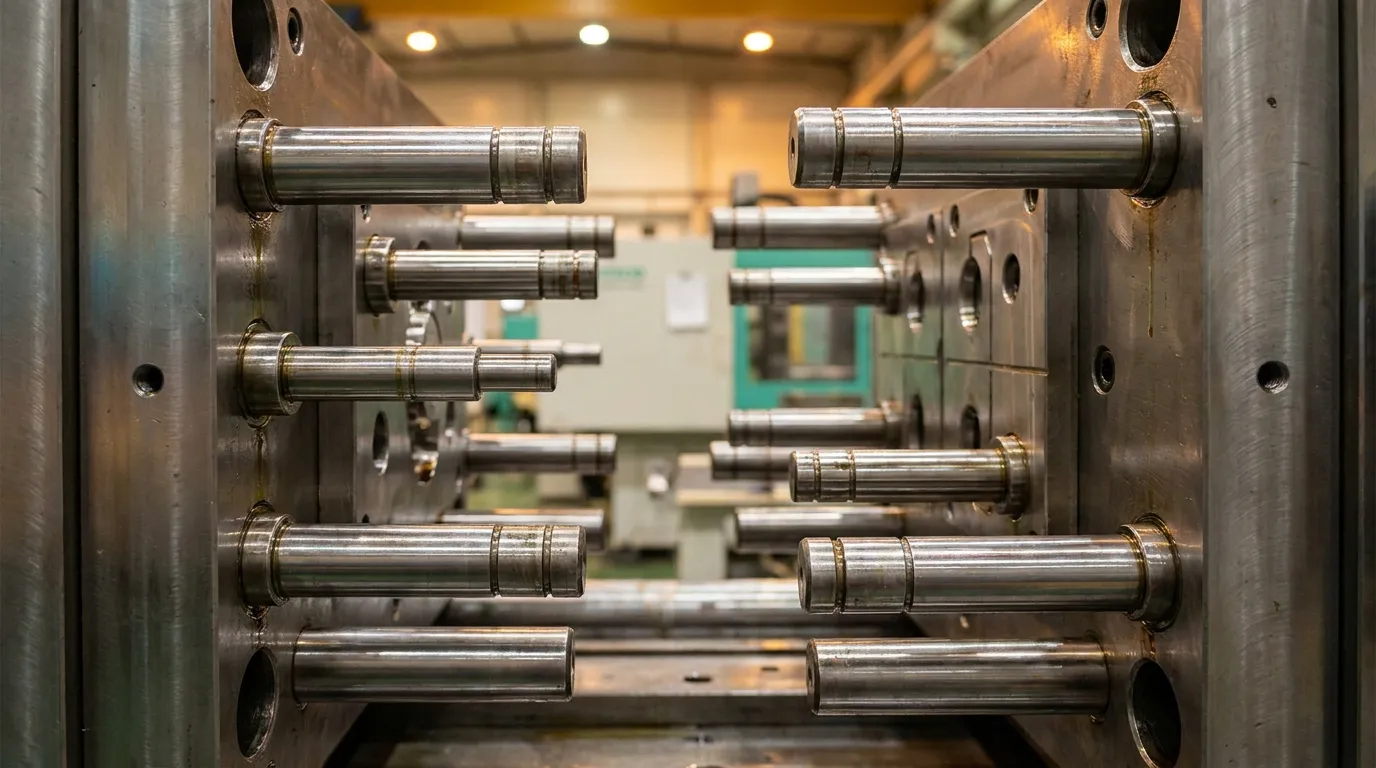
Mold pins and bushings keep mold halves aligned during every production cycle. Proper alignment reduces uneven wear, prevents flashing and binding, and helps maintain dimensional consistency over long production runs.
Chốt dẫn hướng, often called leader pins, guide the moving and stationary mold halves into the correct position during mold closing. Bushings act as the matching contact surface that supports smooth movement and controls friction. Theo Công nghệ nhựa, accurate alignment helps protect critical mold surfaces from premature wear.
Nếu không căn chỉnh đúng, pressure shifts unevenly across the mold. That increases stress on cavities, các slide, ejector systems, and shut-off surfaces. Even a small amount of misalignment can create flashing or dimensional variation in molded parts.
| Thành phần | Chức năng chính | Vấn đề thường gặp nếu bị mòn |
|---|---|---|
| Chốt dẫn hướng | Căn chỉnh các nửa khuôn | Ràng buộc hoặc rung |
| Ống lót dẫn hướng | Giảm ma sát | Mòn không đều |
| Rãnh bôi trơn | Duy trì chuyển động mượt mà | Tích tụ nhiệt |
| Hệ thống giữ | Giữ các thành phần một cách an toàn | Trôi căn chỉnh |
For molds running high production volumes, guide systems directly affect service life. Well-fitted Hệ thống chốt dẫn hướng help reduce impact loading during repeated opening and closing cycles.
If you're comparing broader mold components, Các Hướng dẫn thành phần khuôn hoàn chỉnh explains how guide systems interact with cooling, sự đẩy ra, and cavity design.
How do you choose the right pin and bushing fit?
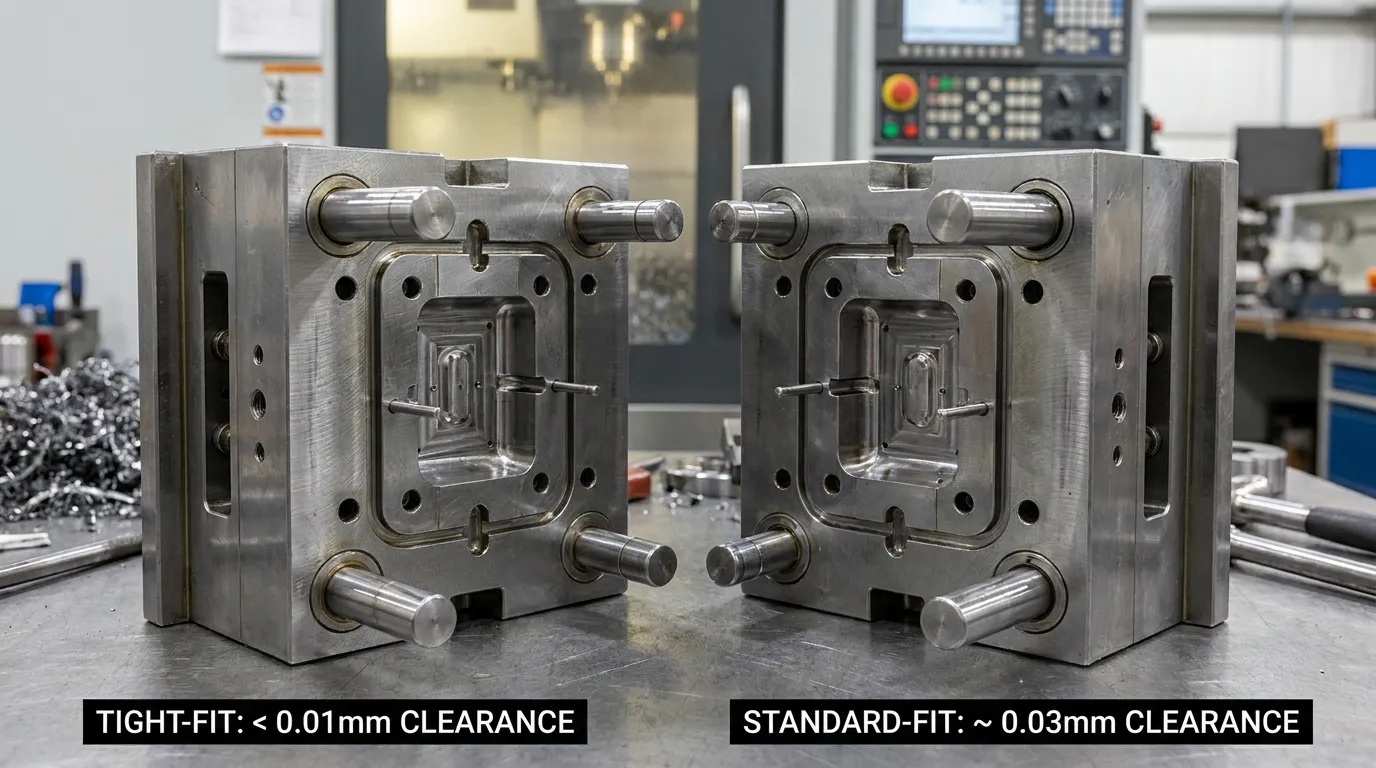
The correct pin-bushing fit balances alignment precision with smooth movement. Tight fits improve accuracy but increase seizure risk if lubrication or thermal expansion is not controlled.
The best fit depends on production speed, operating temperature, and mold tolerance requirements. High-precision molds often use tighter clearances to improve positioning accuracy. Standard production molds usually need slightly more clearance to reduce friction and support easier maintenance.
Very tight fits are not always the best choice. They work well in controlled environments with stable temperatures, but they can create sticking problems during long production runs. Medical molds with tight tolerances sometimes experience binding when thermal expansion changes the pin-to-bushing clearance after several hours of operation.
Hệ thống dẫn hướng vừa vặn so với phù hợp tiêu chuẩn
| Loại phù hợp | Sử dụng tốt nhất | Ưu điểm | Rủi ro |
|---|---|---|---|
| Vừa vặn | Khuôn mẫu y tế và chính xác | Độ chính xác căn chỉnh tốt hơn | Nguy cơ co giật cao hơn |
| Vừa vặn tiêu chuẩn | Khuôn sản xuất chung | Bôi trơn và bảo trì dễ dàng hơn | Độ chính xác định vị thấp hơn một chút |
| Vừa vặn lỏng lẻo | Nguyên mẫu hoặc khuôn chu kỳ thấp | Ma sát thấp hơn | Hao mòn và rung nhanh hơn |
A practical way to compare systems is by expected cycle count. An automotive mold running one million cycles annually places far more stress on guide surfaces than a low-volume prototype mold. High-cycle molds benefit from tighter machining tolerances and better surface treatments.
Theo Khuôn đầu tiên, guide systems improve positioning accuracy and support stable mold operation. Buyers comparing systems should also evaluate surface finish quality and lubrication access, not just dimensional tolerance alone.
When evaluating precision requirements, Dung sai khuôn chính xác also influence how tightly guide systems should be matched to the mold design.
Bảng lựa chọn Pin-to-Bushing
| Khối lượng sản xuất | Giải phóng mặt bằng được đề xuất | Nhu cầu bôi trơn | Rủi ro mài mòn | Ứng dụng tốt nhất |
|---|---|---|---|---|
| Âm lượng thấp | Hơi lỏng lẻo | Trung bình | Thấp | Khuôn mẫu |
| Âm lượng trung bình | Vừa vặn tiêu chuẩn | Thường xuyên | Trung bình | Sản phẩm tiêu dùng |
| Âm lượng lớn | Vừa vặn chính xác chặt chẽ | Cao | Cao nếu bị bỏ qua | Khuôn mẫu ô tô |
| Siêu chính xác | Vừa vặn được kiểm soát chặt chẽ | Bảo trì nghiêm ngặt | Trung bình | Y tế và điện tử |
Which materials and surface treatments reduce wear?
Hardened tool steels with nitriding or surface coatings typically deliver better wear resistance and lower friction than untreated components. Material selection should match cycle count, mold speed, and lubrication conditions.
Most guide pins and bushings use hardened tool steel because it maintains dimensional stability under repeated movement. Harder materials resist scoring better, especially in molds that run continuously across long production shifts.
Surface treatment also matters. Nitriding creates a hardened outer layer that improves wear resistance without significantly changing the component size. Some manufacturers also use PVD coatings to lower friction and reduce surface damage during high-speed operation.
Premium coatings are not necessary for every mold. Standard hardened systems often perform well in low-cycle molds where lubrication and contamination control are properly managed. Buyers sometimes overspend on advanced coatings when maintenance practices are the real source of wear problems.
| Vật liệu hoặc xử lý | Lợi ích chính | Sử dụng tốt nhất |
|---|---|---|
| Thép công cụ cứng | Chống mài mòn chung | Sản xuất tiêu chuẩn |
| Thép thấm nitơ | Cải thiện độ cứng bề mặt | Khuôn chu kỳ cao |
| Lớp phủ PVD | Ma sát thấp hơn | Hoạt động tốc độ cao |
| Hoàn thiện đánh bóng | Chuyển động mượt mà hơn | Khuôn mẫu chính xác |
A real production example shows why material choice matters. One automotive supplier replaced untreated bushings twice as often as nitrided components in a mold producing more than one million cycles per year. The nitrided setup reduced maintenance downtime and improved alignment consistency.
Thuộc tính Các thành phần khuôn cứng used in other precision mold systems often follow the same wear-resistance principles as guide assemblies. Sunshine's engineering discussion on advanced mold materials also highlights how coatings and hardened surfaces improve long-term durability in demanding production environments.
What causes guide pin and bushing wear?
Guide system wear usually starts with poor alignment, insufficient lubrication, or contamination inside the mold. Early wear signs include scoring, uneven polishing, rung động, and increased mold resistance during closing.
Most guide systems fail gradually, not suddenly. Small particles, dry movement, or uneven loading slowly damage the contact surfaces between the pin and bushing. As wear increases, alignment accuracy drops and mold movement becomes less stable.
Poor alignment is one of the biggest causes of premature wear. According to Sunshine's article on punch breakage in stamping dies, uneven loading and misalignment increase stress across tooling surfaces. Similar problems occur in injection molds when guide systems no longer close evenly.
Các dấu hiệu cảnh báo người vận hành không nên bỏ qua
- Dấu chấm điểm trên bề mặt dẫn hướng
- Tăng độ rung trong quá trình đóng khuôn
- Các khuyết tật chớp nhoáng xuất hiện gần các đường phân chia
- Các mẫu đánh bóng không đồng đều
- Tiếng ồn trong chu kỳ đóng mở
- Nhiệt độ quá cao gần các vị trí hướng dẫn
Lubrication problems also accelerate wear. Dry surfaces create friction that increases operating temperature and damages hardened layers. Contamination from plastic residue or metal particles can make the problem worse by scratching contact surfaces during each cycle.
An electronics mold producing thin-wall components showed flashing problems after uneven guide pin wear shifted alignment slightly during operation. The mold still closed fully, but part consistency changed enough to increase rejection rates.
If you are already seeing related friction problems elsewhere in the tool, vấn đề mài mòn khuôn inside ejector systems may point to broader maintenance gaps.
When should mold pins and bushings be replaced?
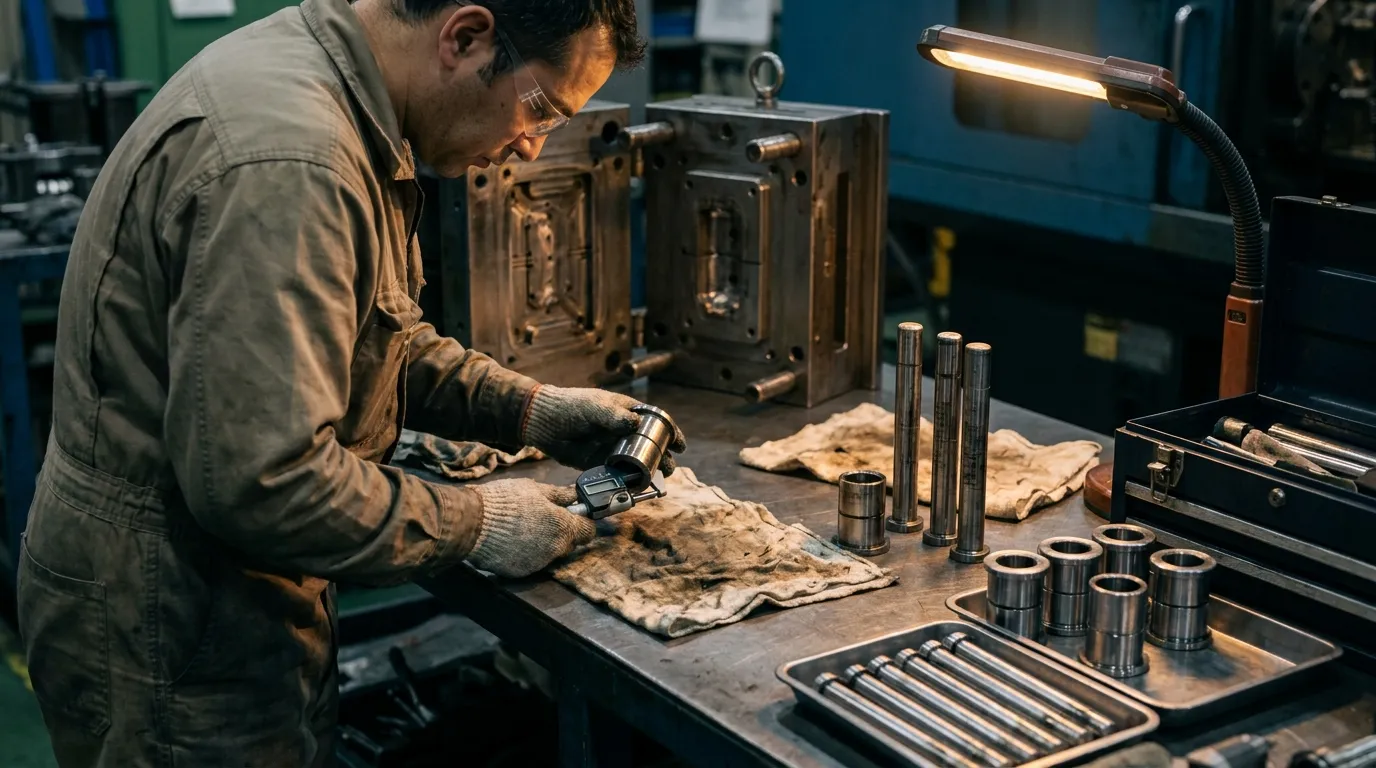
Mold pins and bushings should be replaced before alignment loss affects part quality. Waiting until severe scoring or looseness appears often increases repair costs and production downtime.
Replacement timing depends on cycle count, tốc độ sản xuất, và điều kiện vận hành. Some molds can run for years with minimal wear, while high-speed automotive tools may require regular guide system inspections every few months.
A common mistake is waiting for obvious damage before replacing components. By the time severe looseness appears, uneven loading may already have damaged cavities, các slide, hoặc bề mặt ngắt. Replacing guide systems early usually costs less than repairing multiple mold components later.
Danh sách kiểm tra độ mòn hệ thống hướng dẫn
| Điểm kiểm tra | Những gì cần tìm | Hành động được đề xuất |
|---|---|---|
| Bề mặt hoàn thiện | Ghi điểm hoặc trầy xước | Đánh bóng hoặc thay thế |
| Giải phóng mặt bằng | Vận động quá mức | Đo dung sai |
| Bôi trơn | Dầu mỡ khô hoặc bị nhiễm bẩn | Làm sạch và bôi trơn lại |
| Tiếng ồn | Âm thanh rung hoặc va đập | Kiểm tra căn chỉnh |
| Các bộ phận đúc | Flash hoặc không khớp | Kiểm tra độ mòn của hướng dẫn |
A maintenance team comparing replacement timing found that planned guide system replacement during scheduled downtime cost far less than emergency repair after alignment failure stopped production unexpectedly.
Regular inspection also helps identify lubrication issues early. For molds running continuous production, preventive checks are usually more effective than reacting after visible defects appear. Proper Hướng dẫn bảo trì ống lót helps extend service life and reduce unplanned shutdowns.
How should maintenance and lubrication be planned?
Preventive maintenance is the easiest way to extend guide system life. Consistent lubrication and routine inspections reduce friction, stabilize movement, and help prevent uneven wear before it affects mold accuracy.
Maintenance schedules should match production volume. High-cycle molds often need more frequent lubrication checks because heat and repeated movement gradually break down grease performance. Lower-volume molds usually require less aggressive maintenance intervals.
Danh sách kiểm tra bảo trì
- Làm sạch bề mặt dẫn hướng trong quá trình bảo dưỡng khuôn theo lịch trình
- Check for scoring, discoloration, or uneven wear
- Loại bỏ chất bôi trơn bị nhiễm bẩn trước khi bôi lại dầu mỡ
- Xác minh khe hở từ chốt đến ống lót vẫn nằm trong thông số kỹ thuật
- Kiểm tra phần cứng lắp đặt xem có chuyển động hoặc nới lỏng không
- Store spare components in clean, dry conditions
Lubrication quality matters as much as lubrication frequency. Too little grease increases friction, but excessive lubrication can trap contaminants inside the guide system. Consistent cleaning is often more important than using expensive lubricant types.
For broader maintenance planning, Các Bảo trì thành phần khuôn process should include regular inspection across the entire mold assembly, not only the guide system.
Which guide system works best for your production environment?
The best guide system depends on production volume, yêu cầu độ chính xác, và điều kiện vận hành. A setup that works well for low-volume consumer products may wear out quickly in high-speed automotive production.
Automotive molds usually need hardened pins, nitrided bushings, and tighter machining tolerances because they run continuously under heavy cycle counts. Medical and electronics molds often prioritize positioning accuracy over maximum wear resistance because small dimensional shifts can affect part quality.
| Môi trường sản xuất | Thiết lập được đề xuất | Ưu tiên chính |
|---|---|---|
| Ô tô | Hệ thống nitrid cứng | Tuổi thọ lâu dài |
| Y tế | Hệ thống vừa vặn chính xác | Độ chính xác căn chỉnh |
| Hàng tiêu dùng | Hệ thống cứng tiêu chuẩn | Chi phí cân bằng |
| Khuôn mẫu | Hệ thống dẫn hướng phù hợp tiêu chuẩn | Bảo trì dễ dàng hơn |
High-end coatings are not always necessary. In cleaner production environments with stable temperatures, standard hardened systems often perform reliably for long periods. On the other hand, molds exposed to contamination or very high speeds usually benefit from advanced surface treatments.
One medical mold experienced sticking because the guide fit was too tight for long production runs at elevated temperatures. Switching to a slightly larger clearance improved movement consistency without reducing part quality.
Different industries place different demands on guide systems. Thuộc tính Yêu cầu ứng dụng khuôn across automotive, y tế, and electronics production help explain why guide system selection should match the operating environment, not just the initial component cost.
Thực hiện bước tiếp theo đúng đắn
Choosing the right mold pins and bushings setup comes down to balance. Tight tolerances improve alignment, but they also increase maintenance demands. Hardened and coated systems extend wear life, but only when lubrication and inspection routines stay consistent.
Before ordering replacement components, Xem lại khối lượng sản xuất của bạn, operating temperature, and downtime history. Small alignment problems often become expensive repair issues if guide wear goes unchecked. A planned maintenance strategy usually delivers better long-term performance than simply replacing parts after failure.
Những câu hỏi thường gặp
What are mold pins and bushings used for?
Mold pins and bushings guide mold halves into accurate alignment during opening and closing cycles. They reduce uneven wear, Cải thiện độ chính xác định vị trí, and help prevent flashing or binding problems in injection molds.
How do guide bushings reduce mold wear?
Guide bushings reduce direct friction between moving mold components and distribute alignment forces more evenly. Properly fitted bushings also help prevent metal-to-metal damage and vibration during production cycles.
When should guide pins be replaced?
Guide pins should be replaced when scoring, looseness, or alignment variation becomes visible during inspection. Delaying replacement can increase mold damage and create longer production downtime.
What materials are best for mold guide systems?
Hardened tool steel is commonly used because it provides strong wear resistance and dimensional stability. Nitriding and surface coatings can further improve service life in high-cycle molds.
How tight should guide pin clearance be?
Guide pin clearance should balance alignment accuracy with smooth movement during thermal expansion. Extremely tight fits may increase seizure risk if lubrication is not properly controlled.
Can poor alignment damage mold components?
Có. Poor alignment increases uneven loading across mold components and may cause flashing, scoring, punch failure, hoặc mòn sớm. Even small alignment errors can shorten overall mold lifespan.
Chia sẻ:


Được viết bởi Sunshine
Tại Sunshine, Chúng tôi là nhà sản xuất và cung cấp chuyên nghiệp các linh kiện khuôn chính xác, cung cấp một loạt sản phẩm đa dạng cho ứng dụng dập và khuôn ép. Trọng tâm chính của chúng tôi bao gồm khuôn đục lỗ, ghim và ống lót đẩy, và cọc hướng dẫn cùng các bushing. Với gia công CNC tiên tiến, Kiểm soát chất lượng nghiêm ngặt, và năng lực sản xuất mạnh mẽ, chúng tôi đảm bảo độ tin cậy, các bộ phận chính xác cao, cùng với các linh kiện tiêu chuẩn có sẵn trong kho để cung cấp nhanh chóng và hiệu quả toàn cầu.
TIN TỨC
NHẬN DỊCH VỤ
Với các bộ phận chất lượng đáp ứng mọi ngân sách và đội ngũ nhân viên thân thiện được đào tạo để giúp chuyến thăm của bạn trở nên hữu ích và thuận tiện.
