



Đúc phun y tế: Yêu cầu, Vật liệu, và danh sách kiểm tra chất lượng
Medical injection molding uses validated production processes, medical-grade plastics, cleanroom-compatible tooling, and strict inspection controls to manufacture healthcare components safely and consistently. Successful projects depend on proper material selection, phòng ngừa ô nhiễm, documented traceability, and quality checks that verify dimensional accuracy, điều kiện bề mặt, and packaging integrity throughout production.
Medical parts face tighter quality demands than standard plastic products. A small defect, contamination issue, or material mismatch can create compliance risks or product failure. That’s why medical molding projects require more than precision tooling alone. Buyers also need the right materials, clean production controls, and reliable inspection systems before approving production.
Ép phun y tế là gì?
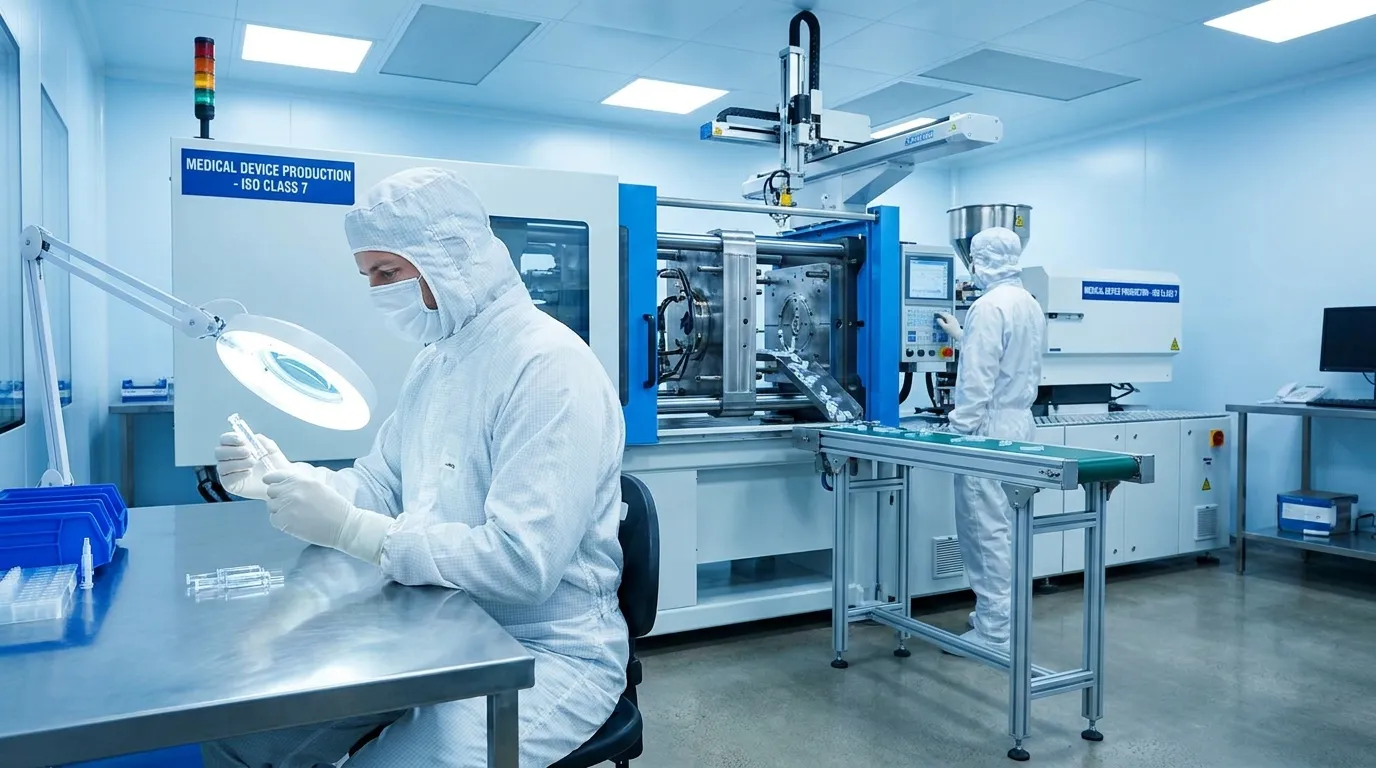
Medical injection molding produces medical-grade plastic components under tightly controlled manufacturing and quality conditions. Unlike standard molding, it requires validated processes, kiểm soát ô nhiễm, Truy xuất nguồn gốc, and material compliance suitable for healthcare environments.
Medical injection molding is used to manufacture parts for healthcare and laboratory products. Ví dụ phổ biến bao gồm vỏ ống tiêm, vỏ thiết bị chẩn đoán, Đầu nối IV, tay cầm phẫu thuật, and disposable testing components.
The molding process itself is similar to standard injection molding. Heated plastic resin is injected into a mold cavity under pressure. The difference is the production environment and quality requirements. Medical production often requires process validation, theo dõi vật liệu, documented inspections, and controlled handling procedures.
Các công ty sản xuất các bộ phận y tế cũng cần xem xét các kỳ vọng về quy định từ các tổ chức như FDA. Buyers usually expect suppliers to maintain detailed production records and stable process controls.
For readers who need broader tooling fundamentals, Các Hướng dẫn thành phần khuôn explains how mold systems support precision manufacturing across different industries.
Đúc phun y tế khác gì so với đúc tiêu chuẩn?
Medical molding prioritizes patient safety, Truy xuất nguồn gốc, and contamination control over pure production speed. Standard molding may focus mainly on cost and throughput, while medical production requires validated materials, documented processes, and stricter inspection standards.
A standard industrial plastic part may only need dimensional accuracy and cosmetic consistency. Medical parts often require additional documentation, material verification, and contamination control procedures before shipment approval.
The production environment also changes. Many medical components are manufactured in controlled areas to reduce airborne particles and contamination risks. Tool maintenance becomes more important because mold wear can introduce cosmetic defects or particulate contamination.
| Diện tích | Đúc tiêu chuẩn | Đúc phun y tế |
|---|---|---|
| Kiểm soát vật liệu | Theo dõi cơ bản | Truy xuất nguồn gốc đầy đủ |
| Kiểm tra | Kiểm tra hàng loạt | Quy trình làm việc QC được ghi lại |
| Môi trường sản xuất | Nhà xưởng tiêu chuẩn | Có kiểm soát hoặc tương thích với phòng sạch |
| Xác nhận | Giới hạn | Yêu cầu xác thực quy trình |
| Dung sai khuyết tật | Trung bình | Rất nghiêm ngặt |
Medical projects also tend to require longer supplier qualification. A supplier may need to demonstrate repeatability, khả năng kiểm tra, and documentation practices before production approval.
Which medical products commonly use injection molding?
Injection molding is widely used for disposable and reusable healthcare products because it supports high-volume production with tight dimensional consistency.
Medical manufacturers use molded plastic parts in:
- Thân ống tiêm
- Vỏ hộp mực chẩn đoán
- Tay cầm dụng cụ phẫu thuật
- IV và các thành phần phân phối chất lỏng
- Hệ thống phân phối thuốc
- Vật tư tiêu hao trong phòng thí nghiệm
- Giám sát vỏ thiết bị
A disposable syringe housing is a good example of high-volume medical molding. The part needs stable dimensions, kiểm soát ô nhiễm, and repeatable material quality across large production runs.
Diagnostic equipment often creates different requirements. Cosmetic quality and dimensional precision matter because parts may include snap fits, transparent windows, or electronic integration points.
For a broader overview of sector-specific production uses, SunshinePro của Ứng dụng đúc y tế page covers additional injection molding industries and part categories.
What materials are used in medical injection molding?
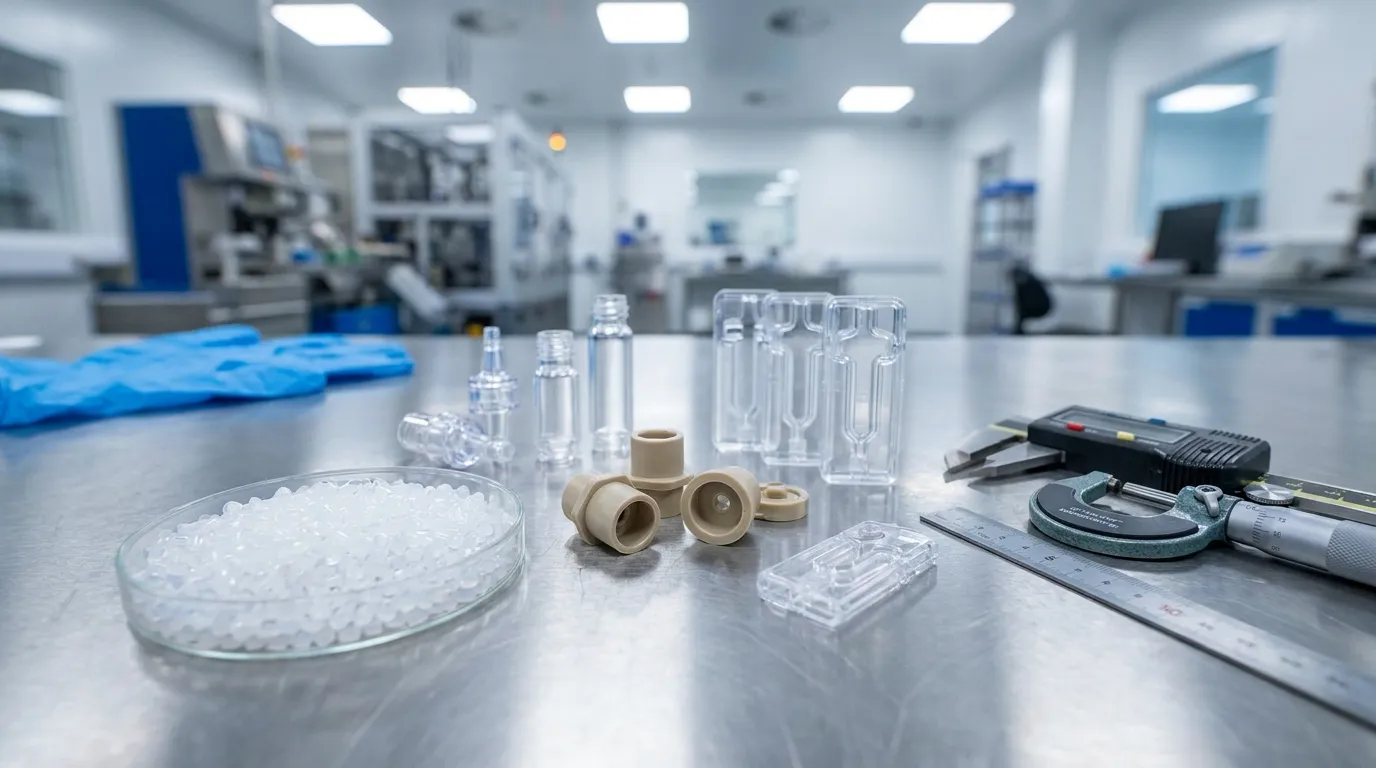
Medical injection molding commonly uses polypropylene, polycarbonate, polyethylene, Nhựa PVC, and PEEK depending on sterilization, Sức mạnh, and biocompatibility requirements. Material selection depends on whether the device is disposable, reusable, implantable, or exposed to chemicals or heat.
Medical-grade plastics are selected based on performance, khả năng tương thích tiệt trùng, and regulatory expectations. The same resin used for industrial production may not meet medical traceability or biocompatibility requirements.
Here’s a simplified comparison of common materials:
| Vật chất | Sử dụng y tế điển hình | Kháng khử trùng | Mức chi phí |
|---|---|---|---|
| Polypropylene (PP) | ống tiêm, các thùng chứa | Tốt | Thấp |
| polyethylene (HOẶC) | Tubing, Đóng gói | Tốt | Thấp |
| Polycarbonate (Máy tính) | Surgical handles, nhà ở | Rất tốt | Trung bình |
| Nhựa PVC | Ống y tế | Trung bình | Trung bình |
| NHÌN TRỘM | Các bộ phận liền kề Implant | Thông minh | Cao |
When is PEEK necessary?
PEEK is not automatically the best medical plastic. It performs well in high-temperature or demanding environments, but many disposable devices use lower-cost materials successfully.
A reusable surgical instrument handle may justify polycarbonate or PEEK because it must survive repeated sterilization cycles. A disposable diagnostic cartridge usually does not need that level of performance.
Material selection also affects tooling wear. Abrasive or high-temperature resins may require stronger tooling materials and better surface protection. Hướng dẫn của SunshinePro về Các thành phần khuôn chống mài mòn explains how mold durability supports stable long-run production.
Why do cleanroom compatibility and surface finish matter?
Cleanroom compatibility reduces contamination risks during medical molding production. Mold surface finish, khả năng chống mài mòn, and maintenance quality directly affect particulate generation, khuyết tật thẩm mỹ, and product cleanliness.
Not every medical product requires full cleanroom production, but contamination-sensitive devices often do. Airborne particles, residue buildup, or poor handling practices can create quality problems that are unacceptable in healthcare applications.
Surface finish also affects cleaning and maintenance. A poorly finished mold surface may trap residue more easily or create cosmetic inconsistency on molded parts. That becomes a larger issue for transparent or patient-contact products.
A polished mold surface is not only cosmetic in medical production. Poor surface quality can increase contamination retention and cleaning difficulty during production cycles.
Danh sách kiểm tra bảo trì phòng sạch và khuôn mẫu
- Sử dụng quy trình xử lý vật liệu có kiểm soát
- Giảm sự tích tụ hạt trong quá trình sản xuất
- Duy trì lịch trình làm sạch khuôn nhất quán
- Theo dõi tình trạng mài mòn và đánh bóng khuôn
- Tách dụng cụ y tế khỏi dụng cụ sản xuất nói chung
- Xác minh độ sạch của bao bì trước khi giao hàng
Medical manufacturers also pay close attention to tooling wear because worn surfaces can increase flash, contamination risk, hoặc biến đổi kích thước. SunshinePro’s article about hoàn thiện bề mặt khuôn y tế explains how finishing quality affects molded part performance.
What certifications and compliance standards matter?
Medical injection molding suppliers typically follow ISO 13485 quality management standards and FDA-related manufacturing requirements. Tài liệu, Truy xuất nguồn gốc, sự xác thực, and process control are essential for regulated medical production.
Medical molding suppliers are often evaluated on more than machining capability. Buyers also review quality systems, documentation procedures, and inspection controls before approving production.
Một trong những tiêu chuẩn phổ biến nhất là Tiêu chuẩn ISO 13485, which focuses on quality management systems for medical device manufacturing. The standard emphasizes traceability, risk management, and documented process control.
What does ISO 13485 cover?
ISO 13485 focuses on manufacturing consistency and documentation. It supports process validation, corrective actions, supplier control, and product traceability throughout production.
Các nhà cung cấp làm việc với các công ty thiết bị y tế cũng có thể cần phải phù hợp với các kỳ vọng được nêu trong Quy định hệ thống chất lượng của FDA.
Chỉ chứng nhận ISO không đảm bảo hiệu suất tạo hình y tế tốt. Buyers still need to evaluate tooling maintenance practices, contamination control procedures, and inspection discipline before approving a supplier.
What should a medical injection molding QC checklist include?
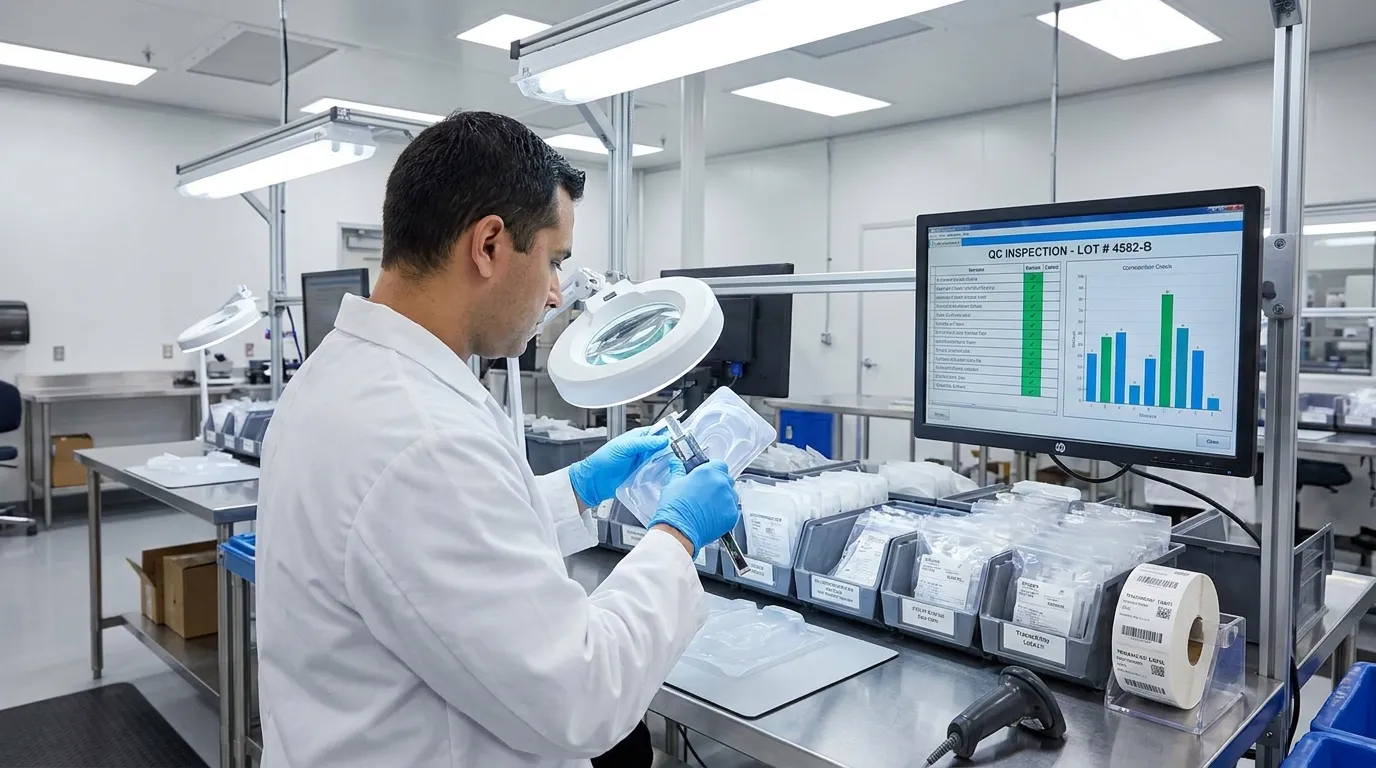
A medical injection molding QC checklist should verify material traceability, độ chính xác kích thước, kiểm soát ô nhiễm, visual quality, tính nhất quán quy trình, and packaging integrity. Medical parts require documented inspection steps throughout production, not only at final shipment.
Medical QC starts before molding begins. Incoming resin verification helps confirm that the correct medical-grade material is being used for production. Traceability records should connect each production batch to specific materials and process conditions.
In-process inspection monitors dimensions, chất lượng mỹ phẩm, and contamination risks during production. Final inspection verifies that packaging, Ghi nhãn, and part quality meet customer and regulatory requirements.
Danh sách kiểm tra QC ép phun y tế
| Khu vực kiểm tra | Những gì cần xác minh | Tại sao nó lại quan trọng |
|---|---|---|
| Nhựa đầu vào | Chứng nhận vật liệu và ID lô | Xác nhận việc sử dụng nhựa đã được phê duyệt |
| Tình trạng nấm mốc | Bề mặt mài mòn và sạch sẽ | Giảm nguy cơ ô nhiễm |
| Kiểm tra kích thước | Dung sai tới hạn | Duy trì sự phù hợp lắp ráp |
| Kiểm tra trực quan | Đèn flash, vết sụt, Sự ô nhiễm | Ngăn ngừa các khuyết tật về thẩm mỹ và chức năng |
| Xử lý hồ sơ | Tính nhất quán của nhiệt độ và áp suất | Hỗ trợ xác thực |
| Kiểm tra bao bì | Niêm phong và sạch sẽ | Bảo vệ xử lý vô trùng |
Incoming, In-Process, and Final Inspection
Incoming inspection focuses on resin quality and mold readiness. In-process inspection monitors production stability and dimensional consistency during manufacturing runs.
Final inspection verifies cosmetic condition, Tính toàn vẹn của bao bì, and traceability records before shipment approval. Medical manufacturers usually require documented QC records for each batch.
Heat treatment also affects mold stability during long production cycles. Proper tooling hardness reduces wear and dimensional drift over time. Hướng dẫn của SunshinePro về Xử lý nhiệt cho các bộ phận khuôn explains how hardened tooling improves production consistency.
How do you choose the right medical injection molding supplier?
The best medical injection molding suppliers combine regulatory experience, validated production processes, cleanroom capability, and consistent QC documentation. Buyers should evaluate traceability systems, tooling maintenance, material handling, and inspection procedures before approving production.
Medical sourcing decisions should focus on process reliability as much as tooling quality. A supplier may produce visually acceptable parts while still lacking proper traceability or contamination controls.
Buyers should ask suppliers practical questions before approval:
- Do you support documented process validation?
- Can you provide traceability records?
- How are molds cleaned and maintained?
- What inspection data is recorded during production?
- Do you support cleanroom-compatible manufacturing?
A supplier comparison often makes the difference clear. Supplier A may offer lower pricing with standard production controls. Supplier B may provide validated inspection records, documented mold maintenance, and traceable material handling. For regulated medical production, Supplier B usually reduces long-term compliance risk.
Production cost still matters, especially for disposable products. Buyers comparing tooling investments can review SunshinePro’s guide to Các yếu tố chi phí khuôn y tế to understand how tooling complexity and production requirements affect pricing.
Các nhà cung cấp xử lý sản xuất quốc tế cũng nên hiểu các kỳ vọng về chứng từ thương mại và nhập khẩu được nêu trong Trade.gov và Hoa Kỳ. Hải quan và Bảo vệ Biên giới.
Thực hiện bước tiếp theo đúng đắn
Medical injection molding projects succeed when tooling quality, Lựa chọn vật liệu, kiểm soát ô nhiễm, and inspection systems work together from the start. Buyers should evaluate more than part appearance alone. Truy xuất nguồn gốc, xác thực quy trình, bảo dưỡng nấm mốc, and clean production practices all affect long-term reliability.
If you’re reviewing suppliers or planning a new medical device project, start with a clear material strategy and a documented QC checklist. That approach reduces approval delays, lowers production risk, and helps maintain stable quality across future production runs.
Những câu hỏi thường gặp
Nhựa y tế là gì?
Medical-grade plastic is a resin formulated and tested for healthcare applications that require biocompatibility, sterilization resistance, and regulatory compliance. The right material depends on how the device is used and whether it contacts patients, chemicals, or heat during operation.
Does medical injection molding require a cleanroom?
Not every medical part requires full cleanroom molding, but contamination-sensitive products often do. Cleanroom requirements depend on the device category, regulatory expectations, and the level of contamination risk during production and packaging.
What is ISO 13485 in medical manufacturing?
ISO 13485 is a quality management standard used in medical device manufacturing. It focuses on documentation, Truy xuất nguồn gốc, kiểm soát quy trình, and risk management to help suppliers maintain consistent production quality.
Which plastics are commonly used in medical injection molding?
Common medical molding plastics include polypropylene, polyethylene, polycarbonate, Nhựa PVC, and PEEK. Material selection depends on sterilization method, khả năng kháng hóa học, strength requirements, and whether the product is disposable or reusable.
How are medical molded parts inspected?
Medical molded parts are inspected through dimensional checks, visual inspection, contamination monitoring, xác thực quy trình, and traceability review. Inspection happens during production and again before packaging and shipment approval.
What defects are unacceptable in medical molding?
Ô nhiễm, ánh sáng chớp nhoáng, những cú bắn ngắn, vết sụt, biến đổi kích thước, and surface defects can create quality or compliance risks in medical products. Acceptable tolerances depend on the part’s function, khớp lắp ráp, and regulatory requirements.
Chia sẻ:


Được viết bởi Sunshine
Tại Sunshine, Chúng tôi là nhà sản xuất và cung cấp chuyên nghiệp các linh kiện khuôn chính xác, cung cấp một loạt sản phẩm đa dạng cho ứng dụng dập và khuôn ép. Trọng tâm chính của chúng tôi bao gồm khuôn đục lỗ, ghim và ống lót đẩy, và cọc hướng dẫn cùng các bushing. Với gia công CNC tiên tiến, Kiểm soát chất lượng nghiêm ngặt, và năng lực sản xuất mạnh mẽ, chúng tôi đảm bảo độ tin cậy, các bộ phận chính xác cao, cùng với các linh kiện tiêu chuẩn có sẵn trong kho để cung cấp nhanh chóng và hiệu quả toàn cầu.
TIN TỨC
NHẬN DỊCH VỤ
Với các bộ phận chất lượng đáp ứng mọi ngân sách và đội ngũ nhân viên thân thiện được đào tạo để giúp chuyến thăm của bạn trở nên hữu ích và thuận tiện.
