



Medical Device Plastic Injection Molding: Design Tips for Molded Parts
Medical device plastic injection molding works best when part design decisions happen before tooling starts. Engineers should focus on wall thickness, góc draft, sterilization compatibility, các mức dung sai, and moldability early in development. Small geometry changes can prevent tooling revisions, validation delays, production defects, and unnecessary manufacturing costs later in the process.
Medical molded parts have far less room for design mistakes than consumer products. A feature that looks acceptable in CAD can still create warping, ánh sáng chớp nhoáng, sterilization failures, or tooling delays once production begins. This guide focuses on practical design decisions before mold manufacturing starts, so engineering teams can reduce risk and move into validation with fewer surprises.
What makes medical device plastic injection molding design different?

Medical device plastic injection molding requires stricter design control than standard consumer molding because geometry, material choice, sterilization compatibility, and validation requirements directly affect safety, Tuân thủ, và khả năng sản xuất.
Medical products must meet tighter quality expectations than most commercial plastic parts. A small dimensional issue can affect assembly, sterility, fluid flow, or patient safety. That changes how engineers approach geometry, các mức dung sai, and material selection from the beginning.
The regulatory side also affects design decisions. Thuộc tính Khung thiết bị y tế của FDA và các hệ thống chất lượng như Tiêu chuẩn ISO 13485 increase the importance of process consistency and documentation. Molded parts need repeatable performance, not just successful prototypes.
Medical parts also face sterilization exposure that consumer products rarely encounter. Steam, radiation, or chemical sterilization can weaken plastics, distort geometry, or shorten product lifespan if the wrong resin is selected.
| Phần nhựa tiêu dùng | Phần đúc y tế |
|---|---|
| Chất lượng mỹ phẩm tập trung | Tập trung vào xác nhận và an toàn |
| Kỳ vọng dung sai vừa phải | Tính nhất quán về kích thước chặt chẽ |
| Yêu cầu tài liệu thấp hơn | Tài liệu quy trình nghiêm ngặt |
| Hạn chế tiếp xúc khử trùng | Tiếp xúc khử trùng nhiều lần |
| Thay đổi thiết kế nhanh hơn | Các bản sửa đổi kỹ thuật có kiểm soát |
If your team still needs broader tooling knowledge, Sunshine Pro của Hướng dẫn thành phần khuôn hoàn chỉnh explains the larger injection mold engineering process in more detail.
Bạn cũng có thể xem lại Quy trình đúc thiết bị y tế before finalizing tooling decisions.
How do you know if a medical part is actually moldable?
A medical plastic part is considered moldable when its geometry supports consistent filling, sự đẩy ra, độ ổn định kích thước, and validation without requiring excessive tooling complexity or repeated secondary operations.
Many medical parts fail during tooling because the original CAD model was designed around appearance or assembly first, then manufacturability second. A design can look clean on screen but still create sink marks, short shots, or difficult ejection once production begins.
The easiest way to evaluate moldability is to review geometry before tooling approval. Engineers should check wall transitions, cắt giảm giá, góc draft, vị trí cổng, and cooling behavior early. Small adjustments during DFM review are far cheaper than modifying hardened tooling later.
Các tính năng thường tạo ra sự cố về dụng cụ
Several features increase mold complexity quickly:
- Đường cắt sâu yêu cầu các hành động phụ
- Các góc bên trong sắc nét
- Chuyển đổi độ dày thành web đột ngột
- Bề mặt phẳng không có gió lùa
- Sườn mỏng gắn vào thành dày
- Bề mặt mỹ phẩm che giấu vị trí cổng
A reusable surgical handle is a common example. The prototype may look correct during 3D printing, but once injection molding begins, missing draft angles can create ejection damage and surface drag marks. That often forces expensive tooling revisions after steel cutting has already started.
Complex undercuts and cosmetic geometry are not always the best choice for medical products. They may look acceptable in CAD, but they frequently increase tooling risk without improving device performance.
| Kiểm tra khả năng đúc | Tại sao nó lại quan trọng |
|---|---|
| Độ dày thành đồng đều | Giảm cong vênh và vết chìm |
| Góc nháp thích hợp | Hỗ trợ đẩy trơn tru |
| Hạn chế cắt xén | Giảm độ phức tạp của dụng cụ |
| Đường phân chia ổn định | Cải thiện độ lặp lại kích thước |
| Vị trí cổng có thể truy cập | Cải thiện tính nhất quán của điền |
For a broader overview of tooling structure, review these Khái niệm cơ bản về khuôn ép before finalizing production tooling.
Which medical-grade plastics work best for molded parts?
The best plastic depends on the device’s sterilization method, durability requirements, phơi nhiễm hóa học, and regulatory needs. Polycarbonate, polypropylene, polyethylene, and PEEK are among the most common medical injection molding materials.
No single resin works for every medical application. Some plastics handle repeated sterilization well but cost more. Others reduce material cost but struggle with dimensional stability or long-term chemical exposure.
A disposable diagnostic housing, Ví dụ, may use polypropylene because it balances chemical resistance and cost. A reusable surgical component may need PEEK or polycarbonate to survive repeated sterilization cycles and mechanical stress.
A successful prototype does not automatically mean the design is production-ready. Some materials perform well during testing but lose strength or discolor after repeated sterilization exposure.
| Vật chất | Sử dụng tốt nhất | Khả năng tương thích khử trùng | Hạn chế chính |
|---|---|---|---|
| Polypropylene (PP) | Thiết bị dùng một lần | Tốt | Độ cứng thấp hơn |
| Polycarbonate (Máy tính) | Vỏ phẫu thuật | Tốt | Nguy cơ nứt do ứng suất |
| Polyethylene (PE) | Hệ thống ống và chất lỏng | Trung bình | Khả năng chịu nhiệt thấp hơn |
| NHÌN TRỘM | Thiết bị hiệu suất cao | Thông minh | Chi phí cao hơn |
| Nhựa PVC | Các bộ phận y tế linh hoạt | Trung bình | Hạn chế quy định |
Material selection should also match manufacturing conditions. Clean room molding, phơi nhiễm hóa học, and long production runs all affect resin performance over time.
For more production context, Hướng dẫn của Sunshine Pro về Vật liệu đúc y tế explains how different medical plastics behave during manufacturing.
How do sterilization requirements change part design?
Sterilization requirements directly affect resin selection, độ dày thành, và độ ổn định kích thước lâu dài. A part that survives prototyping may still fail after repeated steam, radiation, or chemical sterilization cycles.
Sterilization affects more than material strength. It can change color stability, Bề mặt hoàn thiện, Linh hoạt, and dimensional accuracy over time. Engineers should evaluate sterilization early instead of treating it as a final production step.
Steam sterilization creates high heat exposure. Gamma radiation can weaken certain plastics. Chemical sterilization may create stress cracking in materials that already carry internal molding stress.
A disposable diagnostic housing offers a good example. One design used uneven wall thickness near a mounting feature. The part molded correctly during testing but warped after gamma sterilization because cooling behavior and shrinkage were inconsistent across the geometry.
| Phương pháp khử trùng | Mối quan tâm về thiết kế | Tiêu điểm được đề xuất |
|---|---|---|
| Khử trùng bằng hơi nước | Biến dạng nhiệt | Vật liệu chịu nhiệt |
| Bức xạ gamma | Độ giòn của vật liệu | Nhựa ổn định bức xạ |
| Khử trùng bằng hóa chất | Nứt ứng suất | Khả năng tương thích hóa học |
| Khử trùng EtO | Thông hơi và cặn bã | Khả năng truy cập hình học |
Engineers should also avoid late-stage sterilization changes. Switching sterilization methods after tooling approval often creates expensive redesign work.
What wall thickness and draft angle rules reduce molding problems?
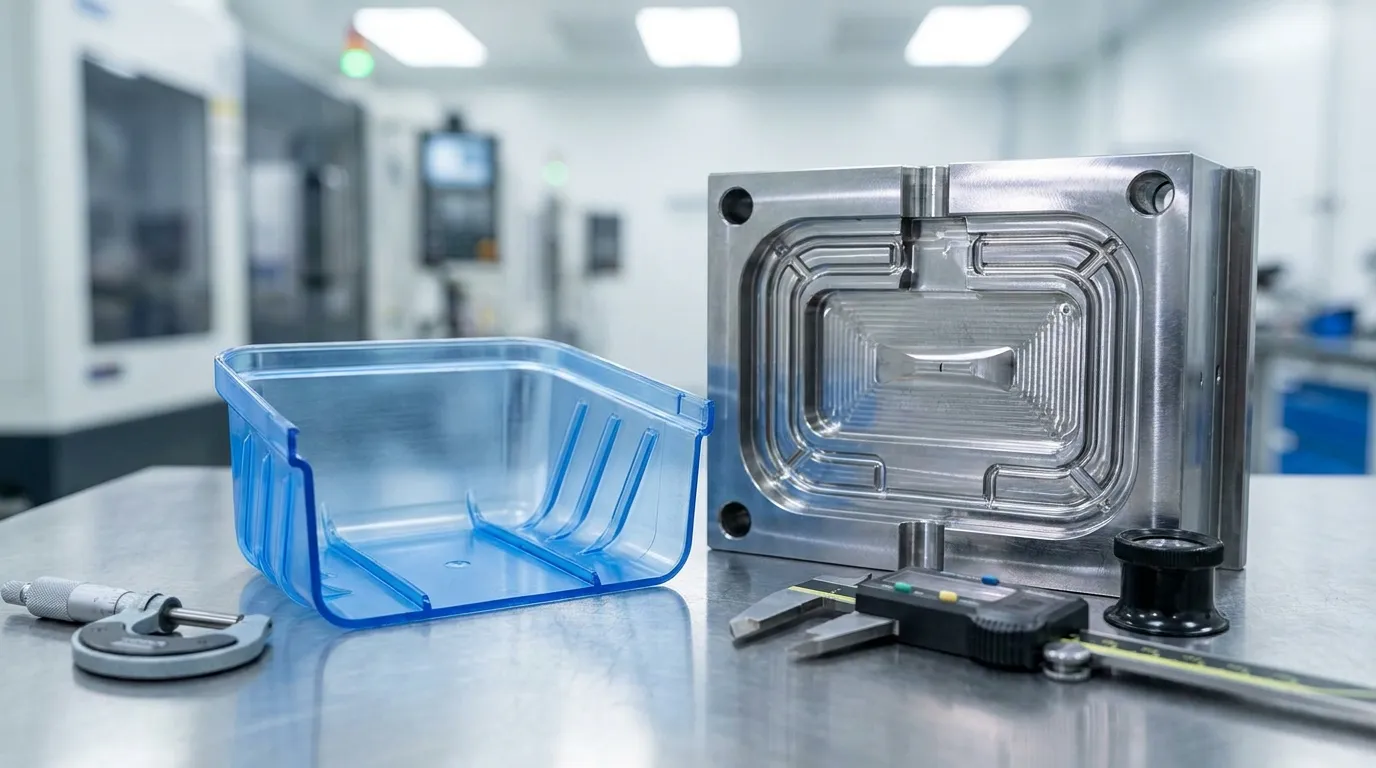
Consistent wall thickness and proper draft angles reduce warping, vết sụt, ánh sáng chớp nhoáng, and ejection damage. Small geometry changes early in design often prevent expensive tooling modifications later.
Wall thickness controls how plastic cools and shrinks inside the mold. Large thickness differences create uneven cooling, which often leads to warping, vết sụt, or dimensional variation.
Draft angles help the part release from the mold cleanly. Without enough draft, molded parts can drag across steel surfaces during ejection. That damages cosmetic finishes and increases cycle instability.
Các lỗi hình học thường gặp trong các bộ phận y tế
- Những con trùm dày được kết nối với những bức tường mỏng
- Bề mặt mỹ phẩm không có gió lùa
- Các góc bên trong sắc nét
- Sườn sâu mà không cần hỗ trợ thích hợp
- Chuyển đổi độ dày thành một cách đột ngột
A catheter component redesign showed how small geometry changes can improve manufacturability. The original design used deep side actions and tight corner transitions. After simplifying the geometry and improving draft angles, the manufacturer reduced tooling lead time and improved molding consistency.
| Quy tắc hình học | Thực hành được đề xuất |
|---|---|
| Độ dày của tường | Giữ đồng nhất nhất có thể |
| Góc nháp | Thêm bản nháp cho tất cả các mặt dọc |
| Bán kính góc | Sử dụng chuyển tiếp mượt mà |
| Độ dày sườn | Giữ mỏng hơn tường liền kề |
| Thiết kế boss | Tránh tích tụ vật liệu dày |
If you need deeper tooling context, Hướng dẫn của Sunshine Pro về Thiết kế thành phần khuôn explains how part geometry affects mold performance.
How tight should tolerances really be for medical molded parts?
Not every medical molded feature requires ultra-tight tolerances. Over-constraining dimensions increases tooling complexity, inspection costs, and production risk without always improving device performance.
Many engineering teams apply tight tolerances across entire parts instead of focusing on critical dimensions. That approach increases tooling cost and slows production without adding functional value.
Critical dimensions should receive tighter control because they affect assembly, sealing, fluid flow, or patient safety. Cosmetic or non-functional features usually do not need the same tolerance level.
A reusable medical enclosure showed this clearly during production planning. The original drawing specified ±0.02 mm tolerances across several non-critical features. The tighter limits increased tooling complexity and inspection time but did not improve product function. Relaxing those dimensions simplified manufacturing and reduced production risk.
Tighter tolerances are not always safer in medical molding. Excessive dimensional restrictions can actually increase molding instability by narrowing acceptable processing windows.
| Loại tính năng | Chiến lược dung sai được đề xuất |
|---|---|
| Bề mặt niêm phong | Kiểm soát chặt chẽ |
| Giao diện lắp ráp | Trung bình đến chặt chẽ |
| Tính năng thẩm mỹ | Kiểm soát vừa phải |
| Bề mặt không hoạt động | Dung sai đúc tiêu chuẩn |
| Phần mỏng linh hoạt | Đánh giá phụ thuộc vào vật liệu |
Material shrinkage also matters. Polypropylene, polycarbonate, and PEEK behave differently during cooling. Tolerance decisions should match actual molding behavior instead of CAD assumptions.
Long production runs can also create dimensional wear inside tooling. Hướng dẫn của Sunshine Pro về Kiểm soát mài mòn khuôn chính xác explains how mold wear affects long-term consistency.
Which design mistakes cause molding defects in medical parts?
Many medical molding defects begin with avoidable design decisions. Uneven walls, những góc sắc nhọn, đặt cổng không đúng vị trí, and unrealistic tolerances often create quality problems before production even begins.
Defects are often blamed on processing conditions, but part geometry usually creates the root problem. Poor cooling balance, difficult filling paths, and unstable ejection commonly trace back to early design decisions.
Medical parts are especially sensitive because validation requirements leave less room for process variation. A geometry problem that might be acceptable in consumer molding can become a major quality issue in regulated production.
| Nhược điểm | Nguyên nhân thiết kế chung |
|---|---|
| Dấu chìm | Phần tường dày |
| Cong vênh | Làm mát không đều |
| Đèn flash | Hình dạng ngắt kém |
| Ảnh ngắn | Đường dẫn dòng chảy mỏng |
| Đường hàn | Vị trí cổng kém |
A medical startup experienced a validation delay after selecting material late in the tooling process. The original mold design worked for one resin family but created filling instability after the material switch. That forced redesign work during validation instead of before tooling approval.
Tool durability matters as well. Repeated molding stress, abrasive resins, and tight shutoffs increase wear over time. Hướng dẫn của Sunshine Pro về Yếu tố độ bền của khuôn explains how tooling performance affects long-term molding stability.
What should engineers confirm before medical mold manufacturing starts?
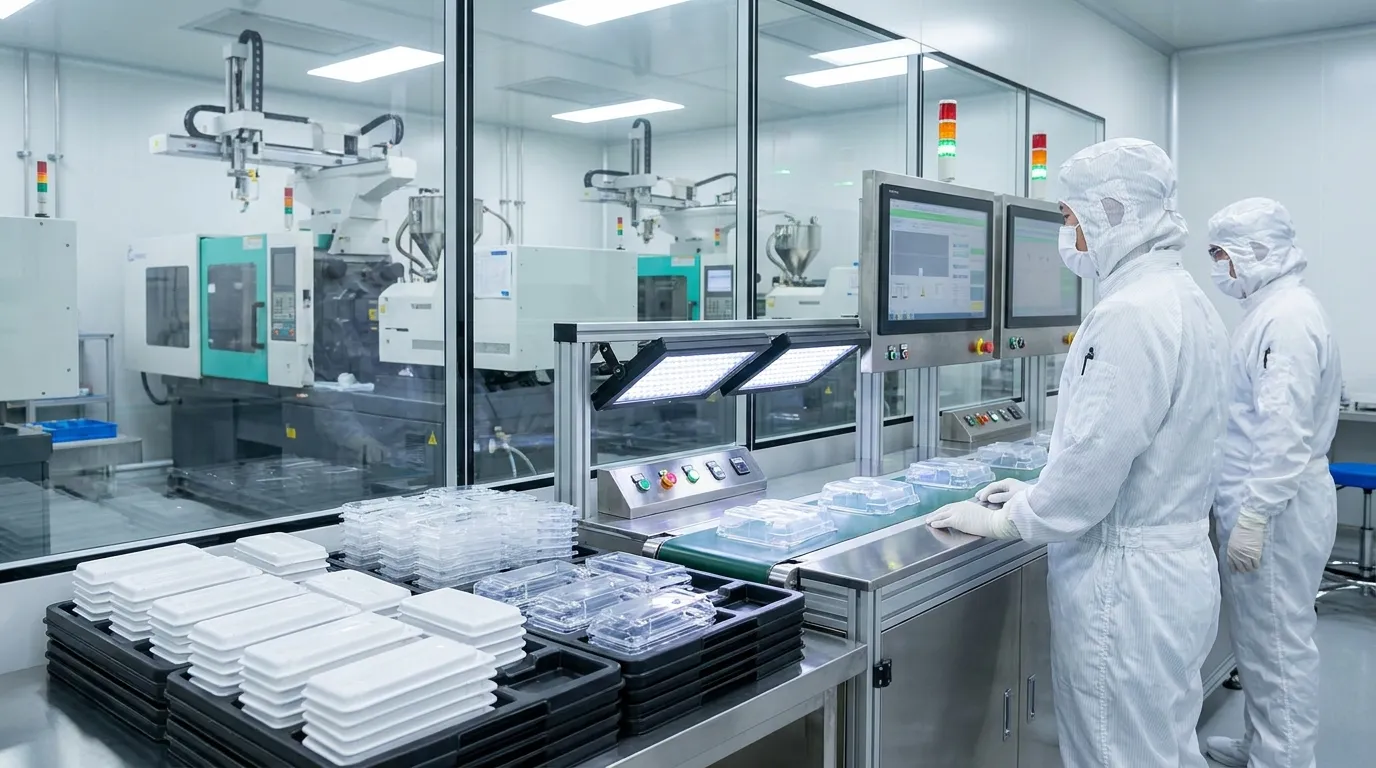
Teams should finalize manufacturability decisions before steel cutting begins. Once tooling enters production, even small design changes can increase lead times, validation work, và chi phí dụng cụ.
The most important step is aligning product engineering, Dụng cụ, and manufacturing requirements before approvals are signed. Lựa chọn vật liệu, sterilization strategy, vị trí cổng, and tolerance expectations should all be reviewed together.
Danh sách kiểm tra khả năng đúc của bộ phận y tế
| Mục đánh giá trước khi sử dụng cụ | Kiểm tra trạng thái |
|---|---|
| Hình học CAD đã hoàn thiện | □ |
| Góc nháp được xác nhận | □ |
| Độ dày thành đồng đều được xem xét | □ |
| Phương pháp khử trùng đã được phê duyệt | □ |
| Lựa chọn nhựa đã hoàn tất | □ |
| Chiến lược dung sai được xem xét | □ |
| Vị trí cổng được đánh giá | □ |
| Các yêu cầu xác nhận được ghi lại | □ |
| Đường chia tay đã được phê duyệt | □ |
| Hoàn tất quá trình xem xét DFM | □ |
Thông tin nhà sản xuất khuôn mẫu của bạn cần trước khi phê duyệt dụng cụ
Before tooling starts, provide:
- Tệp CAD cuối cùng
- Đặc điểm kỹ thuật vật liệu
- Yêu cầu khử trùng
- Khối lượng sản xuất dự kiến
- Yêu cầu về bề mặt mỹ phẩm
- Kỳ vọng xác thực
- Kích thước và dung sai quan trọng
Late-stage changes create some of the biggest delays in medical injection molding projects. A material revision or geometry update after tool steel is cut can add weeks to the production schedule.
Các nhóm chuẩn bị sản xuất có thể xem lại Sunshine Pro Chuẩn bị dụng cụ y tế process to better align engineering and manufacturing expectations.
Làm gì tiếp theo
Medical device plastic injection molding works best when manufacturability drives design decisions from the start. Small geometry adjustments, realistic tolerances, and early sterilization planning can prevent expensive tooling changes later.
Before approving a mold build, review the part from both an engineering and production perspective. Ask whether every feature truly improves function, or simply increases tooling complexity. A cleaner, more stable design usually shortens validation time and improves long-term production consistency.
If your team is still evaluating tooling strategy, material selection, or mold engineering details, use the broader injection mold guides from Sunshine Pro to support the next phase of development.
Những câu hỏi thường gặp
What plastics are commonly used in medical injection molding?
Polycarbonate, polypropylene, polyethylene, NHÌN TRỘM, and PVC are commonly used in medical injection molding because they offer different balances of durability, chemical resistance, sterilization compatibility, and biocompatibility. The best option depends on the device application and regulatory requirements.
How long does it take to make a medical injection mold?
Production mold timelines commonly range from eight to twenty weeks depending on part complexity, validation requirements, số lượng khoang, and tooling revisions. Design changes during tooling development often create the biggest delays.
Why is DFM important in medical injection molding?
DFM helps engineers identify geometry, sự khoan dung, and tooling risks before manufacturing begins. Early DFM review reduces mold revisions, production defects, and validation delays.
Can sterilization damage injection molded medical parts?
Có. Some plastics lose strength, discolor, warp, or crack after repeated steam, radiation, or chemical sterilization exposure. Material selection and wall design should account for sterilization early in development.
What causes warping in medical molded parts?
Warping is commonly caused by uneven wall thickness, poor cooling balance, sharp geometry transitions, or material shrinkage variation. Consistent geometry usually improves dimensional stability.
Are tighter tolerances always better for medical parts?
Không. Excessively tight tolerances increase tooling complexity, inspection costs, and molding instability. Critical dimensions should receive tighter control while non-critical features should remain manufacturable.
Chia sẻ:


Được viết bởi Sunshine
Tại Sunshine, Chúng tôi là nhà sản xuất và cung cấp chuyên nghiệp các linh kiện khuôn chính xác, cung cấp một loạt sản phẩm đa dạng cho ứng dụng dập và khuôn ép. Trọng tâm chính của chúng tôi bao gồm khuôn đục lỗ, ghim và ống lót đẩy, và cọc hướng dẫn cùng các bushing. Với gia công CNC tiên tiến, Kiểm soát chất lượng nghiêm ngặt, và năng lực sản xuất mạnh mẽ, chúng tôi đảm bảo độ tin cậy, các bộ phận chính xác cao, cùng với các linh kiện tiêu chuẩn có sẵn trong kho để cung cấp nhanh chóng và hiệu quả toàn cầu.
TIN TỨC
NHẬN DỊCH VỤ
Với các bộ phận chất lượng đáp ứng mọi ngân sách và đội ngũ nhân viên thân thiện được đào tạo để giúp chuyến thăm của bạn trở nên hữu ích và thuận tiện.
