



Chốt lõi trong ép phun: Cách chúng tạo ra lỗ và các đặc điểm bên trong
Core pins injection molding systems use precision pins to create holes, các khe, and internal features inside plastic parts. Molten resin flows around the pin during injection, leaving a finished void after cooling. Proper pin material, hỗ trợ, cân bằng làm mát, and tolerance control help prevent flash, hole distortion, mòn sớm, and molded part defects. Stainless steel and carbide are common choices depending on resin type and production demands.
Small mold components often decide whether a molded part runs smoothly in production or creates constant quality problems. Core pins are a good example. A poorly supported pin can bend, wear out early, or produce inconsistent holes after thousands of cycles. A well-designed pin improves dimensional accuracy, extends mold life, and reduces downtime. Understanding how these pins work helps engineers and buyers avoid expensive tooling mistakes before production starts.
What are core pins in injection molding?
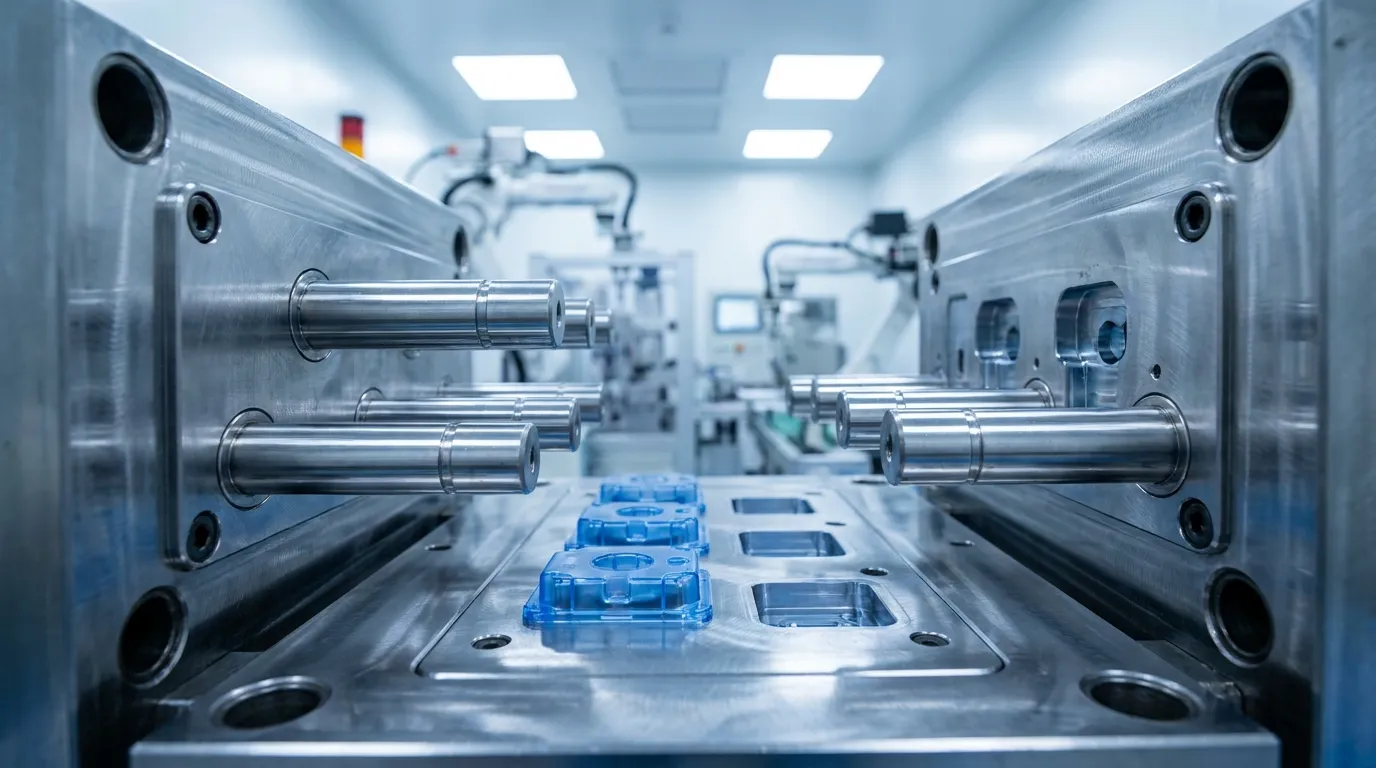
Core pins in injection molding are precision mold components used to create holes, các khe, and internal features inside plastic parts. They stay fixed inside the mold while molten plastic flows around them during injection and cooling.
Core pins are usually installed inside the mold core or cavity area. Their job is simple: occupy space where plastic should not exist. When the part cools and ejects, the empty space left behind becomes a finished internal feature. Theo DME, these pins are commonly used for precision molding applications where dimensional control matters.
Most core pins are made from hardened tool steel, thép không gỉ, or tungsten carbide. The material depends on the resin being molded, expected production volume, and wear conditions. Glass-filled plastics, Ví dụ, can wear standard steel quickly because of their abrasive filler content.
Manufacturers also vary the shape and geometry depending on the part design. Some pins form simple round holes, while others create complex internal channels or narrow slots. High-volume molds often use replaceable chân lõi chính xác so worn pins can be swapped without rebuilding the entire mold.
How do core pins form holes and internal features?
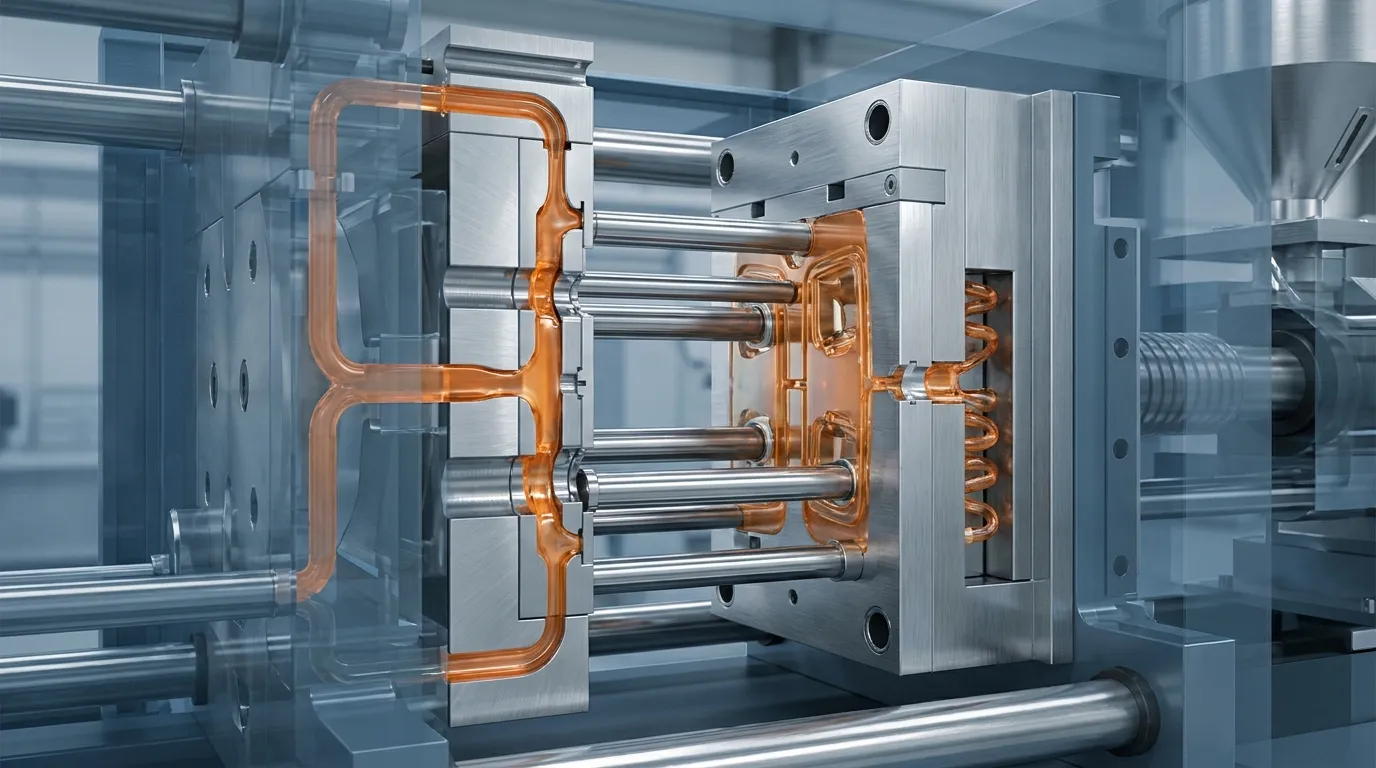
Core pins create internal geometry by occupying space inside the mold cavity while molten plastic flows around them. Sau khi làm nguội, the remaining void becomes the finished hole, channel, or internal feature in the molded part.
The molding cycle starts when the mold closes and molten resin enters the cavity under pressure. The core pin blocks plastic from filling a specific area. Resin flows around the pin surface instead, shaping the surrounding geometry during injection and packing. Truyền thông điện tử explains that this process is essential for creating internal molded features without secondary machining.
Trong quá trình tiêm và đóng gói
Pressure inside the cavity can become extremely high, especially in thin-wall parts or glass-filled materials. If the pin is too thin or unsupported, it may deflect slightly during injection. That small movement can create oval holes, dimensional drift, or uneven wall thickness.
This problem appears often in connector housings and medical parts with micro-features. A medical housing mold using thin carbide pins may hold tight tolerances successfully, but only if the pin length and support geometry are balanced carefully.
Trong quá trình làm mát và đẩy ra
Cooling also affects final hole quality. Uneven heat transfer around the pin can cause shrinkage differences in the molded plastic. Some molds add support sleeves or optimized cooling channels to stabilize temperatures around long pins.
Sau khi làm nguội, the mold opens and the part ejects. The core pin must release cleanly without dragging or sticking. If resin shrinks too tightly around the pin, ejection force rises and surface damage becomes more likely.
Which materials are used for core pins?
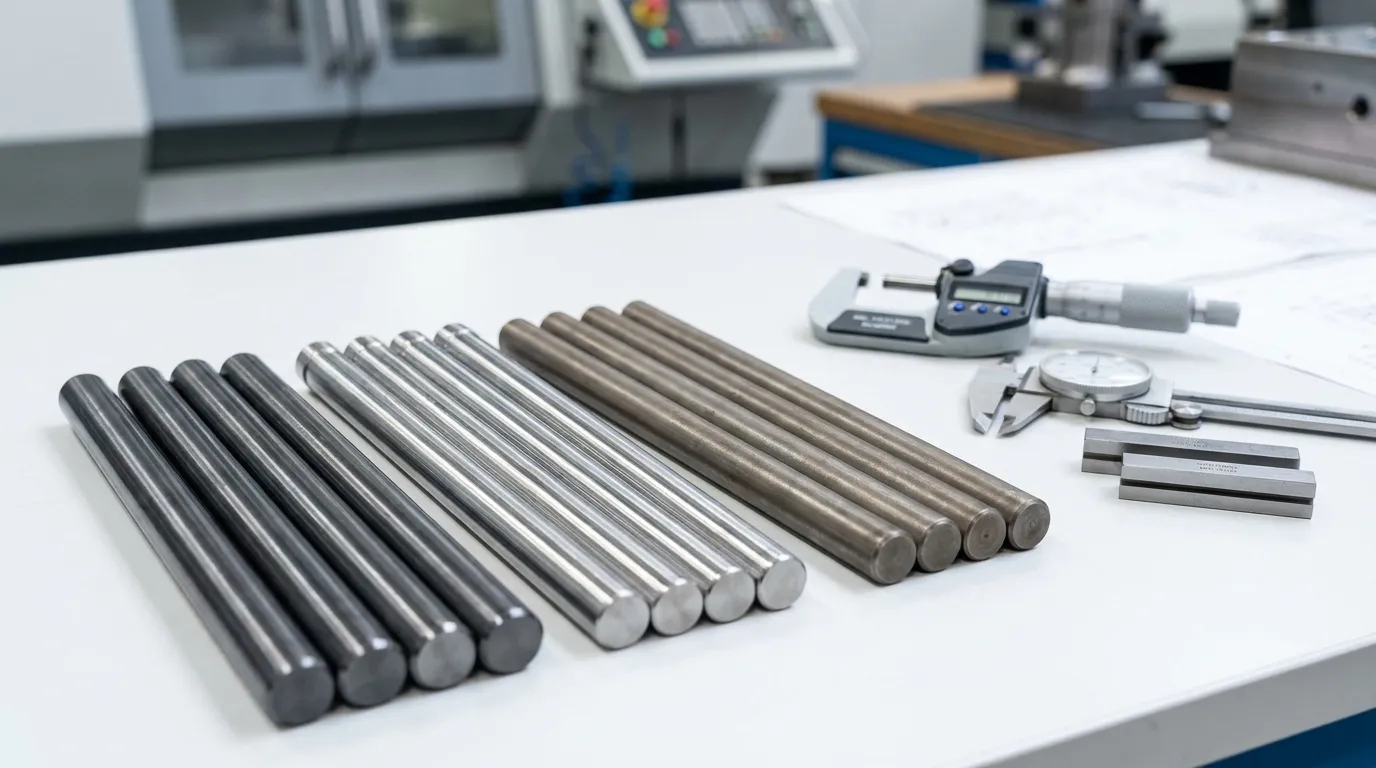
Core pin material selection depends on resin abrasiveness, corrosion exposure, and tolerance requirements. Stainless steel works well for corrosive environments, while carbide performs better in high-wear applications such as glass-filled plastics.
Different molding conditions place different stresses on a core pin. Heat cycling, injection pressure, resin chemistry, and abrasive fillers all affect pin life. Choosing the wrong material can shorten maintenance intervals dramatically.
A standard tool steel pin may work perfectly for low-volume consumer parts. The same pin could wear rapidly in an automotive mold running glass-filled nylon 24 hours a day. Falcon CNC Thụy Sĩ highlights carbide as a strong option for high-wear molding environments.
| Vật chất | Trường hợp sử dụng tốt nhất | Lợi thế chính | Hạn chế chính |
|---|---|---|---|
| Thép công cụ | Đúc chung | Hiệu quả về chi phí | Khả năng chống mài mòn thấp hơn |
| Thép không gỉ | Nhựa ăn mòn | Chống ăn mòn | Khả năng chống mài mòn ít hơn cacbua |
| Cacbua vonfram | Nhựa chứa đầy thủy tinh | Chống mài mòn tuyệt vời | Chi phí cao hơn |
Carbide is not always the best option. It performs well in abrasive applications, but stainless steel is often safer for corrosive resin systems. PVC and flame-retardant materials can attack standard steels over time, especially in humid production environments.
A high-volume bottle cap mold is one practical example. Switching from stainless to carbide pins may extend maintenance intervals significantly when abrasive additives increase wear rates. Vẫn vậy, carbide becomes harder to justify for low-volume molds with moderate tolerances.
For molds requiring specialized geometries, many manufacturers use ghim khuôn tùy chỉnh designed specifically for the part shape and resin type.
What problems can poor core pin design cause?
Poor core pin design can cause dimensional drift, ánh sáng chớp nhoáng, warped holes, các phần dính, and premature pin failure. Thin unsupported pins and incorrect material selection are common causes of molding quality problems.
Core pins directly affect molded part quality because they control internal geometry. Even minor pin movement during injection can create visible defects or tolerance issues. Cooling imbalance around the pin may also distort the surrounding plastic.
Vỏ điện tử tiêu dùng là một ví dụ phổ biến. If a long unsupported pin sits near uneven cooling zones, the finished hole may become slightly oval after shrinkage. That small defect can create assembly problems later.
Hướng dẫn thiết kế làm mát UPMold shows how cooling imbalance contributes to warpage and dimensional inconsistency during molding.
Bảng khắc phục sự cố lỗi chân lõi
| Vấn đề | Nguyên nhân có thể | Điều kiện pin | Đề xuất sửa lỗi |
|---|---|---|---|
| Nhấp nháy xung quanh lỗ | Chuyển động ghim | Hỗ trợ lỏng lẻo hoặc mòn | Cải thiện độ vừa vặn hỗ trợ |
| Lỗ hình bầu dục | Độ lệch chân | Chốt mỏng dài | Tăng đường kính hoặc hỗ trợ |
| Dính trong quá trình phóng | Co ngót dư thừa | Mài mòn bề mặt | Đánh bóng hoặc ghim sơn |
| Mòn nhanh | Nhựa mài mòn | Xói mòn thép | Nâng cấp lên cacbua |
| Vết cháy gần tính năng | Thông gió kém | Tích tụ nhiệt | Cải thiện hệ thống thông gió và làm mát |
Very thin pins may create complex geometry successfully, but unsupported long pins increase the risk of deflection during production. High precision tolerances become difficult to maintain once thermal movement and repeated pressure cycles enter the process.
Cooling matters just as much as machining accuracy. Some molds fail dimensional inspections because the thermal balance around the pin changes during long production runs. Better cooling layout often solves the issue faster than tighter machining tolerances.
If molded parts also rely on ejection around internal features, understanding thiết kế tay áo đẩy can help reduce sticking and part damage.
Core pins vs ejector pins: what is the difference?
Core pins shape internal features, while ejector pins push finished parts out of the mold after cooling. Core pins usually remain stationary during molding, while ejector pins move during the ejection stage.
These two mold components often get confused because both appear as cylindrical pins inside the tool. Their functions are completely different. Core pins create geometry. Ejector pins remove the finished part from the mold.
Công nghệ Opro explains that core pins participate directly in cavity shaping, while ejector systems activate only after cooling.
| Đặc tính | Chân lõi | Chân đẩy |
|---|---|---|
| Chức năng chính | Tạo lỗ / tính năng | Đẩy phần đúc ra |
| Phong trào | Thường đứng yên | Di chuyển trong quá trình phóng |
| Vị trí trong chu kỳ | Phun và làm mát | Giai đoạn phóng |
| Mối quan tâm chính về mài mòn | Độ võng và mài mòn | Trượt lặp đi lặp lại |
The distinction matters during mold design reviews. A buyer focused only on ejector placement may overlook critical support requirements for long core pins. That oversight can create expensive tooling corrections later.
For broader tooling comparisons, Các Hệ thống đẩy khuôn section explains how ejection components interact with molded part release. Engineers comparing different component categories can also review the Hướng dẫn chốt đẩy for additional tooling details.
What should engineers check before approving a core pin design?
Before approving a core pin layout, engineers should verify support length, Lựa chọn vật liệu, cooling exposure, and expected resin wear conditions. Small design compromises often become production failures after high-volume cycling starts.
Long unsupported pins are one of the biggest warning signs. A small connector feature may look acceptable in CAD, but repeated injection pressure can bend the pin slightly during production. Support sleeves or geometry changes are sometimes safer than pushing tolerance limits too aggressively.
Ma trận lựa chọn vật liệu pin lõi
| Loại nhựa | Mức độ mặc | Rủi ro ăn mòn | Vật liệu được đề xuất | Đánh đổi |
|---|---|---|---|---|
| PP tiêu chuẩn | Thấp | Thấp | Thép công cụ | Chi phí thấp hơn |
| Nylon chứa đầy thủy tinh | Cao | Thấp | Cacbua | Chi phí dụng cụ cao hơn |
| Nhựa chống cháy | Trung bình | Cao | Thép không gỉ | Mài mòn nhanh hơn cacbua |
| Nhựa y tế | Trung bình | Trung bình | Thép không gỉ | Chống ăn mòn tốt |
Danh sách kiểm tra phê duyệt
- Xác minh đường kính chốt so với chiều dài không được hỗ trợ
- Xem xét độ mài mòn của nhựa và hàm lượng chất độn
- Kiểm tra bố cục làm mát gần các chốt dài
- Xác nhận kỳ vọng dung sai với khối lượng sản xuất
- Kiểm tra lỗ thông hơi xung quanh các tính năng hẹp
- Xem lại khả năng truy cập thay thế để bảo trì
High precision tolerances are meaningless if cooling balance is poor. Some molds achieve excellent machining accuracy initially, then drift during production because heat distribution changes around the core area.
Dành cho các kỹ sư cần rộng hơn Tổng quan về thành phần khuôn hoàn chỉnh, the pillar guide explains how core pins interact with cooling systems, các lỗ sâu, các thiết bị đẩy, and other tooling elements across the full mold structure.
Thực hiện bước tiếp theo đúng đắn
Core pins injection molding systems look simple at first, but they influence part quality, tuổi thọ dụng cụ, Tần suất bảo trì, and production stability more than many buyers expect. The right pin material and support design can prevent flash, hole distortion, and early wear before production even starts.
If you're reviewing a new mold design, focus on resin type, unsupported pin length, cân bằng làm mát, and expected production volume first. Those factors usually matter more than chasing the tightest possible tolerance on paper. For more complex tooling decisions, reviewing the Hướng dẫn thiết kế khuôn ép can help connect core pin choices to the broader mold system.
Những câu hỏi thường gặp
What is a core pin in injection molding?
A core pin is a precision mold component used to form holes, các khe, and internal features inside molded plastic parts. It stays inside the cavity while molten resin flows around it during injection and cooling.
What is the difference between a core pin and an ejector pin?
Core pins create internal geometry inside molded parts, while ejector pins remove the finished part from the mold after cooling. Each component works during a different stage of the molding cycle.
What materials are core pins made from?
Core pins are commonly made from tool steel, thép không gỉ, or tungsten carbide. The best material depends on wear conditions, corrosion exposure, resin abrasiveness, và sản lượng sản xuất.
Can core pins cause molding defects?
Có. Poorly designed or worn core pins can create flash, biến đổi kích thước, sticking issues, and distorted holes. Long unsupported pins are especially vulnerable to movement during injection.
Why do core pins wear out?
Core pins wear out because of repeated heat cycles, resin abrasion, and injection pressure. Glass-filled plastics and corrosive resins usually increase wear rates faster than standard materials.
How accurate are injection mold core pins?
Precision core pins can hold extremely tight tolerances when they are properly supported and cooled. High-precision molds may achieve micron-level consistency depending on the material and production conditions.
Chia sẻ:


Được viết bởi Sunshine
Tại Sunshine, Chúng tôi là nhà sản xuất và cung cấp chuyên nghiệp các linh kiện khuôn chính xác, cung cấp một loạt sản phẩm đa dạng cho ứng dụng dập và khuôn ép. Trọng tâm chính của chúng tôi bao gồm khuôn đục lỗ, ghim và ống lót đẩy, và cọc hướng dẫn cùng các bushing. Với gia công CNC tiên tiến, Kiểm soát chất lượng nghiêm ngặt, và năng lực sản xuất mạnh mẽ, chúng tôi đảm bảo độ tin cậy, các bộ phận chính xác cao, cùng với các linh kiện tiêu chuẩn có sẵn trong kho để cung cấp nhanh chóng và hiệu quả toàn cầu.
TIN TỨC
NHẬN DỊCH VỤ
Với các bộ phận chất lượng đáp ứng mọi ngân sách và đội ngũ nhân viên thân thiện được đào tạo để giúp chuyến thăm của bạn trở nên hữu ích và thuận tiện.
