



Quy trình khuôn ép phun: Hướng dẫn từng bước từ Thiết kế đến Sản xuất
Injection mold process describes the complete workflow used to design, manufacture, test, and mass-produce plastic parts using injection molding tools. The process includes DFM review, thiết kế khuôn, gia công, thử nghiệm nấm mốc, việc lấy mẫu, quality validation, and production ramp-up. Stable production depends on accurate tooling, controlled process parameters, and early defect prevention before full manufacturing begins.
Injection molding projects rarely fail because of one major issue. Most problems start with small design mistakes, rushed tooling decisions, or unstable sampling results. Understanding the full process helps buyers avoid delays, reduce tooling revisions, and improve production consistency. This guide explains each stage clearly, from early DFM review to final production approval.
What Is the Injection Mold Process?
Injection mold process refers to the complete workflow of designing, building, kiểm tra, and using a mold to mass-produce plastic parts. The process includes DFM review, sản xuất khuôn, việc lấy mẫu, quality approval, and stable production ramp-up.
The process starts long before molten plastic enters a mold cavity. Manufacturers first review the product design, evaluate moldability, and identify production risks. This early planning stage has a major effect on tooling quality, độ ổn định chu kỳ, và chi phí sản xuất dài hạn.
Khi thiết kế được phê duyệt, the mold moves through machining, lắp đặt, sự đánh bóng, and assembly. Sau khi hoàn thành việc chế tạo khuôn, manufacturers perform mold trials and sample inspections before releasing the tool for production. Theo Tổng quan về ép phun IQS Directory, injection molding remains one of the most common manufacturing methods for high-volume plastic parts.
If you're new to tooling fundamentals, cái này Hướng dẫn khuôn ép nhựa gives broader background on mold structures and manufacturing systems. Bạn cũng có thể xem lại Kiến thức cơ bản về thiết kế khuôn nhựa to understand how product geometry affects tooling decisions.
How Does the Injection Mold Process Work Step by Step?
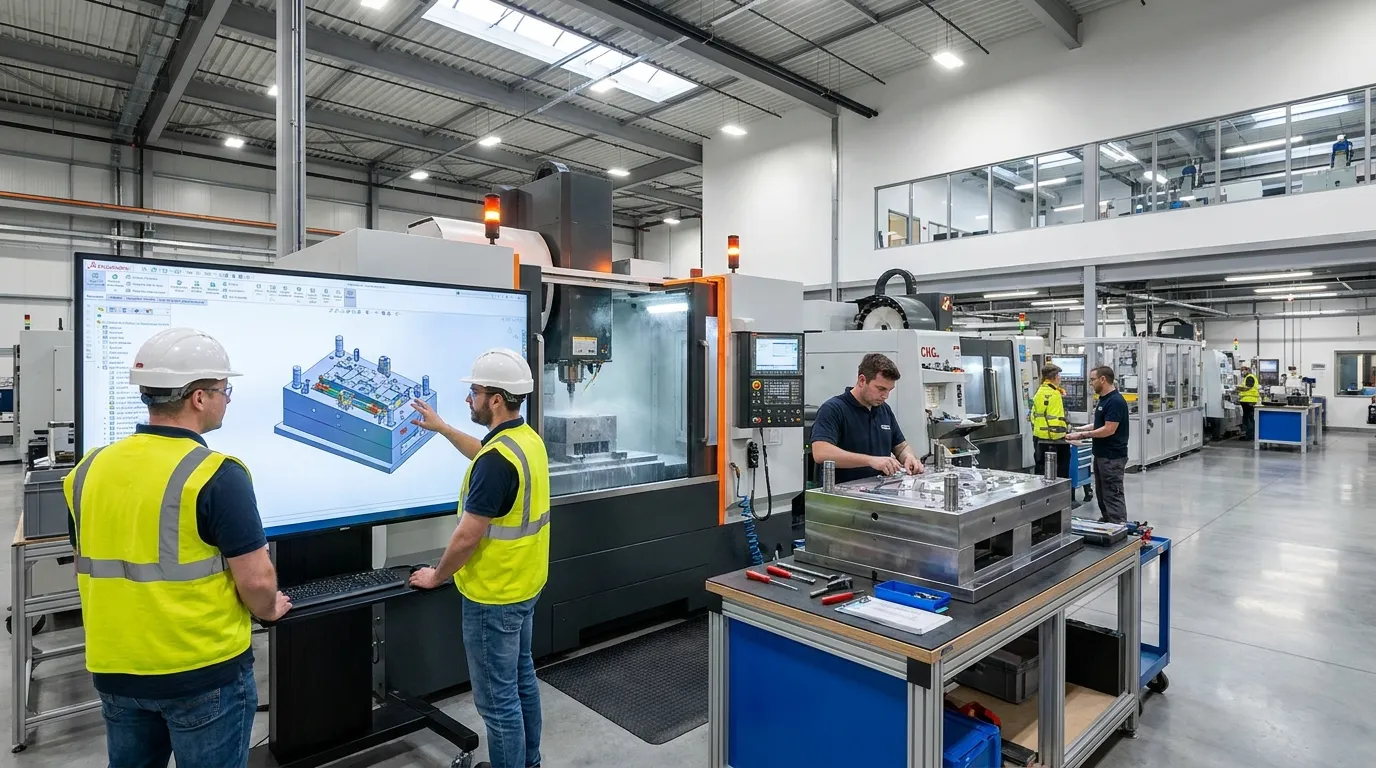
The injection mold process starts with design review and DFM analysis, followed by mold design, gia công, cuộc họp, việc lấy mẫu, kiểm tra, và phê duyệt sản xuất cuối cùng. Stable mass production begins only after part quality and cycle consistency are confirmed.
Most injection molding projects follow the same core sequence. The exact timeline changes based on complexity, tooling size, and production requirements, but the overall workflow stays similar across industries.
| Sân khấu | Mục tiêu chính | Đầu ra chung |
|---|---|---|
| Đánh giá DFM | Xác định rủi ro đúc | Đề xuất thiết kế |
| Thiết kế khuôn mẫu | Tạo bố cục công cụ | Tệp khuôn 3D |
| Sản xuất công cụ | Xây dựng khuôn mẫu | Các thành phần khuôn gia công |
| Thử khuôn | Kiểm tra hiệu suất khuôn | Bộ phận mẫu T1 |
| Xác nhận | Xác nhận tính nhất quán về chất lượng | Mẫu đã được phê duyệt |
| Đường dốc sản xuất | Ổn định sản xuất | Sản lượng sản xuất đầy đủ |
Đánh giá thiết kế và DFM
The first stage focuses on manufacturability. DFM, or Design for Manufacturing, checks whether the part can be molded consistently without excessive defects or tooling risk. Kỹ sư đánh giá độ dày thành, góc draft, cắt giảm giá, vị trí cổng, and material flow before steel cutting begins.
Vỏ điện tử tiêu dùng là một ví dụ phổ biến. If the housing wall thickness changes late in the project, the mold may require additional machining after sampling. That adds cost and delays production approval. Early DFM prevents many of these problems before tooling starts.
For a deeper breakdown of design optimization, review this guide on quá trình ép phun DFM.
Sản xuất khuôn mẫu
After DFM approval, mold manufacturing begins. Toolmakers machine steel blocks using CNC equipment and EDM processes to create cavities, Màu sắc, and detailed part geometry. Kênh làm mát, ejector systems, and alignment features are added during this stage.
Fast tooling is not always the best option. Rushed DFM review often creates larger delays later when mold corrections become necessary. A slightly longer design review usually saves time during sampling and production.
Lấy mẫu và phê duyệt sản xuất
Once tooling is assembled, manufacturers perform mold trials to evaluate part quality and machine stability. The first sample run is often called T1 sampling. Kỹ sư kiểm tra kích thước, chất lượng mỹ phẩm, sự co lại, and molding consistency.
Mass production does not start immediately after T1 approval. Most projects require process adjustments and repeat testing before production becomes stable. This stage determines whether the mold can reliably support long-term manufacturing.
Why Is DFM Review Important Before Mold Manufacturing?
DFM review helps manufacturers identify molding risks before tooling begins. Early analysis reduces defects, prevents expensive steel modifications, and improves production consistency after sampling starts.
DFM review is one of the most important stages in the injection molding workflow. Khi bắt đầu cắt thép, design changes become expensive and time-consuming. A simple geometry issue can require additional machining, insert replacement, or another round of mold trials.
Theo Hướng dẫn về khả năng tạo khuôn của Protolabs, Độ đặc độ dày thành, draft angle design, and material flow all affect molding success. These factors also influence cooling time, part warpage, and cycle stability.
- Các góc nhọn tạo ra các điểm căng thẳng
- Không đủ góc nháp để đẩy bộ phận
- Độ dày thành không đồng đều gây ra vết chìm
- Vị trí cổng kém ảnh hưởng đến dòng vật liệu
- Dung sai chặt chẽ làm tăng độ phức tạp của dụng cụ
A draft-angle correction is a good real-world example. A part may look acceptable in CAD, but without proper draft, the component sticks during ejection. Fixing that problem before machining prevents costly steel modifications later.
Low mold pricing can look attractive initially, but poor sampling stability usually increases long-term production cost and quality risk. Experienced suppliers spend more time reviewing manufacturability because stable production matters more than fast quoting.
Bạn có thể tìm hiểu thêm về tối ưu hóa thiết kế và Yêu cầu thiết kế khuôn before tooling approval.
What Happens During Injection Mold Manufacturing?
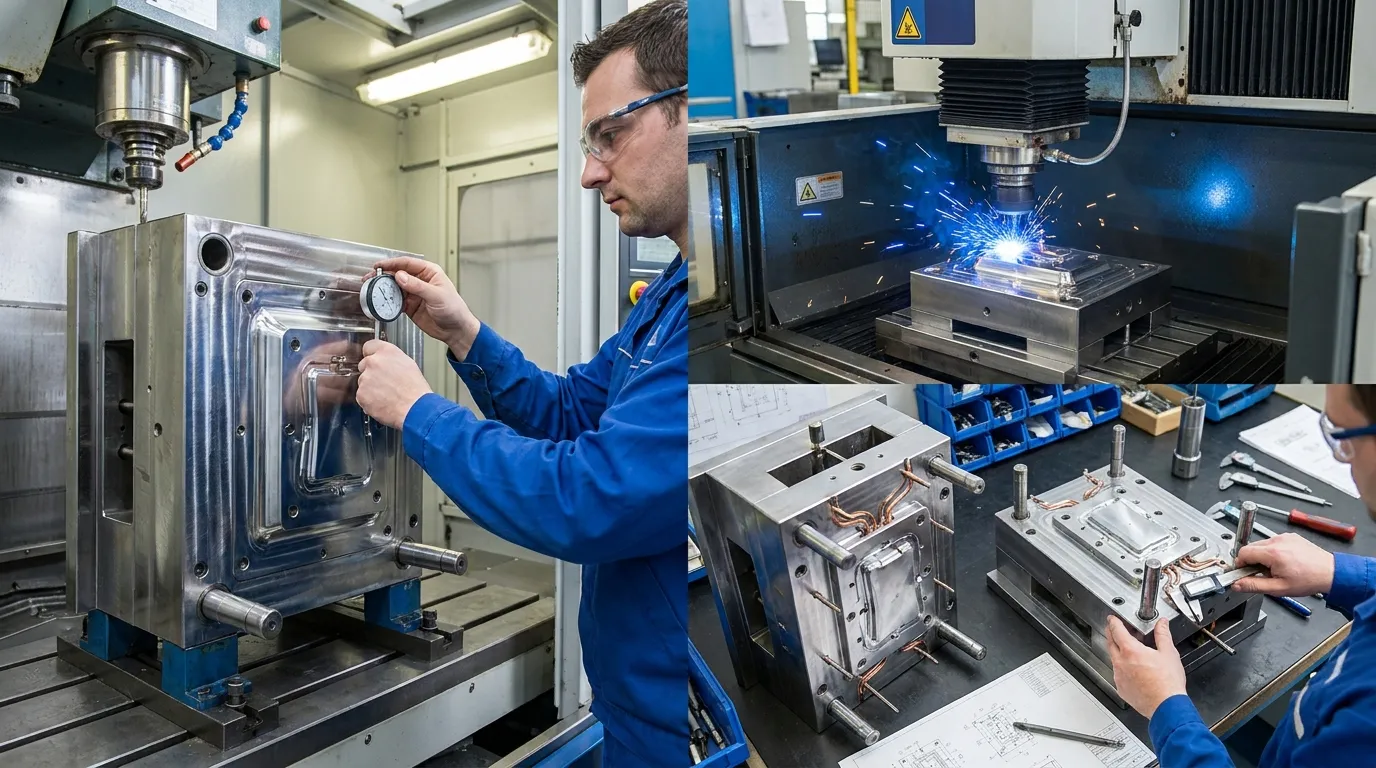
Injection mold manufacturing combines CNC machining, Xử lý EDM, sự đánh bóng, lắp đặt, and assembly to produce a mold capable of repeatable production. Accuracy during this stage directly affects part quality, thời gian chu kỳ, và tuổi thọ khuôn.
Tool manufacturing transforms engineering files into a functional production mold. Most molds are built from hardened steel or aluminum, depending on expected production volume and part complexity.
Gia công và EDM
CNC machining removes large sections of steel and creates the primary mold structure. EDM, or Electrical Discharge Machining, handles finer details and sharp internal features that traditional machining cannot easily produce.
Complex automotive trim components often require both machining methods. Tight cosmetic surfaces, snap-fit details, and textured areas usually need additional EDM processing before polishing begins.
| Bước sản xuất | Mục đích |
|---|---|
| Gia công CNC | Tạo cấu trúc khuôn |
| Xử lý EDM | Tạo hình học chi tiết |
| Mài | Cải thiện bề mặt chính xác |
| Đánh bóng | Cải thiện độ hoàn thiện bề mặt |
| Lắp | Căn chỉnh các thành phần khuôn |
| Lắp ráp | Xây dựng hệ thống khuôn cuối cùng |
Lắp khuôn và đánh bóng
After machining, technicians fit all mold components together and check alignment accuracy. Cooling systems, chốt đẩy, các thanh trượt, and guide components are installed during assembly. Surface polishing then improves cosmetic appearance and material flow.
A medical device enclosure is a good example. During sampling, cosmetic defects may appear near visible surfaces. Additional polishing is often required before final approval. Theo Nghiên cứu quy trình đánh bóng khuôn, surface finishing has a direct impact on molded part quality.
Manufacturers also verify mold movement and sealing during this stage. Poor alignment can cause flash defects, biến đổi kích thước, or premature tool wear during production.
For additional tooling details, cái này Hướng dẫn dụng cụ khuôn ép explains how mold systems are structured.
What Happens During Mold Trial and Sampling?
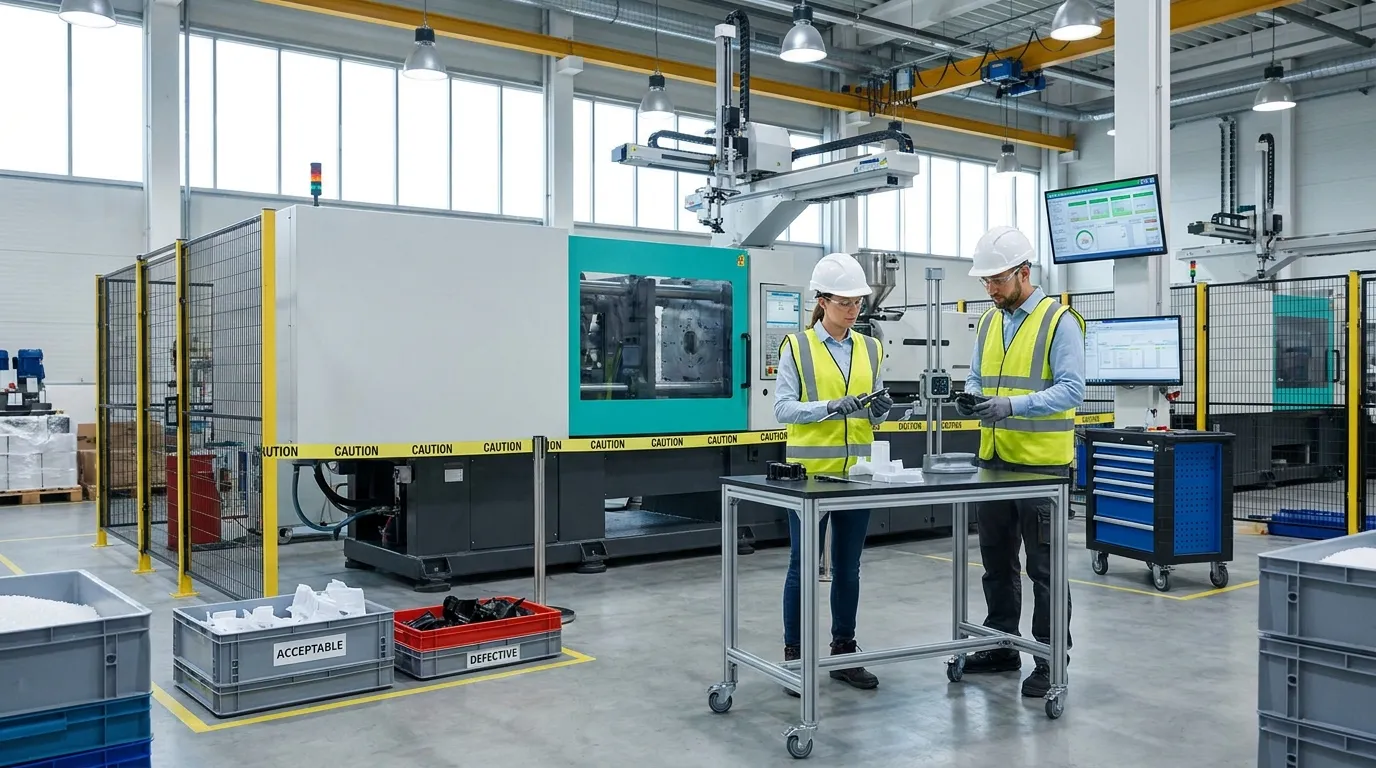
Mold trial and sampling verify whether the tool can consistently produce acceptable parts. Manufacturers evaluate dimensions, những khuyết điểm, sự co lại, and cycle stability before approving the mold for production.
Sampling is the point where theoretical design becomes real production output. The first mold trial checks whether the mold performs correctly under production conditions. Engineers monitor filling balance, hành vi làm mát, độ chính xác kích thước, and cosmetic quality.
T1 samples often reveal issues that were not visible during design review. Common problems include warpage, vết sụt, những cú bắn ngắn, ánh sáng chớp nhoáng, or uneven shrinkage. Manufacturers then adjust process settings or modify tooling before running another trial.
Các khuyết tật thường gặp được tìm thấy trong quá trình lấy mẫu
| Nhược điểm | Nguyên nhân điển hình | Sửa lỗi chung |
|---|---|---|
| Dấu chìm | Phần tường dày | Điều chỉnh thiết kế tường |
| Đèn flash | Niêm phong khuôn kém | Cải thiện độ vừa vặn |
| Độ cong vênh | Làm mát không đều | Sửa đổi bố cục làm mát |
| Bắn ngắn | Dòng nguyên liệu kém | Điều chỉnh vị trí cổng |
| Vết bỏng | Không khí bị mắc kẹt | Cải thiện thông gió |
A production ramp-up scenario shows why this stage matters. One manufacturer completed tooling on schedule, but unstable cycle times caused inconsistent dimensions during sampling. The project needed additional process tuning before production approval could move forward.
Many buyers focus too heavily on mold completion dates, but production stability after sampling is what actually determines project success. A mold that ships quickly but fails during validation usually creates larger delays later.
Manufacturers also use this stage to verify customer specifications and inspection requirements. Cái này Xác nhận khuôn ép resource explains how design decisions influence final part quality.
How Does Mass Production Start After Sampling?
Mass production starts after sampling results are approved and process parameters become stable. Manufacturers monitor cycle time, tỷ lệ khuyết tật, and dimensional consistency before scaling to full production volume.
Production ramp-up focuses on consistency. Engineers lock machine parameters, validate repeatability, and monitor output quality before increasing manufacturing volume. This stage confirms that the process works reliably outside controlled trial conditions.
Theo Hướng dẫn phát triển quy trình của Kaysun, stable processing conditions help reduce variability and improve long-term manufacturing performance. Small changes in temperature, Áp lực, or cooling time can significantly affect part quality.
- Thời gian chu kỳ ổn định
- Kích thước nhất quán
- Tỷ lệ lỗi được kiểm soát
- Xác minh hiệu suất vật liệu
- Cài đặt máy có thể lặp lại
An unstable process can delay mass production even when tooling is technically complete. One automotive project passed dimensional inspection during T1 trials, but cycle instability created inconsistent shrinkage during extended production runs. Additional process tuning delayed launch approval.
Đây là nơi Thiết kế khuôn sẵn sàng sản xuất becomes important. Strong DFM planning makes production stabilization much easier after sampling.
What Delays Commonly Affect Injection Mold Projects?
Injection mold projects are commonly delayed by design revisions, chỉnh sửa dụng cụ, thiếu hụt vật liệu, and international shipping issues. Delays often happen after steel cutting because modifications require additional machining and validation.
Most mold projects do not fail because of one major event. Delays usually build from multiple smaller issues across design, Dụng cụ, việc lấy mẫu, and logistics.
| Nguyên nhân trì hoãn | Khi nó xảy ra | Tác động | Phương pháp phòng ngừa |
|---|---|---|---|
| Sửa đổi thiết kế muộn | Trước hoặc sau khi sử dụng dụng cụ | Gia công bổ sung | Hoàn thành đánh giá DFM sớm |
| Lỗi lấy mẫu | Trong các thử nghiệm T1 | Thử nghiệm lặp lại | Xác thực dụng cụ một cách cẩn thận |
| Thiếu nguyên liệu | Chuẩn bị sản xuất | Lên lịch bị trì hoãn | Xác nhận chuỗi cung ứng sớm |
| Sự chậm trễ của hải quan | Vận chuyển quốc tế | Giao hàng muộn | Chuẩn bị hồ sơ sớm |
| Chu kỳ không ổn định | Đường dốc sản xuất | Phê duyệt chậm trễ | Tối ưu hóa cài đặt quy trình |
International logistics can also affect mold timelines. An automotive trim component shipped overseas may face inspection delays if customs documentation is incomplete. Information from CBP và Trade.gov shows that import processing and trade documentation can influence shipment timing.
Buyers should also understand that mold modifications after steel cutting are rarely quick fixes. Even small changes can require additional machining, sự đánh bóng, lắp đặt, and repeat sampling before approval.
How Can Buyers Reduce Risk Before Starting an Injection Mold Project?
Reducing injection molding risk starts with preparation. Buyers who clarify specifications early usually avoid expensive tooling changes later. Good communication during DFM and sampling stages also improves project stability.
A strong supplier should explain process risks clearly before production starts. If the supplier avoids discussing DFM limitations, tolerance concerns, or sampling expectations, that is usually a warning sign.
- Xác nhận đánh giá DFM trước khi cắt thép
- Xem xét độ dày của tường và góc nháp
- Xác định sớm yêu cầu chất lượng mỹ phẩm
- Làm rõ kỳ vọng phê duyệt mẫu
- Lập kế hoạch thời gian thực tế cho các bản sửa đổi
- Xác minh tính sẵn có của vật liệu trước khi sản xuất
- Xác nhận các tiêu chuẩn kiểm tra và xác nhận
A practical example is a consumer electronics enclosure with cosmetic surface requirements. If the customer approves tooling before discussing polishing standards, additional rework may appear during T1 sampling. That creates extra delays and additional cost.
Cái này Danh sách kiểm tra lập kế hoạch khuôn ép can help buyers organize design and production expectations before tooling approval.
Làm gì tiếp theo
The injection mold process works best when design review, Dụng cụ, việc lấy mẫu, and production planning are treated as one connected workflow. Problems caught early are usually manageable. Problems discovered after tooling or during unstable production often become expensive and time-consuming.
Before starting a new project, review manufacturability carefully and confirm how your supplier handles DFM, thử nghiệm nấm mốc, and production validation. Stable production matters more than fast tooling completion. A supplier with strong process control can reduce defects, improve delivery consistency, and help avoid unnecessary mold revisions later in the project lifecycle.
Những câu hỏi thường gặp
What is the injection mold process?
The injection mold process is the workflow used to design, manufacture, test, and use molds for producing plastic parts. It includes DFM review, Dụng cụ, thử nghiệm nấm mốc, quality validation, and mass production preparation.
How long does injection mold manufacturing take?
Injection mold manufacturing timelines vary based on complexity, các lần sửa đổi, and sampling requirements. Tooling and production ramp-up can extend project timelines across several weeks or months depending on mold size and validation needs.
Why is DFM important in injection molding?
DFM helps identify production risks before tooling starts. Early review reduces defects, minimizes costly tool modifications, and improves long-term production stability after sampling begins.
What happens during mold sampling?
Mold sampling checks whether the mold can consistently produce acceptable parts. Manufacturers inspect dimensions, những khuyết điểm, sự co lại, and cycle stability before approving the tool for production.
What causes injection molding delays?
Injection molding delays often come from design revisions, chỉnh sửa dụng cụ, logistics issues, or material shortages. Changes after steel cutting usually increase lead times because additional machining and validation are required.
How do manufacturers reduce molding defects?
Manufacturers reduce molding defects through DFM review, controlled process settings, sampling adjustments, and consistent quality monitoring. Stable machine parameters are important before scaling to full production volume.
Chia sẻ:


Được viết bởi Sunshine
Tại Sunshine, Chúng tôi là nhà sản xuất và cung cấp chuyên nghiệp các linh kiện khuôn chính xác, cung cấp một loạt sản phẩm đa dạng cho ứng dụng dập và khuôn ép. Trọng tâm chính của chúng tôi bao gồm khuôn đục lỗ, ghim và ống lót đẩy, và cọc hướng dẫn cùng các bushing. Với gia công CNC tiên tiến, Kiểm soát chất lượng nghiêm ngặt, và năng lực sản xuất mạnh mẽ, chúng tôi đảm bảo độ tin cậy, các bộ phận chính xác cao, cùng với các linh kiện tiêu chuẩn có sẵn trong kho để cung cấp nhanh chóng và hiệu quả toàn cầu.
TIN TỨC
NHẬN DỊCH VỤ
Với các bộ phận chất lượng đáp ứng mọi ngân sách và đội ngũ nhân viên thân thiện được đào tạo để giúp chuyến thăm của bạn trở nên hữu ích và thuận tiện.
