



Custom Plastic Injection Molding: Tooling, Vật liệu, and Production Guide
Custom plastic injection molding works best for products that need repeatable quality, scalable production, and tight dimensional control. Success depends on choosing the right tooling, resin, and validation process before mass production begins. Buyers should evaluate mold type, sampling procedures, production lead times, and supplier experience early to reduce revision costs, delays, and long-term quality issues.
Custom molded parts can fail long before production starts if tooling, Vật liệu, or DFM decisions are rushed. A strong injection molding project is built around planning, not just machine capacity. Buyers need clear answers about tooling cost, resin selection, production timing, and validation steps before approving steel cutting or mass production.
What is custom plastic injection molding and when does it make sense?
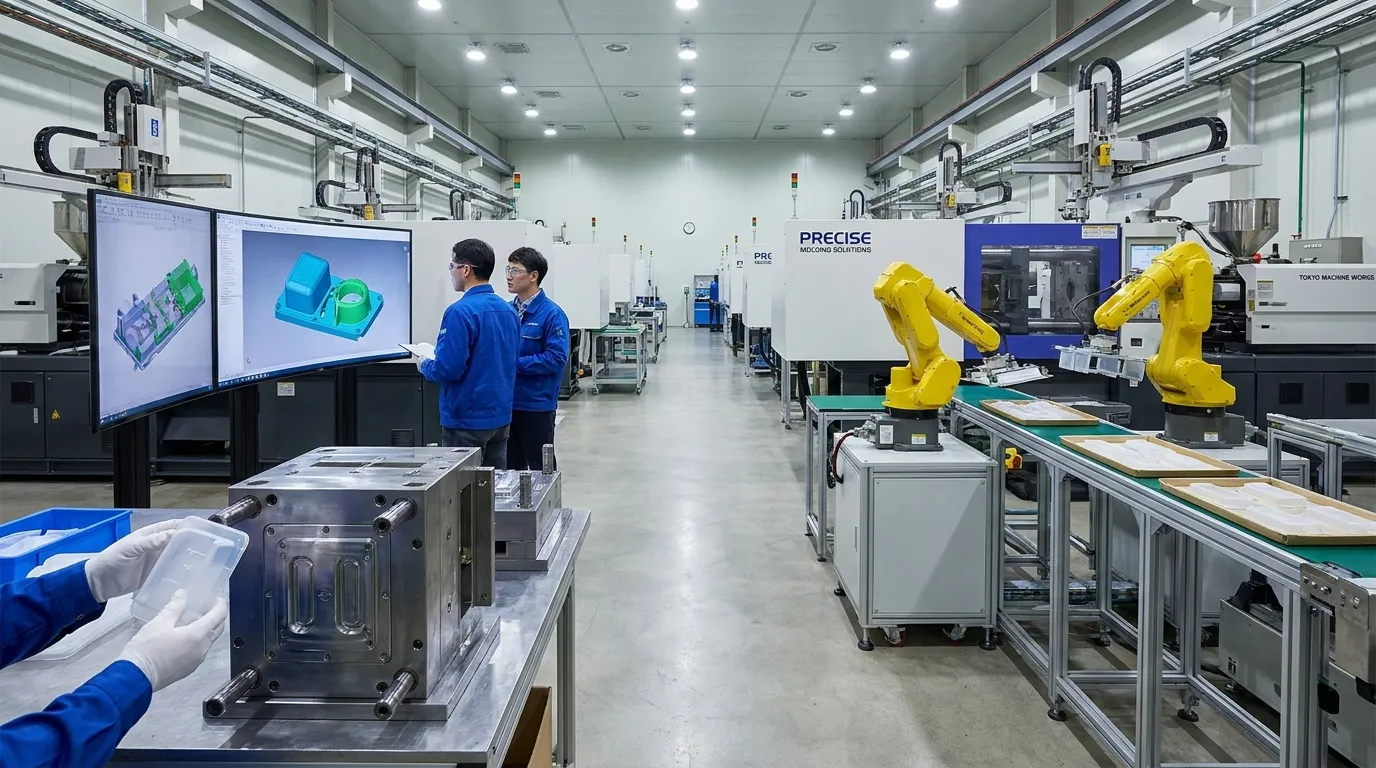
Custom plastic injection molding works best when a product needs repeatable quality, tight tolerances, and medium-to-high production volume. The process requires upfront tooling investment, but lowers per-part cost once production scales.
Injection molding creates plastic parts by injecting molten resin into a mold cavity under pressure. The same mold can produce thousands or millions of identical parts with consistent dimensions and surface finish.
The process makes sense when a product requires stable repeatability, cosmetic consistency, or complex geometry. Vỏ điện tử tiêu dùng, automotive clips, appliance components, and medical enclosures are common examples. Theo Thư mục IQS, injection molding remains one of the most widely used methods for large-scale plastic part production.
| Nhu cầu sản xuất | Ép phun phù hợp |
|---|---|
| Khối lượng sản xuất cao | Thông minh |
| Dung sai chặt chẽ | Mạnh mẽ |
| Thay đổi nguyên mẫu nhanh chóng | Hạn chế sau khi dụng cụ |
| Đầu tư trả trước thấp | Nghèo |
| Bề mặt hoàn thiện mỹ phẩm | Mạnh mẽ |
| Đầu ra có thể lặp lại | Thông minh |
Low-volume projects sometimes benefit from bridge tooling or aluminum molds. A startup producing 5,000 consumer electronics housings may use aluminum tooling first to reduce launch risk before moving to hardened steel tooling later.
For a broader overview of mold structures and tooling systems, see the Hướng dẫn khuôn ép.
How does the custom injection molding process work from design to production?
Most custom injection molding projects follow a predictable sequence: Đánh giá DFM, tooling fabrication, Lấy mẫu T1, revisions, validation, and mass production. Problems become far more expensive once steel cutting begins.
A typical project starts with a DFM review, short for Design for Manufacturability. Engineers evaluate wall thickness, draft angles, gating positions, material flow, and part geometry before tooling begins. Early DFM approval prevents expensive mold revisions later.
Once the design is approved, the manufacturer creates the mold tool. This stage includes CNC machining, EDM work, sự đánh bóng, fitting, and cooling channel preparation. The full Quy trình sản xuất khuôn mẫu usually takes several weeks depending on mold complexity.
Đánh giá DFM
DFM is where many projects either stay on track or begin slipping. A buyer changing wall thickness after steel cutting may trigger additional machining, delayed sampling, and new validation rounds.
One common example is an automotive supplier switching from ABS to PC/ABS after tooling starts because the original resin failed heat testing. That single material change can affect shrinkage rates, gating, and cooling behavior.
T1 và xác nhận
After tooling is complete, the manufacturer runs the first trial shot, often called T1 sampling. Engineers inspect dimensions, cosmetic finish, gate marks, flash, and cycle consistency.
Mass production should not begin immediately after T1 approval. Stable production requires process tuning, repeatability checks, and validated inspection procedures before the production ramp starts.
How do you choose the right plastic material?
Material selection affects strength, khả năng chịu nhiệt, tooling wear, thời gian chu kỳ, and final part cost. Choosing resin based only on price often creates long-term production problems.
The right resin depends on the product’s environment, load requirements, appearance goals, và điều kiện sản xuất. Polypropylene works well for flexible consumer parts, while polycarbonate provides stronger heat resistance and impact performance.
A resin also affects tooling life and production efficiency. Glass-filled materials can increase mold wear. High-temperature resins often require slower cycle times and more advanced tooling design. Tập đoàn Goodfish explains how resin behavior directly impacts manufacturability and long-term part performance.
| Vật chất | Sử dụng tốt nhất | Lợi ích chính | Hạn chế |
|---|---|---|---|
| PP | Hàng tiêu dùng | Chi phí thấp, flexible | Khả năng chịu nhiệt thấp hơn |
| ABS | Nhà ở | Ngoại hình đẹp | Độ bền vừa phải |
| Máy tính | Thiết bị điện tử | Độ bền va đập cao | Chi phí cao hơn |
| Ni lông | Bộ phận cơ khí | Chống mài mòn | Hấp thụ độ ẩm |
The cheapest resin is not always the lowest total cost. A lower-grade material may increase defect rates, cosmetic rejection, or part failure during production.
A medical device project may require multiple resin evaluations before approval. If sterilization temperatures exceed the material’s limit, the part can warp or crack after shipment. Trong những trường hợp đó, engineering-grade resin becomes necessary even if tooling and cycle costs increase.
For broader mold and resin production context, Xem Giải pháp khuôn nhựa.
Should you use aluminum or steel tooling?
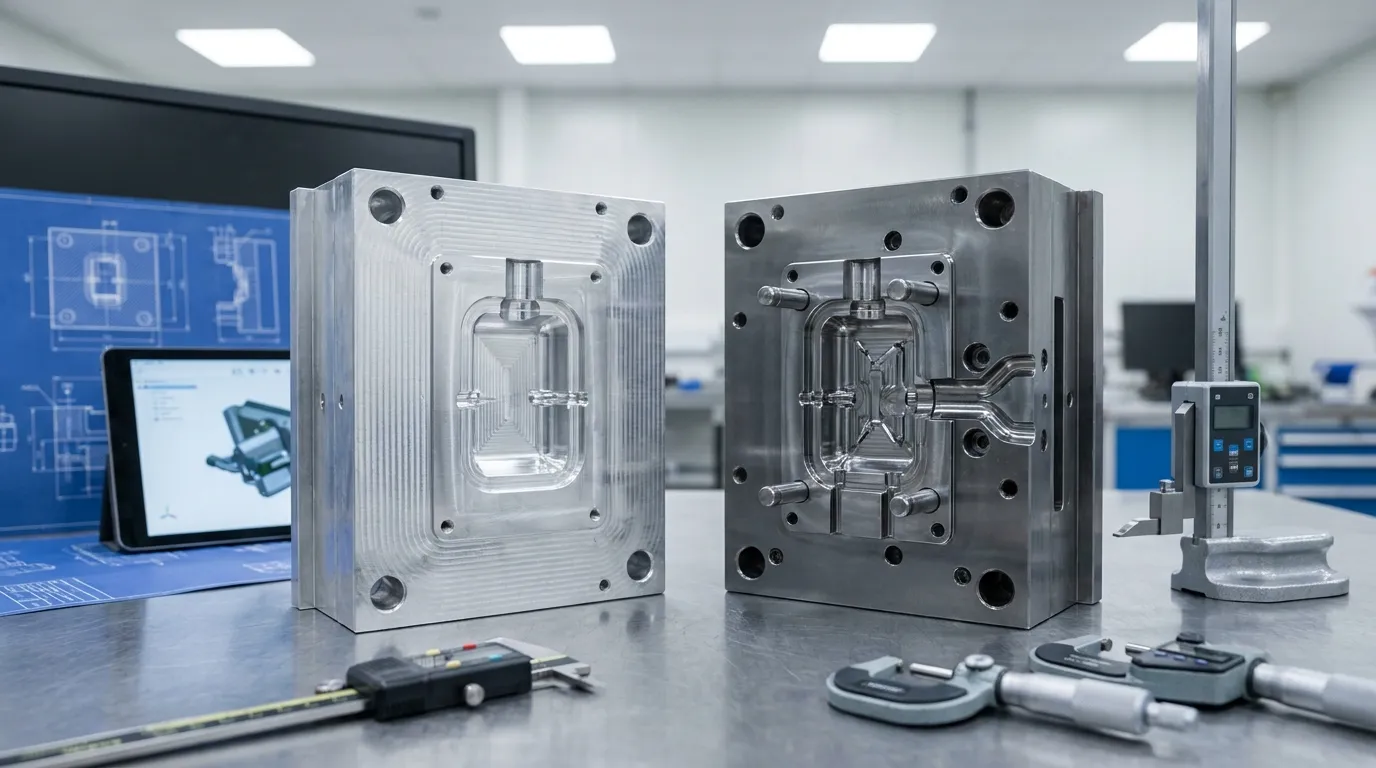
Aluminum molds reduce lead times and tooling cost for lower-volume projects, while hardened steel tooling is safer for long production runs and tighter tolerances.
Tooling material changes both project economics and production stability. Aluminum molds machine faster and cost less upfront, making them useful for prototyping, bridge production, or market testing.
Steel molds require more time and investment, but they handle higher production volumes and abrasive materials more reliably. Nhựa Weilin notes that aluminum tooling is often preferred for low-volume manufacturing because of faster turnaround times.
Bảng quyết định dụng cụ
| Yếu tố | Dụng cụ nhôm | Dụng cụ thép |
|---|---|---|
| Thời gian dẫn | Nhanh hơn | Dài hơn |
| Chi phí trả trước | Thấp hơn | Cao hơn |
| Tuổi thọ sản xuất | Thấp hơn | Cao hơn nhiều |
| Tính linh hoạt trong việc sửa đổi | Dễ dàng hơn | Khó hơn |
| Tốt nhất cho | Prototypes, bridge runs | Sản xuất lâu dài |
Aluminum tooling is not always the cheapest long-term option. It works well for startup launches and pilot production, but hardened steel tooling is safer when repeatability and large production runs matter.
A startup launching a smart home device may choose aluminum tooling for the first 8,000 Đơn vị. Once demand stabilizes, the company can transition to steel tooling for larger production volumes and improved durability.
If you're comparing tooling suppliers, review dụng cụ khuôn ép before committing to a production plan.
What affects tooling cost and production pricing?
Tooling cost depends on part geometry, cavity count, resin behavior, yêu cầu về dung sai, and production volume. Small design changes after tooling starts can increase both lead time and total project cost.
Most injection molding costs fall into two categories: tooling cost and per-part production cost. Tooling includes machining, mold design, steel selection, cooling systems, and finishing work. Per-part cost depends on resin usage, thời gian chu kỳ, labor, and output volume.
Complex geometry increases tooling cost quickly. Cắt xén, threaded sections, side actions, and polished cosmetic surfaces all require additional machining and engineering time.
| Trình điều khiển chi phí | Tác động đến giá cả |
|---|---|
| Khuôn nhiều khoang | Chi phí dụng cụ cao hơn, lower part cost |
| Dung sai chặt chẽ | Gia công và xác nhận nhiều hơn |
| Nhựa cấp kỹ thuật | Chi phí vật liệu cao hơn |
| Hoàn thiện thẩm mỹ | Đánh bóng bổ sung |
| Sửa đổi thiết kế | Sự chậm trễ và làm lại |
The lowest mold quote is rarely the lowest total project cost. Weak DFM review and poor validation often create expensive corrections later.
Ví dụ, a buyer approving tooling before finalizing snap-fit geometry may face steel modifications after T1 sampling. Even small tooling revisions can delay production schedules and increase engineering costs.
When evaluating suppliers, a qualified nhà cung cấp khuôn tùy chỉnh should explain cost drivers clearly instead of quoting only a single mold price.
How long does a custom injection molding project take?
Most custom plastic injection molding projects take several weeks to months depending on tooling complexity, revisions, sampling cycles, and production validation requirements.
Simple tooling projects may move from DFM approval to production in a few weeks. Complex hardened steel molds with multiple cavities and cosmetic requirements often take much longer. Theo Aprios, production mold lead times can extend from several weeks to multiple months depending on complexity.
| Giai đoạn dự án | Thời gian điển hình |
|---|---|
| Đánh giá DFM | 2-7 ngày |
| Thiết kế khuôn mẫu | 1-2 tuần |
| Chế tạo công cụ | Vài tuần |
| Lấy mẫu T1 | Vài ngày |
| Sửa đổi và xác nhận | Biến |
| Đường dốc sản xuất | Phụ thuộc vào phê duyệt |
Nguyên nhân phổ biến của sự chậm trễ
Most delays come from project changes, not machine downtime. Sửa đổi thiết kế muộn, incomplete specifications, resin changes, and failed validation rounds create the largest schedule disruptions.
A medical device project may require multiple T1 sampling rounds before dimensional stability meets approval standards. That extra validation time is normal in regulated production environments.
Evokpoly also highlights how tooling complexity and engineering changes affect overall lead time.
What should happen during sampling and production validation?
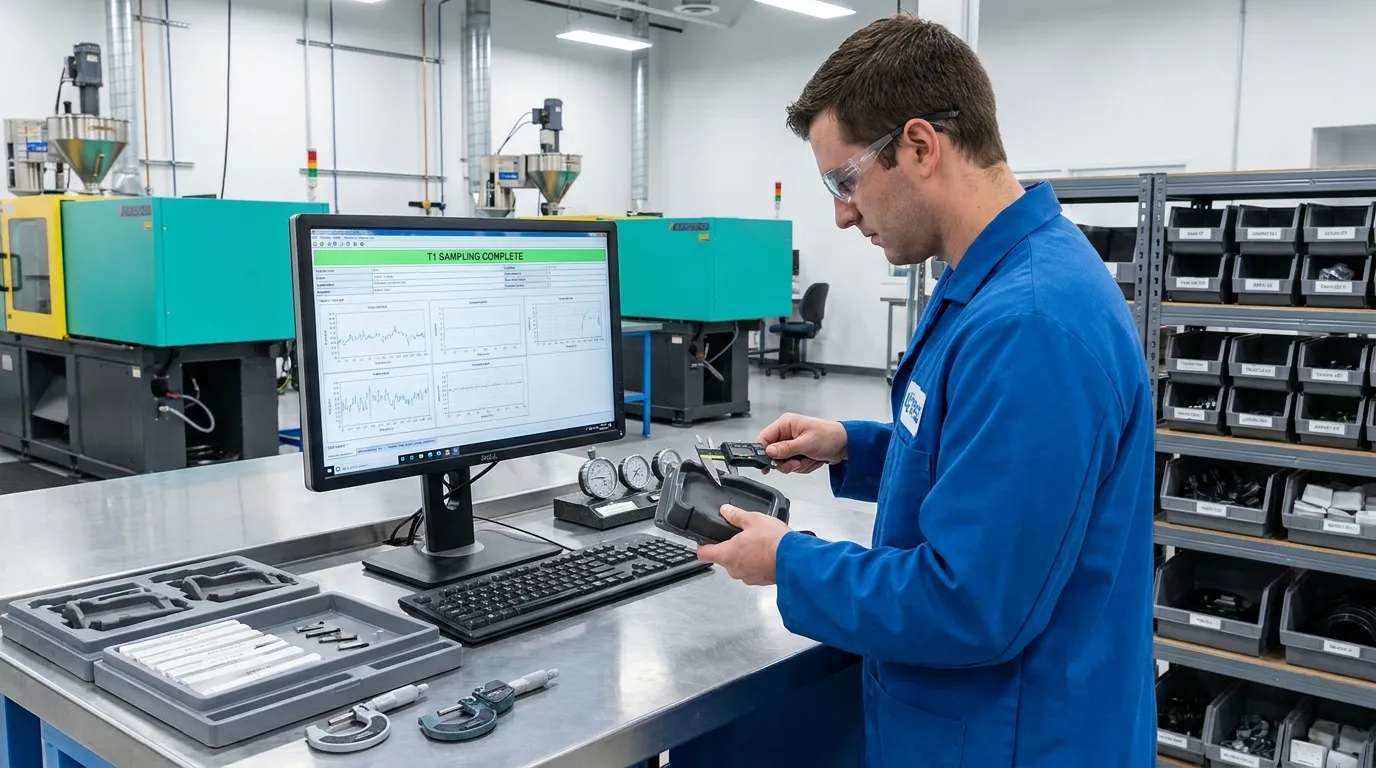
T1 sampling is where manufacturers validate dimensions, material behavior, and molding stability before full production begins. Skipping structured validation increases the risk of downstream defects and delays.
Sampling is the transition point between tooling completion and production readiness. The goal is not just to create acceptable parts. The goal is to prove the process can repeat stable results consistently.
Manufacturers usually inspect dimensions, chất lượng mỹ phẩm, gate performance, cooling behavior, and material consistency during T1 and follow-up validation rounds.
Danh sách kiểm tra sẵn sàng sản xuất
- Phê duyệt mẫu T1
- Báo cáo kiểm tra kích thước
- Xác minh nhựa
- Kiểm tra bề mặt hoàn thiện
- Xem xét thông số quy trình
- Phê duyệt bao bì
- Đánh giá lập kế hoạch hậu cần
- Xác nhận theo dõi sửa đổi
A rushed production launch often creates avoidable quality problems. Faster production timing only helps if validation procedures are complete.
Before export shipment, some manufacturers also perform mold function testing and trial verification. Khuôn núi cao recommends reviewing trial reports, functionality, and dimensional checks before shipment approval.
For additional production-stage planning, review the Quy trình xác nhận khuôn used during mold qualification and production release.
How can buyers reduce production delays and supply chain risk?
Most production delays come from design revisions, incomplete specifications, tooling changes, and poor production planning rather than machine downtime alone.
The best way to reduce delays is to lock specifications before tooling begins. Changing geometry, resin type, or surface finish after steel cutting usually affects tooling, validation, and scheduling.
International projects also require planning for customs paperwork, shipping schedules, and packaging requirements. Both Trade.gov và U.S. Customs and Border Protection provide guidance related to import procedures and shipment documentation.
| Nếu điều này xảy ra | Tăng rủi ro |
|---|---|
| Thay đổi vật liệu sau khi gia công dụng cụ | Lấy mẫu chậm trễ |
| Thông số kỹ thuật dung sai không rõ ràng | Kiểm tra thất bại |
| Không có đánh giá bao bì | Thiệt hại do vận chuyển |
| Nhịp giao tiếp yếu | Nhầm lẫn sản xuất |
A buyer delaying steel cutting until DFM approval often saves far more money than a buyer rushing into production. Early discipline reduces revision cycles and keeps production schedules predictable.
Các công ty chuẩn bị mở rộng quy mô sản xuất cũng nên xem xét Hỗ trợ lập kế hoạch sản xuất before approving long-term manufacturing agreements.
How do you choose the right injection molding manufacturer?
Choosing the right supplier depends on engineering support, quality systems, tooling capability, and communication quality. A manufacturer should help reduce production risk, not simply quote a mold price.
Buyers should evaluate whether the supplier handles DFM reviews, sampling reports, validation support, and export coordination internally. Clear engineering communication matters just as much as machine capacity.
Danh sách kiểm tra đánh giá nhà cung cấp
- Hỗ trợ kỹ thuật DFM
- Kinh nghiệm dụng cụ
- Năng lực sản xuất
- Quy trình kiểm tra chất lượng
- Kinh nghiệm xuất khẩu và logistics
- Kiểm soát nguồn cung ứng nguyên liệu
- Thời gian phản hồi giao tiếp
- Quy trình quản lý sửa đổi
An experienced supplier should also explain where risk exists. Ví dụ, a supplier producing automotive parts may recommend hardened steel tooling immediately if annual production targets exceed projected aluminum mold lifespan.
If you're comparing long-term manufacturing partners, an nhà sản xuất khuôn mẫu có kinh nghiệm should be able to explain tooling decisions, validation methods, and production scalability clearly.
Thực hiện bước tiếp theo đúng đắn
A successful custom plastic injection molding project depends on early planning, realistic timelines, and disciplined validation. Buyers who focus only on mold price often face higher costs later through revisions, delays, or unstable production.
Start by reviewing your production volume, yêu cầu vật liệu, tolerance expectations, and launch timeline. Then evaluate whether aluminum or steel tooling fits the project long term. A supplier that supports DFM review, structured sampling, and production validation will usually reduce risk far more effectively than a low-cost quote alone.
Những câu hỏi thường gặp
How much does custom plastic injection molding cost?
Costs depend on tooling complexity, resin selection, cavity count, yêu cầu về thẩm mỹ, and production volume. The mold is usually the largest upfront expense, while per-part pricing becomes lower as production volume increases.
How long does it take to build an injection mold?
Simple molds may be completed within a few weeks, while complex hardened steel tooling can take several months. Vòng lấy mẫu, revisions, and validation requirements also affect the final production timeline.
Should tooling be made from aluminum or steel?
Aluminum tooling works well for prototypes and lower-volume production because it reduces cost and lead time. Steel tooling is better for large production runs, dung sai chặt chẽ hơn, and longer mold lifespan.
Which plastic material should I use for my application?
Material selection depends on heat resistance, Độ bền, Linh hoạt, chemical exposure, and cosmetic requirements. Resin choice also affects tooling wear, thời gian chu kỳ, và tính nhất quán trong sản xuất lâu dài.
What certifications should I look for in an injection molding supplier?
Most buyers evaluate ISO compliance, quality management procedures, traceability systems, and industry-specific certifications. Medical and automotive programs often require stricter validation and inspection standards.
What causes delays in injection molding projects?
Sửa đổi thiết kế sau khi bắt đầu sử dụng công cụ, incomplete specifications, material changes, and failed validation rounds are common delay sources. Early DFM review helps reduce many of these production risks.
Chia sẻ:


Được viết bởi Sunshine
Tại Sunshine, Chúng tôi là nhà sản xuất và cung cấp chuyên nghiệp các linh kiện khuôn chính xác, cung cấp một loạt sản phẩm đa dạng cho ứng dụng dập và khuôn ép. Trọng tâm chính của chúng tôi bao gồm khuôn đục lỗ, ghim và ống lót đẩy, và cọc hướng dẫn cùng các bushing. Với gia công CNC tiên tiến, Kiểm soát chất lượng nghiêm ngặt, và năng lực sản xuất mạnh mẽ, chúng tôi đảm bảo độ tin cậy, các bộ phận chính xác cao, cùng với các linh kiện tiêu chuẩn có sẵn trong kho để cung cấp nhanh chóng và hiệu quả toàn cầu.
TIN TỨC
NHẬN DỊCH VỤ
Với các bộ phận chất lượng đáp ứng mọi ngân sách và đội ngũ nhân viên thân thiện được đào tạo để giúp chuyến thăm của bạn trở nên hữu ích và thuận tiện.
