



Custom Injection Mold: What Buyers Should Prepare Before Quotation
A custom injection mold quotation moves faster when buyers prepare complete technical and production information before contacting suppliers. A strong RFQ package should include 3D CAD files, 2D drawings, Thông số kỹ thuật nhựa, yêu cầu về dung sai, kỳ vọng về hoàn thiện bề mặt, annual production volume, and delivery timelines. Missing details often create quotation delays, sửa đổi dụng cụ, and inaccurate pricing.
A mold quotation is not just about getting a price. Suppliers use your RFQ package to evaluate tooling design, machining complexity, mold lifespan, and production feasibility. If important details are missing, the quotation process slows down quickly. Buyers who prepare the right files and specifications upfront usually get faster responses, fewer revisions, and more accurate tooling recommendations.
What information does a supplier need before quoting a custom injection mold?
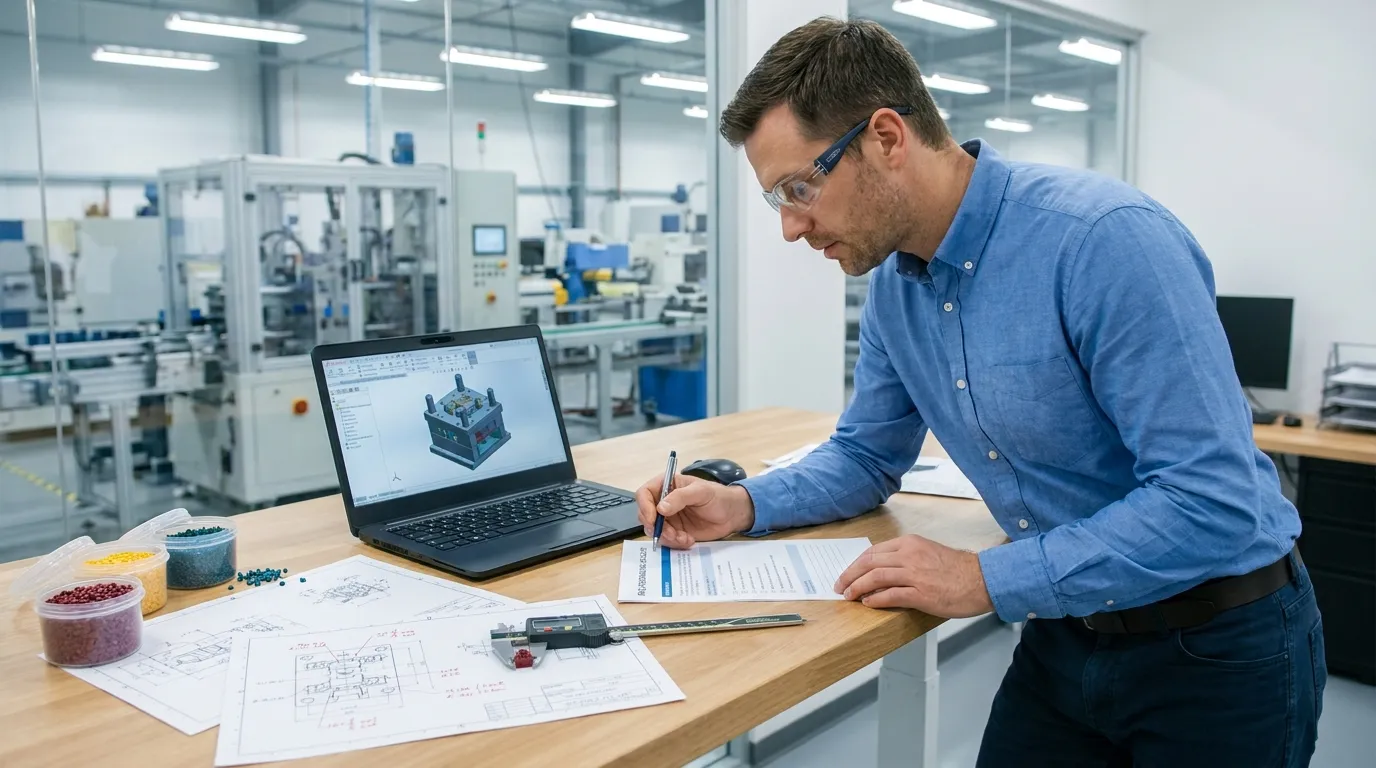
A custom injection mold quotation is only accurate when suppliers receive complete technical and production details. CAD files, lựa chọn nhựa, các mức dung sai, kỳ vọng về hoàn thiện bề mặt, and annual production volume directly affect tooling design, Thời gian dẫn, and mold cost.
Most suppliers need enough information to evaluate manufacturability before they can quote tooling. That usually starts with a 3D CAD model, production expectations, and material requirements. If any of those pieces are unclear, engineering teams often need multiple clarification rounds before pricing can begin.
A complete RFQ package should include:
- Tệp CAD 3D
- Bản vẽ kỹ thuật 2D
- Cấp vật liệu hoặc đặc điểm kỹ thuật nhựa
- Khối lượng sản xuất hàng năm
- Yêu cầu về độ hoàn thiện bề mặt
- Ghi chú dung sai
- Tài liệu tham khảo lắp ráp
- Yêu cầu đóng gói hoặc tuân thủ
- Tiến độ dự kiến của dự án
Many buyers focus only on the part geometry. That creates problems later because tooling decisions also depend on production volume, hành vi của nhựa, tiêu chuẩn mỹ phẩm, và tuổi thọ khuôn dự kiến.
Ví dụ, a mold designed for 5,000 parts per year may use very different tooling materials than a mold expected to run 500,000 cycles annually. If you are still learning broader tooling terminology, cái này Hướng dẫn thành phần khuôn explains the core mold structures and systems suppliers evaluate during quotation.
Danh sách kiểm tra sẵn sàng RFQ
| Mục RFQ | Tại sao nó lại quan trọng |
|---|---|
| Tệp CAD 3D | Cho phép xem xét dụng cụ và phân tích khả năng sản xuất |
| Bản vẽ 2D | Xác định kích thước và dung sai |
| Đặc điểm kỹ thuật nhựa | Ảnh hưởng đến sự co lại, gate design, and tooling steel |
| Khối lượng sản xuất | Xác định yêu cầu về độ bền của khuôn |
| Bề mặt hoàn thiện | Ảnh hưởng đến thời gian đánh bóng và gia công |
| Kỳ vọng dòng thời gian | Giúp nhà cung cấp lên lịch công suất dụng cụ |
| Yêu cầu tuân thủ | Xác định nhu cầu thử nghiệm hoặc chứng nhận |
| Ghi chú đóng gói | Hỗ trợ lập kế hoạch sản xuất hạ nguồn |
Need help evaluating production methods before RFQ submission? Giải pháp đúc tùy chỉnh can help clarify common tooling and manufacturing options.
Which drawings and files should buyers prepare before requesting a quote?
Suppliers can quote faster when buyers provide editable 3D CAD files together with 2D tolerance drawings. Missing dimensions, unclear revisions, or screenshot-only submissions usually create multiple clarification rounds before pricing can begin.
A STEP or IGES file is usually the starting point for any serious quotation request. These formats allow tooling engineers to inspect wall thickness, góc draft, cắt giảm giá, and part geometry directly inside CAD software.
Rendered images or screenshots are rarely enough. One common problem happens when startups submit only visual product mockups without engineering files. Suppliers can see the appearance, but they cannot evaluate mold complexity or manufacturability accurately.
Định dạng CAD ưa thích
| Loại tệp | Mục đích |
|---|---|
| STEP (.step/.stp) | Tệp trao đổi sản xuất 3D tiêu chuẩn |
| IGES (.igs) | Định dạng CAD có thể chỉnh sửa thay thế |
| Tệp CAD gốc | Hữu ích cho việc theo dõi sửa đổi |
| Bản vẽ PDF | Hỗ trợ xem xét kích thước |
| Tập tin lắp ráp | Cho thấy sự phù hợp giữa nhiều bộ phận |
Những gì sẽ xuất hiện trên bản vẽ 2D
2D drawings help suppliers identify dimensions that matter most during tooling and inspection. Không có chúng, engineers often make assumptions that create quotation revisions later.
Your drawings should include:
- Kích thước quan trọng
- Vùng dung sai
- Chú thích hoàn thiện bề mặt
- Thông số kỹ thuật chủ đề
- Ghi chú vật liệu
- Số sửa đổi
- Tài liệu tham khảo lắp ráp
Tight tolerances should only appear where they are functionally necessary. Many buyers apply precision tolerances across every dimension, even when only a few surfaces require strict control. That increases tooling complexity and machining time without improving product performance.
If you want a broader overview of how tooling moves from design to production, cái này Quy trình sản xuất khuôn mẫu explains the major manufacturing stages.
How detailed should material specifications be?
Resin names alone are not enough for accurate mold quotations. Suppliers usually need the exact material grade, performance requirements, additives, and compliance standards to recommend proper tooling steel, gate design, and processing conditions.
Many RFQs simply say “ABS” or “polypropylene.” That creates uncertainty because resin behavior changes significantly between grades, additives, and suppliers. Flame-retardant materials, glass-filled resins, UV stabilizers, and food-grade requirements all affect tooling recommendations.
A consumer electronics company might initially request standard ABS, then later switch to flame-retardant PC/ABS after quotation. That single change can affect shrinkage assumptions, processing temperatures, and tooling wear expectations.
Các chi tiết vật liệu bị thiếu phổ biến
| Chi tiết còn thiếu | Tại sao nó tạo ra vấn đề |
|---|---|
| Cấp nhựa chính xác | Các lớp khác nhau xử lý khác nhau |
| Đánh giá ngọn lửa | Có thể yêu cầu thiết kế dụng cụ thay thế |
| Chống tia cực tím | Thay đổi lựa chọn vật liệu |
| Tuân thủ cấp thực phẩm | Tác động đến yêu cầu chứng nhận |
| Yêu cầu về màu sắc | Ảnh hưởng đến kiểm tra thẩm mỹ |
| Nội dung đầy thủy tinh | Tăng mài mòn nấm mốc |
Material uncertainty also affects mold steel selection. Hardened steel tooling may be recommended for abrasive glass-filled materials, while softer tooling materials can work well for simpler resin systems.
Aluminum tooling is not automatically a low-quality option. It works well for prototypes and lower-volume production when speed matters more than maximum mold lifespan. Buyers sometimes overspend on hardened steel tooling before confirming actual production demand.
If you are comparing suppliers and molding capabilities, Khả năng ép phun can help explain how manufacturers evaluate material and tooling compatibility.
Why do tolerances and surface finish requirements affect mold pricing?
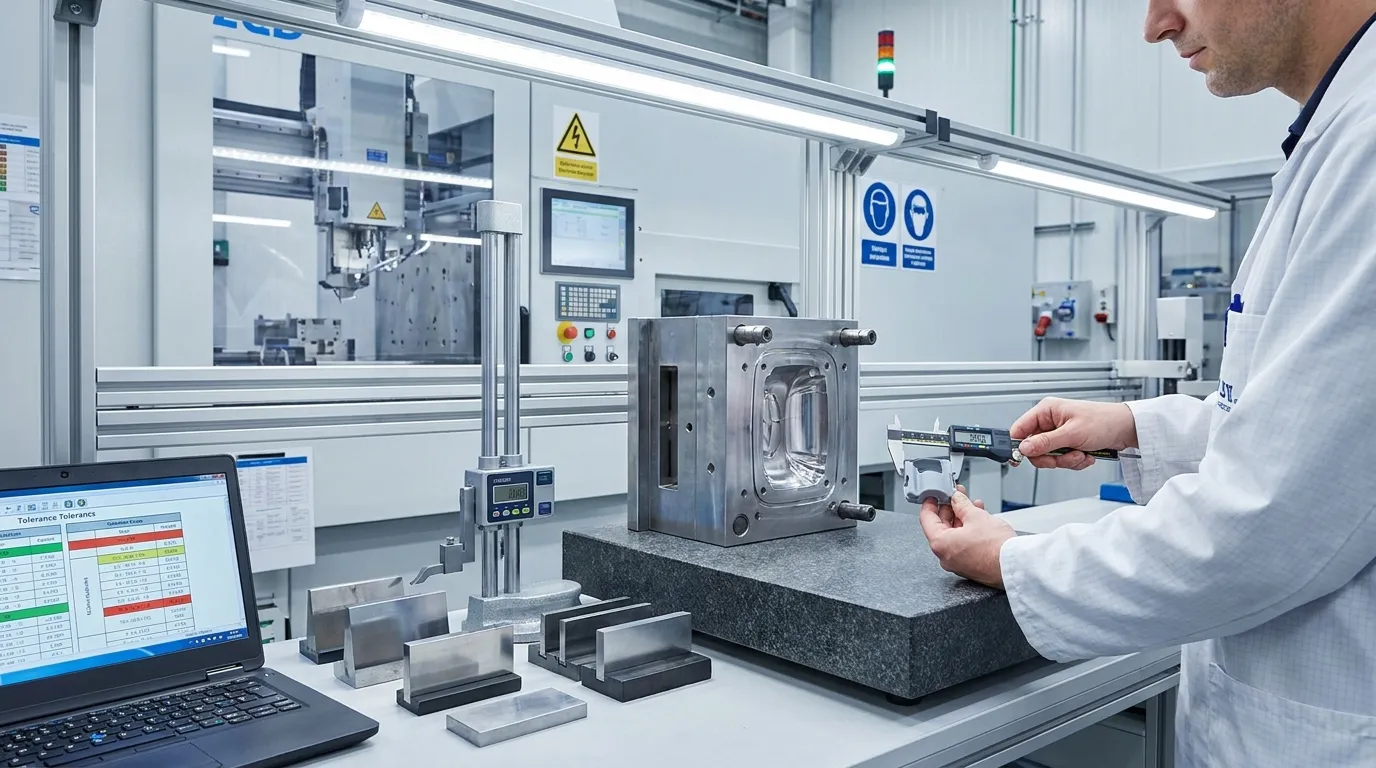
Tight tolerances and cosmetic surface requirements increase mold complexity, machining time, inspection steps, and maintenance expectations. Even small tolerance changes can significantly affect tooling cost and lead time.
Suppliers evaluate tolerance requirements early because they directly affect machining strategy and quality control planning. Precision dimensions may require slower machining, additional inspection equipment, or secondary tooling adjustments.
The same thing happens with cosmetic requirements. A high-gloss consumer housing usually needs more polishing and surface preparation than an industrial enclosure with a textured finish.
| Yêu cầu | Tác động của dụng cụ |
|---|---|
| Dung sai kích thước chặt chẽ | Độ chính xác gia công cao hơn |
| Hoàn thiện đánh bóng gương | Tăng lao động đánh bóng |
| Kết cấu mịn | Gia công khuôn bổ sung |
| Bề mặt bên ngoài mỹ phẩm | Thời gian kiểm tra nhiều hơn |
| Hình học thành mỏng | Độ nhạy quy trình cao hơn |
Not every dimension needs ultra-tight tolerance control. Automotive buyers sometimes request ±0.02 mm tolerance across every feature, even though only a few assembly points require precision. That increases tooling cost quickly.
If your product needs highly controlled dimensions or cosmetic quality, working with a nhà sản xuất khuôn mẫu chính xác can help reduce long-term production issues.
How does production volume change mold recommendations?
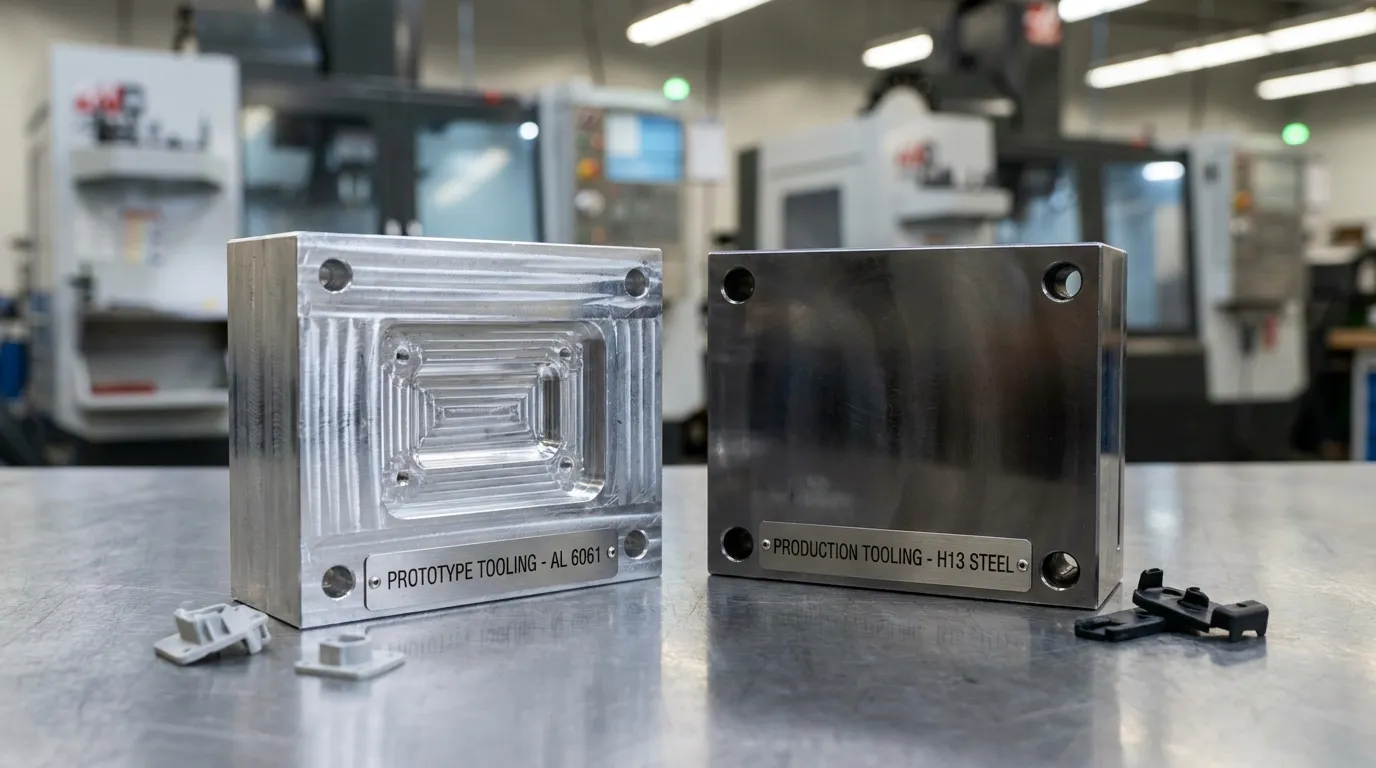
Production volume directly affects tooling strategy. Low-volume projects may justify aluminum prototype molds, while long production runs often require hardened steel tooling, additional cavities, and stronger wear resistance.
Suppliers ask about annual production volume because mold lifespan expectations change tooling design decisions immediately. A prototype tool built for 3,000 parts is very different from a production tool expected to run hundreds of thousands of cycles.
Low-volume buyers sometimes assume steel tooling is always the safest option. Điều đó không phải lúc nào cũng đúng. For shorter production runs, aluminum tooling may reduce lead time and upfront tooling cost without creating performance problems.
Dụng cụ nhôm vs thép
| Loại dụng cụ | Tốt nhất cho | Tuổi thọ điển hình | Chi phí tương đối |
|---|---|---|---|
| Dụng cụ nhôm | Nguyên mẫu và chạy khối lượng thấp | Tuổi thọ chu kỳ thấp hơn | Chi phí trả trước thấp hơn |
| Thép cứng trước | Sản xuất khối lượng trung bình | Vòng đời trung bình | Chi phí vừa phải |
| Thép cứng | Thời gian sản xuất dài | Vòng đời cao | Chi phí trả trước cao hơn |
So sánh nguyên mẫu và dụng cụ sản xuất
| Khối lượng sản xuất | Dụng cụ được đề xuất | Sâu răng điển hình | Thời gian dẫn | Trường hợp sử dụng tốt nhất |
|---|---|---|---|---|
| Under 5,000 Đơn vị | Khuôn nguyên mẫu nhôm | Khoang đơn | Nhanh hơn | Thử nghiệm sản phẩm |
| 5,000 to 100,000 Đơn vị | Thép cứng trước | Khoang đơn hoặc khoang kép | Trung bình | Sản xuất thương mại ổn định |
| Hơn 100,000 Đơn vị | Thép cứng | Đa khoang | Dài hơn | Sản xuất hàng loạt lâu dài |
Production forecasts also affect cavity count decisions. Higher-volume parts may justify multi-cavity tooling to reduce cycle time and improve manufacturing efficiency.
Trade conditions can also influence sourcing decisions. Some manufacturers adjusted tooling strategies during recent tariff changes and supply chain disruptions, according to Nhựa Advantech.
If you are evaluating different tooling approaches, Dụng cụ khuôn tùy chỉnh explains how manufacturers match tooling strategy to production goals.
What causes quotation delays for custom injection molds?
Most quotation delays happen because suppliers must clarify missing technical details before tooling evaluation can begin. Bản vẽ chưa hoàn chỉnh, undefined materials, and unclear production targets typically slow both pricing and manufacturability review.
One of the biggest causes of delay is incomplete RFQ documentation. Suppliers cannot evaluate tooling risk accurately when key information is missing. That usually leads to engineering questions, revised assumptions, and multiple quotation updates.
Common RFQ problems include:
- Thiếu các bản sửa đổi CAD
- Các loại nhựa không xác định
- Không ước tính khối lượng hàng năm
- Chú thích dung sai không rõ ràng
- Thiếu tài liệu tham khảo lắp ráp
- Ghi chú tuân thủ không đầy đủ
- Yêu cầu vận chuyển không chắc chắn
A common example involves overseas mold shipment planning. Buyers sometimes finalize tooling without preparing proper customs documentation or mold classification details. Theo Hoa Kỳ. Hải quan và Bảo vệ Biên giới, customs review and import documentation accuracy can affect shipment processing times.
Mold classification details can also affect customs handling and HS code processing, as explained by Vận chuyển hàng hóaAmigo.
Design revisions after steel cutting create another major delay risk. Once tooling manufacturing starts, geometry changes often increase machining time and project cost. Giải pháp kỹ thuật Ulitech notes that post-approval changes can extend tooling schedules significantly.
If you want better visibility into tooling stages before sending your RFQ, cái này Quy trình sản xuất khuôn mẫu explains how suppliers move from design review into production.
What should buyers confirm before sending the RFQ package?
Before contacting suppliers, buyers should review the RFQ package one final time. Small missing details often create avoidable delays during engineering review.
Use this checklist before submission:
- Xác nhận bản sửa đổi CAD mới nhất được đính kèm
- Xác minh tất cả các kích thước và ghi chú dung sai
- Hoàn thiện các yêu cầu tuân thủ và cấp nhựa
- Xác định kỳ vọng khối lượng sản xuất hàng năm
- Chỉ định yêu cầu bề mặt mỹ phẩm
- Bao gồm tham chiếu lắp ráp nếu nhiều bộ phận tương tác
- Thêm yêu cầu đóng gói hoặc ghi nhãn nếu có liên quan
- Xác nhận thời gian giao hàng mục tiêu
Material selection should be finalized before requesting production quotations whenever possible. Resin uncertainty creates tooling revisions later because shrinkage, khả năng chống mài mòn, and processing assumptions may change.
Buyers should also avoid over-specifying tolerances. Tight dimensions should only apply where they affect product fit or function. Excessive precision requirements often increase tooling cost without improving the final product.
If you are preparing to compare manufacturers or move toward supplier selection, Đối tác ép phun provides a broader look at production support and manufacturing capabilities.
Thực hiện bước tiếp theo đúng đắn
A strong RFQ package makes the custom injection mold quotation process faster and more accurate. Suppliers can evaluate tooling complexity, hành vi vật chất, and production requirements much more efficiently when technical details are complete from the start.
Before requesting pricing, review your CAD files, Thông số kỹ thuật nhựa, production forecasts, and tolerance requirements carefully. Small gaps in the RFQ stage often create bigger delays later during tooling approval and production planning.
Mục tiêu rất đơn giản: reduce revisions, avoid assumptions, and give suppliers enough information to quote the right tooling solution the first time.
Những câu hỏi thường gặp
How long does it take to build a custom injection mold?
Simple molds may take a few weeks, while complex production molds can require several months depending on cavity count, các mức dung sai, và yêu cầu xác thực. Design revisions after tooling begins usually extend lead time further.
Which plastic should I use for my application?
The correct plastic depends on strength, khả năng chịu nhiệt, phơi nhiễm hóa học, yêu cầu về thẩm mỹ, và các nhu cầu quy định. Suppliers usually recommend materials after reviewing the part design and product environment.
Dụng cụ nên được làm từ nhôm hay thép?
Aluminum tooling works well for low-volume projects and prototype production, while steel tooling is better for long production runs and higher durability requirements. Production volume usually determines the best option.
What determines injection mold cost?
Injection mold cost depends on tooling complexity, số lượng khoang, yêu cầu về dung sai, kỳ vọng về hoàn thiện bề mặt, và sản lượng sản xuất. Incomplete RFQ information can also increase engineering review time and quotation revisions.
What files should I send for a mold quotation?
Most suppliers request editable 3D CAD files such as STEP or IGES formats together with 2D technical drawings. Assembly references and material specifications also improve quotation accuracy.
Why do mold quotations get delayed?
Mold quotations are commonly delayed by incomplete technical information. Missing dimensions, undefined materials, unclear production targets, or late design revisions often force suppliers to pause engineering review and request clarification.
Chia sẻ:


Được viết bởi Sunshine
Tại Sunshine, Chúng tôi là nhà sản xuất và cung cấp chuyên nghiệp các linh kiện khuôn chính xác, cung cấp một loạt sản phẩm đa dạng cho ứng dụng dập và khuôn ép. Trọng tâm chính của chúng tôi bao gồm khuôn đục lỗ, ghim và ống lót đẩy, và cọc hướng dẫn cùng các bushing. Với gia công CNC tiên tiến, Kiểm soát chất lượng nghiêm ngặt, và năng lực sản xuất mạnh mẽ, chúng tôi đảm bảo độ tin cậy, các bộ phận chính xác cao, cùng với các linh kiện tiêu chuẩn có sẵn trong kho để cung cấp nhanh chóng và hiệu quả toàn cầu.
TIN TỨC
NHẬN DỊCH VỤ
Với các bộ phận chất lượng đáp ứng mọi ngân sách và đội ngũ nhân viên thân thiện được đào tạo để giúp chuyến thăm của bạn trở nên hữu ích và thuận tiện.
